New Export Product: Science Education for Kids

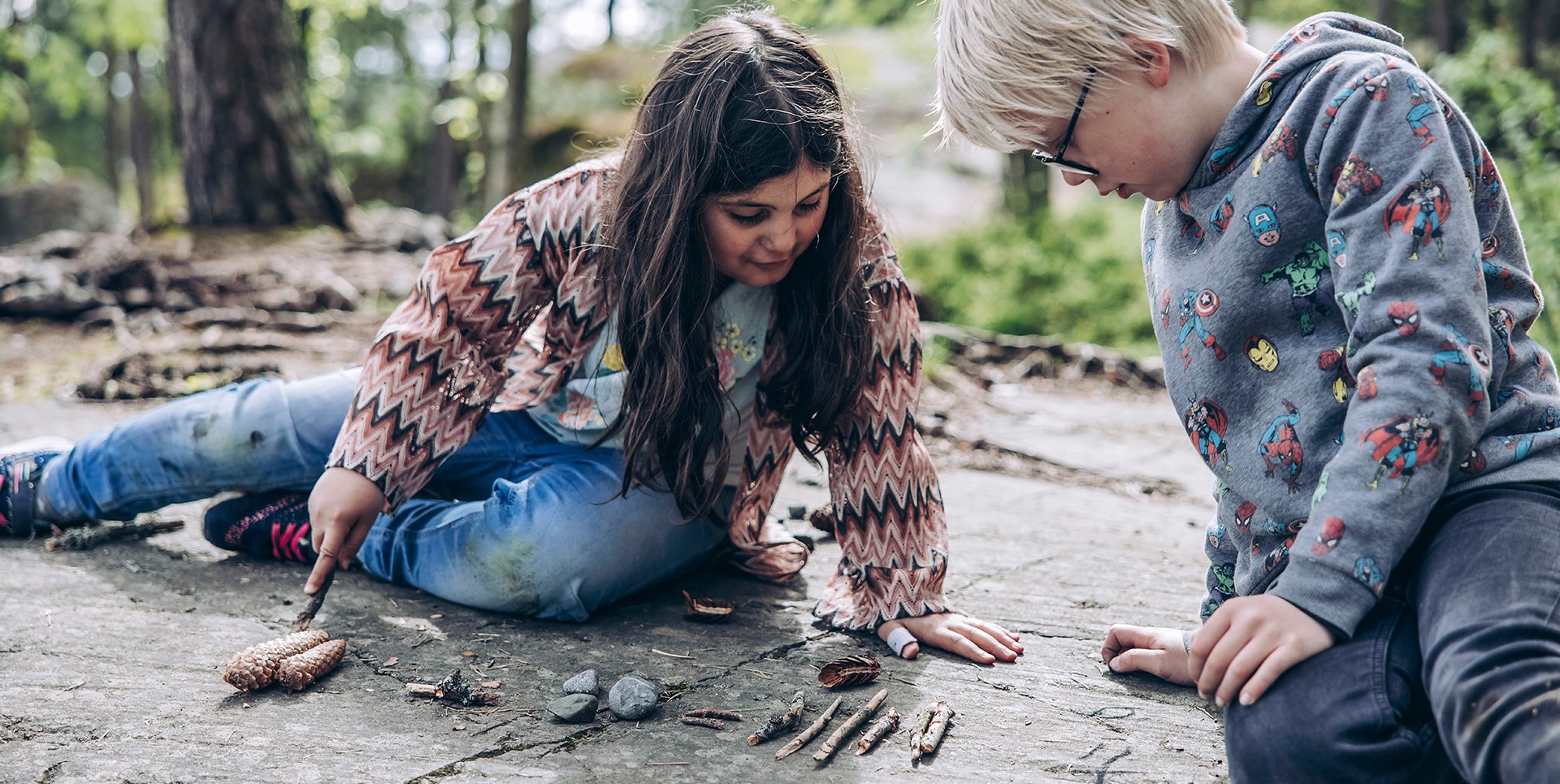
Kuvassa työttä ja poika ratkovat matemaattista tehtävää kävyillä ja kivillä kalliolla istuen.

Finnish innovations spread the joy of math and science learning to kindergartens, families and online environments. Virtual clubs and science classes are being made into export products, offering research-based learning and teaching.

The LUMA Centres of Finnish universities inspire children and young people to study science, technology, engineering and mathematics (STEM), develop learning innovations, and educate teachers.

The Centres’ best known education products include science clubs and camps. Science classes for school children are also very popular. The Gadolin chemistry lab in Helsinki, for example, caters to over 4,000 children a year. The classrooms also offer an opportunity to study which teaching methods work and why they do so.

The network of LUMA Centres is led by Professor Maija Aksela of the University of Helsinki, who is one of the most innovative developers of Finnish education.

Aksela knows that small children learn better through games, play and stories. Their learning is based not only on intellect, but also on emotion. Research indicates that early experiences of comprehension and success are the best support for later education at school.

Little scientists at home

One of the latest novelties is the Jippo virtual club, based on cutting-edge research, which introduces 3–10 year-olds to online science at home. The participants receive weekly videos with a math- or science-related exercise, which they can solve at home and then discuss the results at the club sessions.

Since children learn through play and joy, the pleasure of comprehension and success is very important. The clubs are a hobby shared by the entire family.

Graduate student Jenni Vartiainen, who coordinates the Jippo project and has developed the virtual clubs, emphasises the extensive research behind the clubs.

“Everything is based on research on elements that support learning,” she says.

Chemistry and physics have not been discussed much in Finnish kindergartens, because the staff often feel they do not know enough about the fields. Virtual clubs offer tools and learning material for science education in day care. Even three-year-olds can study natural science phenomena through games and play.

Finnish miracles

Both the science classes and the Jippo virtual clubs have attracted a great deal of attention outside Finland.

“We aim at education export,” says Vartiainen. “Science education for small children is getting lots of attention, and Finland has a good reputation for education. Little research has been conducted in this field, and the topic carries novelty value.”

Maija Aksela is also familiar with the interest shown towards the Finnish school system. Thanks for this go to the high standards of the universities’ teacher education and Finland’s good results in PISA surveys.

“Teachers influence society for a century – first through their own careers and then through that of their pupils and students,” Aksela points out. “As long as teachers and universities interact and learn from one another, the latest research data can spread throughout society.”

 Text: Kimmo Luukkonen. Photo: Elisa Lautala.

STEM Education Meets Citizen Science

The Finnish Meteorological Institute puts science into high school STEM courses by offering students the possibility to collect actual data and to do real science alongside researchers. Mixing citizen science with STEM education could benefit both in the future, thinks researcher Atte Harjanne.

The 5T project coordinated by the Finnish Meteorological Institute offers high school students the opportunity to participate in actual research under the guidance of scientists. The two-year project is financed by the Finnish Ministry of Education and Culture.

Participation in the project is open to all interested high school groups. The process usually begins with a visit to the FMI in Helsinki where the students meet the scientists and get an overview of the research topics. The students can choose their projects among several themes, for example measurements of the depth and coverage of snow, phenology, the amount of pollen, observations of the Aurora Borealis and climate change actions taken by local communities. They can also help by designing novel mobile weather services -some may even have the skills to code these applications.

In the field the students contribute to research by for example making observations on different phenomena in their everyday environment. The work can be included in a STEM subject course or it can extend over a longer period of time and include several subjects.

The role of the teacher is to integrate the research projects to the context and pedagogical goals of the subject or course.

Citizen science benefits both researchers and the public

The 5T project links the traditional aspects of outreach and STEM education with the trending global movement of citizen science, says the project’s contact person, researcher Atte Harjanne from FMI:

“Citizen science is a rising trend around the world. It is a big thing especially in meteorology and climate research, which rely on observations.”

Millions of people around the world have already participated in citizen science projects that take advantage of the power of crowdsourcing. Anyone with a smartphone can participate in making and recording observations or simple measurements or screen data for specific findings.

Citizen science could become a powerful tool in STEM teaching: interest in the natural sciences and STEM education could benefit from citizen science as students will feel more involved with research.

“The kids will get an idea of what STEM areas could offer as a career choice and they will be more familiar with how science is done in real life. Our aim is to study if and how participating in this project changes the students’ conceptions about science,” Harjanne says.

According to feedback from the students and teachers contributing to research motivates the students and has engaged them successfully in STEM studies.

So far snow has been the most popular research topic. Harjanne thinks this could be due to the straightforward and scalable nature of the tasks. “Snow measurements were probably the most easily approachable topic also from the teachers’ point of view,” he says.

The project has received positive feedback also from the researchers who, according to Harjanne, are happy with the work of their teenage research assistants. The students collect real data, Hajanne emphasizes: they are a part of actual research.

“We expect all students to do their best in the project: all observations must be made carefully and recorded diligently according to the researchers’ instructions. Otherwise they are of no use to science.”

The Finnish Meteorological Institute offers information, open access data and educational resources on climate and climate change: Visit the Climate Guide portal.

Text: Maija Pollari.

STEM Education with a Focus on Responsible Research

The European IRRESISTIBLE-project develops STEM education with a focus on engaging youth with responsible research and innovation.

Current research in the natural sciences progresses in close collaboration with the the public, industry, policy-makers and civil society. The process should include open and transparent discussion and handling of the social, ethical and environmental effects, risks and opportunities of scientific research.

Why is it important that everyone should have access to knowledge about advances in science? How do we decide what kind of nanoparticles are allowed in cosmetics or what side effects are acceptable in novel cancer treatments? How does information generated by the scientific community reach the policy makers and consumers? How and why is our climate changing and how does it affect our daily life?

IRRESISTIBLE is a project project improving young people’s awareness and engagement in responsible research and innovation. Funded by the European Union, the project aims to cross boundaries between traditional STEMteaching in schools and informal learning environments through a combination of formal and nonformal learning.

Teacher training will be an important approach in bringing these themes to schools, science centres and museums.

Ten European countries are involved in the project. Finland is represented by the universities of Helsinki and Jyväskylä. Researchers of the Department of Teacher Education at the University of Jyväskylä will work together with climate experts at the University of Helsinki to develop a teaching module and exhibition on climate change.

Other countries will similarly tackle topics in for example nanosciences and -technology, renewable energy, genomics and oceanography.

Read more about the IRRESISTIBLE project.

Text: Antti Laherto, Anna-Leena Kähkönen & Taina Ruuskanen.

ChemistryLab Gadolin Receives International Recognition for Innovative Practices

ChemistryLab Gadolin is a nonformal learning enviroment based at the Department of Chemistry at the University of Helsinki. Gadolin received an honorary mention in the Global Best Awards for innovative solutions in education business collaboration.

Innovative and creative partnerships

ChemistryLab Gadolin received an honorary mention in the Global Best Awards for developing the collaboration between education, academia and business with innovative and creative partnerships. The Global Best Awards are awarded by the International business education Partnerhip Network (The IPN), an international network for the promotion of collaboration between education, entrepreneurs and businesses.

“Gadolin is an example of the collaborative LUMA effort between Finnish schools universities and businesses, which has also inspired international attention. A number of dedicated experts, teachers and students have been involved in designing, planning and establishing the Gadolin concept,” says Gadolin’s director, professor Maija Aksela from the Teacher training unit at the Department of Chemistry.

Visits to the Gadolin lab and other services including materials are free of charge for teachers and student groups. “We gratefully acknowledge the support and collaboration of the businesses and organizations that support us,” says Aksela.

Learning happens everywhere

An important part of learning takes place outside the classroom. ChemistryLab Gadolin, for example, is open and accessible for free for students of all ages. Gadolin’s aim is to engage students in chemistry through experimentation, fun and the joy of learning.

Chemistry teacher Susanna Saukkonen brought her class of IB chemistry students to the Gadolin lab in September. Her students studied the quality of a water sample using ion exchange chromatography and later experimented with hydrogen fuel cells and molecular modelling.

Saukkonen thinks it is important to leave the classroom once in a while to learn in a different, nonformal environment. In her opinion already the opportunity to visit the university research facilities engages students in a meaningful way.

“It is important to be able to visit the Department of Chemistry. Many students are excited about visiting the university. For example a student might find the visit so interesting that they make up their mind to apply to study here,”Saukkonen says.

“Meeting scientists, visiting actual research labs and seeing scientific posters has also been in some way inspirational to my students.”

More information about ChemistryLab Gadolin.

Text: Maija Pollari. Photo: Veikko Somerpuro.

Inspiring Young People in STEM: LUMA FINLAND programme launched

Funded by the Ministry of Education and Culture, the LUMA Finland programme will develop new methods and resources to inspire 6-16 year-olds towards STEM and to increase their skills and knowledge.

Declining results in international surveys on student performance, interest and motivation in STEM subjects have encouraged lively discussions in Finland. In addition to teachers and parents, policy makers have expressed their concerns about the low appeal of natural science, technology and mathematics studies and careers. Young people with sufficient skills and knowledge in STEM areas are essential for maintaining an economically sustainable future in Finland.

To address the situation, the Ministry of Education and Culture chose LUMA Centre Finland proposal, LUMA FINLAND,” as a six-year national development programme. Aiming to inspire and engage 6-16 year-olds in the importance of science, technology and mathematics, the LUMA Finland programme will work together with teachers, students, families, schools and policy makers.

The LUMA FINLAND programme was officially launched on September 1st 2014 at the University of Oulu during the 3rd national Mathematics Teaching Day.

In practice the development programme is organized into three thematic categories each including diverse subprojects on specific topics. The main themes are:

1. Mathematics
2. Natural and environmental sciences
3. Technology education

Each theme will also address and develop inquiry-based learning, ICT in education, career opportunities and skills and core competencies in a knowledge-based society.

The LUMA FINLAND programme will draw on current education research to design and implement new teaching methods, learning environments and materials for schools. A student-centered approach with the aim of providing hands-on experiences about research and science will be used throughout the programme.

“Problem solving requires creativity and should learn to use technology as a useful tool in the process,” said professor Tapio Salakoski, who is responsible for projects under the technology theme. According to professor Peter Hästö, creativity will also be emphasized in the mathematics programme.

“I think the motivation for mathematics arises from focusing on an individual’s capacity for deduction, thinking and creativity instead of rigid textbook answers.”

Ms. Krista Kiuru, the Minister for Education commented on the need for a national development programme when the desicion was made public in April 2014. Read the Minister’s comments.

More information:

Head of the programme, prof. Maija Aksela, director of LUMA Centre Finland, maija.aksela@helsinki.fi.

Text: Maija Pollari.

The International Millennium Youth Camp Brings the World’s Brightest Young Minds to Helsinki

The fifth International Millennium Youth Camp opened yesterday at the Kumpula Science Campus. The camp brings teenagers from all over the world to Helsinki for a week of sicience, research, technology and international collaboration.

International Millennium Youth Camp brings together 59 gifted young students for a week of science, research, technology and networking. The campers, aged 16-19, represent all of the inhabited continents.

At the camp the participants work together on scientific challenges and tackle global sustainability issues with creative ideas. The themes of the camp include for example biosciences and biotechnology, energy, water and urban planning.

Each of the theme groups are mentored by leading experts from Finnish universities and technology companies.

This year over 1400 eligible applications were received.

“The top candidates stood out with their motivation and interest in chemistry and science,” says researcher Sari Rautiainen from the Laboratory of Inorganic Chemistry, University of Helsinki.

As little of waste as possible

Rautiainen coaches the Renewable Resources team — Ramon Goncalves da Silva from Brazil among others.

“I want to make a difference wherever I am. I intend to create technology that will push humanity forward and make our world a better place to live in,” Ramon Goncalves da Silva says.

Rautiainen herself studies the conversion of carbohydrates into chemicals that could be used in pharmaceutical or food industries. Furthermore, monomers from materials like wood could be used to generate novel biopolymers.

“The molecules of biomass are an important source for the production of fuels and chemicals. The key is to develop selective methods which produce as little of waste as possible,” Rautiainen says.

The Renewable resources group is researching methods for producing chemicals from lignocellulosic biomass such as wood. During the Millennium Youth Camp they will also get the opportunity to do hands-on practical work in the laboratory.

“This year the group will be experimenting in the laboratory with some methods developed in the Laboratory of inorganic chemistry. These include for example oxidative pretreatment of lignocellulose to separate lignin from carbohydrates,” Rautiainen reveals about the project.

“Keep up your sense of humor!”

Tarja Halonen, the former president of the Republic of Finland was the guest of honor at the opening ceremony held at the Kumpula Science Campus. In her opening speech she encouraged the young scientists to tackle global challenges.

“From financial crises to climate change, we face the fact that local and global issues are closely connected. The future is also more unpredictable than before. Therefore, it is important that the young students of today are given the tools they will need to live in the world of tomorrow.”

Halonen emphasized the importance of being open to new ideas. She also came with a piece of advice to the campers:

“Keep your personality and your sense of humor. If you do not succeed, you must try again. And again, and again.”

The International Millennium Youth Camp is organized by Technology Academy Finland, the LUMA Centre at the University of Helsinki and the neighbouring Aalto University.

Text: Maija Pollari. Photo: Ella Brandt.

LUMA Centre Finland chosen to launch national STEM education development programme

LUMA Centre Finland will launch a national programme focusing on developing STEM education for 6 to 16 year-olds. The programme aims to improve student’s knowledge and skills and to strengthen the joy of discovery and learning in STEM subjects.

The Ministry of Education and Culture has chosen LUMA Centre Finland’s proposal as the start of a national development programme to strengthen STEM skills in children and youth aged 6 to 16 years old. School teachers will also be an important and influential target group in addition to the students.

The programme is scheduled to take place between 2014 and 2019. Initiated by the Minister of Education, Ms. Krista Kiuru, the national quest to improve STEM skills forms a part of a programme to develop the future of basic education in Finland.

“According to the latest national and international surveys the STEM skills of Finnish youth are declining. This trend is alarming because mathematical thinking and logical problem solving skills form an essential part of the foundations of learning. It is necessary to take action to improve students’ engagement and joy in learning,” minister Kiuru emphasized.

The LUMA Finland programme will find novel and innovative tools and approaches to teaching practices, methods and learning environments. The programme will be based on current research and it aims to provide practical action guidelines that can be employed in schools nationwide.

LUMA Centre Finland welcomes ideas and suggestions from teachers, students and researchers. For example, Finnish STEM teachers will have a significant role in shaping the new programme.

For more information, please contact

• Director General Eeva-Riitta Pirhonen, Ministry of Education and Culture +358 02 953 30258
• Director Jari Rajanen, Ministry of Education and Culture , +358 02 953 30268
• Director, professor Maija AkselaLUMA Centre Finland, +358 050 514 1450

Text: Maija Pollari. Photo: Veikko Somerpuro.

New Factor Explains Math Development

Recent research at the University of Turku reveals a novel factor, spontaneous focus on quantitative relations that plays a role in the development of mathematical thinking. According to the study children with a tendency to focus spontaneously on quantitative relations might have an advantage in school mathematics.

Spontaneous Focusing on Quantitative Relations

While children have a variety of mathematical competencies, some show a greater tendency to focus spontaneously on quantitative relations. Researcher, MA Jake McMullen discovered that this tendency shows even in situations that are not explicitly mathematical and is a factor in developing mathematics skills.

“We were interested in expanding our groups’ previous research on children’s focusing on exact number and how it contributes to early counting and numerical skills. We supposed that looking at how children spontaneously focus their attention on the relationships between numbers and quantities might also be important for math development,” he says about discovering the research topic.

McMullen’s recent PhD dissertation at the University of Turku essentially defined Spontaneous Focus on Quantitative Relations (SFOR) and examined its role in the development of rational number conceptual knowledge.

Impact on Mathematical Development

McMullen developed methods for measuring spontaneous focusing on quantitative relations in primary school children and examined it in relation to the development of rational number conceptual knowledge.

He gathered data from research settings where children participated in different activities. “The studies that made up my dissertation involved feeding stuffed animals pieces of bread or spoons of rice, or describing how sets of objects had changed,” he says and adds that his post-doc studies will include scenarios and studies of real life activities in children’s everyday lives.

Although there was considerable variation between individuals, children who were more likely to recognize and use quantitative relations had advantages in mathematics, for example in arithmetic fluency. Also, follow-up studies revealed that SFOR tendency predicted fraction conceptual knowledge in fourth-graders.

While the impact on mathematical development is clear, McMullen says it is too early to say if spontaneous focusing predicts success in school mathematics.

“It seems to be a predictor of math development, especially knowledge of rational numbers, so we do think that it is helping with school math. Of course, we don’t expect it to be a sole determiner of success with school math, but it at least seems worth consideration when thinking about teaching and learning of math.”

In everyday life we all must make do with the mathematical competencies that we have. According to McMullen spontaneous focusing tendency might be quite common: “I would argue that everyone has some level of SFOR tendency, it’s just a matter of degree and different thresholds for recognizing opportunities to use quantitative relations in everyday situations. More evidence is still needed to determine if this is true.”

McMullen’s results suggest that children with spontaneous focusing tendency gain more and better practice with quantitative relations in everyday situations because of their natural tendency. This could be one explanation behind the observed effect on mathematical learning and development.

Teachers can support and strengthen spontaneous focusing tendency in children. Future research will help determine how this could be done effectively.

“We can’t say at this point exactly what we recommend to be done, in fact this is one of the major goals of our academy funded TULOS project. But, in general we would expect that teachers encouraging students to see these mathematical relations (and mathematics in general) in their everyday lives would help promote both SFOR and related math skills and knowledge. This is what my colleagues found when they did a study on enhancing children’s focusing on number,” McMullen says.

The PhD dissertation is openly accessible through the University of Turku’s electronic archives: McMullen (2014) Spontaneous Focusing on Quantitative Relations and the Development of Rational Number Conceptual Knowledge

McMullen will continue research on SFOR in the TULOS-project funded by the Academy of Finland.

Text: Maija Pollari.

The LUMA-school competition rewards and recognizes innovative STEM activities in schools

The Winners of the 2013 LUMA School competition have been announced. The prizes were rewarded for schools engaging students in STEM through innovative and inspirational activities.

Finnish schools use and innovate diverse and inspirational activities to engage children and young people in STEM subjects. LUMA Centre Finland supports teachers and schools in the development of teaching and learning in STEMsubjects. The annual LUMA School competition rewards and recognizes the efforts of active schools.

In 2013 the LUMA School competition was divided into three series: I) pre- and primary schools, II) middle schools and III) upper seconday schools and vocational schools. Participating schools reported on their STEM activities during 2013 with special emphasis on the year’s themes: global environmental challenges, Finnish innovations and know-how, the year of Statistics and functional mathematics.

Winners of the LUMA School competition had different approaches to engaging STEM activities. Their examples of good practices included events and workshops built around the themes as well as innovative projects encouraging skills in communication and investigative learning.

Trees adopted for investigation

Kindergarten Metsäpolku from Taipalsaari won series I for pre- and primary schools. The entire learning environment in Metsäpolku (“Forest path”) supported the children’s curiosity towards nature and natural phenomena, skills in questioning and critical thinking as well as active participation. ‘

The toddlers had for example adopted individual trees from the nearby forest, and continued to measure and examine their trees throughout the seasons. The globally important issue of clean water was addressed though a project where the children designed and tested their own water-cleaning apparatus.

Oral math olympics and simulated oil spills

Viikki Teacher Training School in Helsinki won the middle school series. Their activities included for example oral mathematics olympics for 7th graders, math challenges and workshops. In biology the topics embraced global challenges through simulating oils spills and recovery techniques in the Baltic region.

The winner of the third series was the Kokkola vocational school from Western Finland. In Kokkola the most engaging STEM theme had been Finnish innovations and know-how, which had sparked numerous visits, interaction with scientists and experts as well as student experiments and research. Importantly, the Kokkola vocational school had increased the effectiveness of their STEM activities by reaching out to local primary schools. According to their report, the children’s participation in the school’s activities had been a reward of its own.

The winners of the LUMA School competition will be rewarded with diplomas and a 500 € stipend each. The prize ceremony will take place at the Nordic Research Symposium on Science Education in Helsinki in June 2014.

The LUMA School 2013 competition was organized by LUMA Centre Finland. The stipends were sponsored by the Chemical Industry FederationForest Industries and the Federation of Finnish Technology Industries.

Text: Maija Pollari. Photo: Kindergarten Metsäpolku.


Study Shows Industry Site Visits Boost Motivation in School Science

How to improve students’ motivation in learning science at school is a challenge most teachers face in their daily lives. A recent PhD dissertation at the University of Helsinki shows that industry site visits can help improve students’ motivation and engage them in STEM subjects.

Many STEM teachers consider the lack motivation a major factor in the low popularity of their subjects. This is a familiar complaint in physics and chemistry classes where motivation van vary significantly between individuals.

Researcher Anni Loukomies at the University of Helsinki sought solutions to this problem in her PhD studies. According to her results industry site visits can help boost motivation and interest in learning science at school.

Loukomies studied how an inquiry-based site visit teaching sequence affected the students’ motivation. She collaborated with STEM teachers to research and design a teaching sequence focusing on industry site visits. The unit combined inquiry activities, industry site visits, expert interviews and writing tasks.

Enhanced motivation in science through relevant real life applications

Loukomies gathered survey and interview data from students aged 14-15 participating in the study. The designed teaching sequence was tested in several middle schools in Helsinki Finland and, in the final phase, in Greece. According to the results the teaching sequence had the potential to promote motivation in school science by enhancing the students’ feeling of relevance of their science studies.

The study provides useful information to teachers on how to differentiate teaching according to varying motivational profiles and different needs in the classroom. In unmotivated students discovering real life industrial applications and solutions played a significant role in creating motivation. On the other hand students who started with a higher level of motivation felt that the teaching sequence further supported their interest and strengthened their planning and decision making skills.

“Students can be critical about studying sciences if they are unclear about the purpose of the studies,” Loukomies said. “Some of the unmotivated students were in fact interested in science, but did not care much for studying in school.” In these students especially connecting school science to real life and industrial applications or emphasizing career or work aspects is a good way to improve motivation.

Loukomies, who is a science teacher herself, believes the key to engagement in STEM subjects could be found through embracing the world outside school.

“In addition industry site visits could support motivation through providing interesting role models in different sciences. Diverse role models would be essential in getting rid of stereotypical views of scientists and researchers.”

Read Anni Loukomies’ PhD dissertation online: Loukomies, Anni (2013) Enhancing Students’ Motivation towards School Science with an Inquiry-Based Site Visit Teaching Sequence: A Design-Based Research Approach

Text: Maija Pollari. Photo: Sakari Tolppanen.

Evästeasetukset
LUMA-kukka ilman tekstiä

This website uses cookies so that we can provide you with the best user experience possible. Cookie information is stored in your browser and performs functions such as recognizing you when you return to our website and helping our team to understand which sections of the website you find most interesting and useful.

You can adjust all of your cookie settings in this view.

Strictly Necessary Cookies

Strictly Necessary Cookie should be enabled at all times so that we can save your preferences for cookie settings.

Analytics

This website uses Google Analytics to collect anonymous information such as the number of visitors to the site, and the most popular pages.

Keeping this cookie enabled helps us to improve our website.