Inspiring Young People in STEM: LUMA FINLAND programme launched

Funded by the Ministry of Education and Culture, the LUMA Finland programme will develop new methods and resources to inspire 6-16 year-olds towards STEM and to increase their skills and knowledge.

Declining results in international surveys on student performance, interest and motivation in STEM subjects have encouraged lively discussions in Finland. In addition to teachers and parents, policy makers have expressed their concerns about the low appeal of natural science, technology and mathematics studies and careers. Young people with sufficient skills and knowledge in STEM areas are essential for maintaining an economically sustainable future in Finland.

To address the situation, the Ministry of Education and Culture chose LUMA Centre Finland proposal, LUMA FINLAND,” as a six-year national development programme. Aiming to inspire and engage 6-16 year-olds in the importance of science, technology and mathematics, the LUMA Finland programme will work together with teachers, students, families, schools and policy makers.

The LUMA FINLAND programme was officially launched on September 1st 2014 at the University of Oulu during the 3rd national Mathematics Teaching Day.

In practice the development programme is organized into three thematic categories each including diverse subprojects on specific topics. The main themes are:

1. Mathematics
2. Natural and environmental sciences
3. Technology education

Each theme will also address and develop inquiry-based learning, ICT in education, career opportunities and skills and core competencies in a knowledge-based society.

The LUMA FINLAND programme will draw on current education research to design and implement new teaching methods, learning environments and materials for schools. A student-centered approach with the aim of providing hands-on experiences about research and science will be used throughout the programme.

“Problem solving requires creativity and should learn to use technology as a useful tool in the process,” said professor Tapio Salakoski, who is responsible for projects under the technology theme. According to professor Peter Hästö, creativity will also be emphasized in the mathematics programme.

“I think the motivation for mathematics arises from focusing on an individual’s capacity for deduction, thinking and creativity instead of rigid textbook answers.”

Ms. Krista Kiuru, the Minister for Education commented on the need for a national development programme when the desicion was made public in April 2014. Read the Minister’s comments.

More information:

Head of the programme, prof. Maija Aksela, director of LUMA Centre Finland, maija.aksela@helsinki.fi.

Text: Maija Pollari.

The International Millennium Youth Camp Brings the World’s Brightest Young Minds to Helsinki

The fifth International Millennium Youth Camp opened yesterday at the Kumpula Science Campus. The camp brings teenagers from all over the world to Helsinki for a week of sicience, research, technology and international collaboration.

International Millennium Youth Camp brings together 59 gifted young students for a week of science, research, technology and networking. The campers, aged 16-19, represent all of the inhabited continents.

At the camp the participants work together on scientific challenges and tackle global sustainability issues with creative ideas. The themes of the camp include for example biosciences and biotechnology, energy, water and urban planning.

Each of the theme groups are mentored by leading experts from Finnish universities and technology companies.

This year over 1400 eligible applications were received.

“The top candidates stood out with their motivation and interest in chemistry and science,” says researcher Sari Rautiainen from the Laboratory of Inorganic Chemistry, University of Helsinki.

As little of waste as possible

Rautiainen coaches the Renewable Resources team — Ramon Goncalves da Silva from Brazil among others.

“I want to make a difference wherever I am. I intend to create technology that will push humanity forward and make our world a better place to live in,” Ramon Goncalves da Silva says.

Rautiainen herself studies the conversion of carbohydrates into chemicals that could be used in pharmaceutical or food industries. Furthermore, monomers from materials like wood could be used to generate novel biopolymers.

“The molecules of biomass are an important source for the production of fuels and chemicals. The key is to develop selective methods which produce as little of waste as possible,” Rautiainen says.

The Renewable resources group is researching methods for producing chemicals from lignocellulosic biomass such as wood. During the Millennium Youth Camp they will also get the opportunity to do hands-on practical work in the laboratory.

“This year the group will be experimenting in the laboratory with some methods developed in the Laboratory of inorganic chemistry. These include for example oxidative pretreatment of lignocellulose to separate lignin from carbohydrates,” Rautiainen reveals about the project.

“Keep up your sense of humor!”

Tarja Halonen, the former president of the Republic of Finland was the guest of honor at the opening ceremony held at the Kumpula Science Campus. In her opening speech she encouraged the young scientists to tackle global challenges.

“From financial crises to climate change, we face the fact that local and global issues are closely connected. The future is also more unpredictable than before. Therefore, it is important that the young students of today are given the tools they will need to live in the world of tomorrow.”

Halonen emphasized the importance of being open to new ideas. She also came with a piece of advice to the campers:

“Keep your personality and your sense of humor. If you do not succeed, you must try again. And again, and again.”

The International Millennium Youth Camp is organized by Technology Academy Finland, the LUMA Centre at the University of Helsinki and the neighbouring Aalto University.

Text: Maija Pollari. Photo: Ella Brandt.

LUMA Centre Finland chosen to launch national STEM education development programme

LUMA Centre Finland will launch a national programme focusing on developing STEM education for 6 to 16 year-olds. The programme aims to improve student’s knowledge and skills and to strengthen the joy of discovery and learning in STEM subjects.

The Ministry of Education and Culture has chosen LUMA Centre Finland’s proposal as the start of a national development programme to strengthen STEM skills in children and youth aged 6 to 16 years old. School teachers will also be an important and influential target group in addition to the students.

The programme is scheduled to take place between 2014 and 2019. Initiated by the Minister of Education, Ms. Krista Kiuru, the national quest to improve STEM skills forms a part of a programme to develop the future of basic education in Finland.

“According to the latest national and international surveys the STEM skills of Finnish youth are declining. This trend is alarming because mathematical thinking and logical problem solving skills form an essential part of the foundations of learning. It is necessary to take action to improve students’ engagement and joy in learning,” minister Kiuru emphasized.

The LUMA Finland programme will find novel and innovative tools and approaches to teaching practices, methods and learning environments. The programme will be based on current research and it aims to provide practical action guidelines that can be employed in schools nationwide.

LUMA Centre Finland welcomes ideas and suggestions from teachers, students and researchers. For example, Finnish STEM teachers will have a significant role in shaping the new programme.

For more information, please contact

• Director General Eeva-Riitta Pirhonen, Ministry of Education and Culture +358 02 953 30258
• Director Jari Rajanen, Ministry of Education and Culture , +358 02 953 30268
• Director, professor Maija AkselaLUMA Centre Finland, +358 050 514 1450

Text: Maija Pollari. Photo: Veikko Somerpuro.

New Factor Explains Math Development

Recent research at the University of Turku reveals a novel factor, spontaneous focus on quantitative relations that plays a role in the development of mathematical thinking. According to the study children with a tendency to focus spontaneously on quantitative relations might have an advantage in school mathematics.

Spontaneous Focusing on Quantitative Relations

While children have a variety of mathematical competencies, some show a greater tendency to focus spontaneously on quantitative relations. Researcher, MA Jake McMullen discovered that this tendency shows even in situations that are not explicitly mathematical and is a factor in developing mathematics skills.

“We were interested in expanding our groups’ previous research on children’s focusing on exact number and how it contributes to early counting and numerical skills. We supposed that looking at how children spontaneously focus their attention on the relationships between numbers and quantities might also be important for math development,” he says about discovering the research topic.

McMullen’s recent PhD dissertation at the University of Turku essentially defined Spontaneous Focus on Quantitative Relations (SFOR) and examined its role in the development of rational number conceptual knowledge.

Impact on Mathematical Development

McMullen developed methods for measuring spontaneous focusing on quantitative relations in primary school children and examined it in relation to the development of rational number conceptual knowledge.

He gathered data from research settings where children participated in different activities. “The studies that made up my dissertation involved feeding stuffed animals pieces of bread or spoons of rice, or describing how sets of objects had changed,” he says and adds that his post-doc studies will include scenarios and studies of real life activities in children’s everyday lives.

Although there was considerable variation between individuals, children who were more likely to recognize and use quantitative relations had advantages in mathematics, for example in arithmetic fluency. Also, follow-up studies revealed that SFOR tendency predicted fraction conceptual knowledge in fourth-graders.

While the impact on mathematical development is clear, McMullen says it is too early to say if spontaneous focusing predicts success in school mathematics.

“It seems to be a predictor of math development, especially knowledge of rational numbers, so we do think that it is helping with school math. Of course, we don’t expect it to be a sole determiner of success with school math, but it at least seems worth consideration when thinking about teaching and learning of math.”

In everyday life we all must make do with the mathematical competencies that we have. According to McMullen spontaneous focusing tendency might be quite common: “I would argue that everyone has some level of SFOR tendency, it’s just a matter of degree and different thresholds for recognizing opportunities to use quantitative relations in everyday situations. More evidence is still needed to determine if this is true.”

McMullen’s results suggest that children with spontaneous focusing tendency gain more and better practice with quantitative relations in everyday situations because of their natural tendency. This could be one explanation behind the observed effect on mathematical learning and development.

Teachers can support and strengthen spontaneous focusing tendency in children. Future research will help determine how this could be done effectively.

“We can’t say at this point exactly what we recommend to be done, in fact this is one of the major goals of our academy funded TULOS project. But, in general we would expect that teachers encouraging students to see these mathematical relations (and mathematics in general) in their everyday lives would help promote both SFOR and related math skills and knowledge. This is what my colleagues found when they did a study on enhancing children’s focusing on number,” McMullen says.

The PhD dissertation is openly accessible through the University of Turku’s electronic archives: McMullen (2014) Spontaneous Focusing on Quantitative Relations and the Development of Rational Number Conceptual Knowledge

McMullen will continue research on SFOR in the TULOS-project funded by the Academy of Finland.

Text: Maija Pollari.

The LUMA-school competition rewards and recognizes innovative STEM activities in schools

The Winners of the 2013 LUMA School competition have been announced. The prizes were rewarded for schools engaging students in STEM through innovative and inspirational activities.

Finnish schools use and innovate diverse and inspirational activities to engage children and young people in STEM subjects. LUMA Centre Finland supports teachers and schools in the development of teaching and learning in STEMsubjects. The annual LUMA School competition rewards and recognizes the efforts of active schools.

In 2013 the LUMA School competition was divided into three series: I) pre- and primary schools, II) middle schools and III) upper seconday schools and vocational schools. Participating schools reported on their STEM activities during 2013 with special emphasis on the year’s themes: global environmental challenges, Finnish innovations and know-how, the year of Statistics and functional mathematics.

Winners of the LUMA School competition had different approaches to engaging STEM activities. Their examples of good practices included events and workshops built around the themes as well as innovative projects encouraging skills in communication and investigative learning.

Trees adopted for investigation

Kindergarten Metsäpolku from Taipalsaari won series I for pre- and primary schools. The entire learning environment in Metsäpolku (“Forest path”) supported the children’s curiosity towards nature and natural phenomena, skills in questioning and critical thinking as well as active participation. ‘

The toddlers had for example adopted individual trees from the nearby forest, and continued to measure and examine their trees throughout the seasons. The globally important issue of clean water was addressed though a project where the children designed and tested their own water-cleaning apparatus.

Oral math olympics and simulated oil spills

Viikki Teacher Training School in Helsinki won the middle school series. Their activities included for example oral mathematics olympics for 7th graders, math challenges and workshops. In biology the topics embraced global challenges through simulating oils spills and recovery techniques in the Baltic region.

The winner of the third series was the Kokkola vocational school from Western Finland. In Kokkola the most engaging STEM theme had been Finnish innovations and know-how, which had sparked numerous visits, interaction with scientists and experts as well as student experiments and research. Importantly, the Kokkola vocational school had increased the effectiveness of their STEM activities by reaching out to local primary schools. According to their report, the children’s participation in the school’s activities had been a reward of its own.

The winners of the LUMA School competition will be rewarded with diplomas and a 500 € stipend each. The prize ceremony will take place at the Nordic Research Symposium on Science Education in Helsinki in June 2014.

The LUMA School 2013 competition was organized by LUMA Centre Finland. The stipends were sponsored by the Chemical Industry FederationForest Industries and the Federation of Finnish Technology Industries.

Text: Maija Pollari. Photo: Kindergarten Metsäpolku.


Study Shows Industry Site Visits Boost Motivation in School Science

How to improve students’ motivation in learning science at school is a challenge most teachers face in their daily lives. A recent PhD dissertation at the University of Helsinki shows that industry site visits can help improve students’ motivation and engage them in STEM subjects.

Many STEM teachers consider the lack motivation a major factor in the low popularity of their subjects. This is a familiar complaint in physics and chemistry classes where motivation van vary significantly between individuals.

Researcher Anni Loukomies at the University of Helsinki sought solutions to this problem in her PhD studies. According to her results industry site visits can help boost motivation and interest in learning science at school.

Loukomies studied how an inquiry-based site visit teaching sequence affected the students’ motivation. She collaborated with STEM teachers to research and design a teaching sequence focusing on industry site visits. The unit combined inquiry activities, industry site visits, expert interviews and writing tasks.

Enhanced motivation in science through relevant real life applications

Loukomies gathered survey and interview data from students aged 14-15 participating in the study. The designed teaching sequence was tested in several middle schools in Helsinki Finland and, in the final phase, in Greece. According to the results the teaching sequence had the potential to promote motivation in school science by enhancing the students’ feeling of relevance of their science studies.

The study provides useful information to teachers on how to differentiate teaching according to varying motivational profiles and different needs in the classroom. In unmotivated students discovering real life industrial applications and solutions played a significant role in creating motivation. On the other hand students who started with a higher level of motivation felt that the teaching sequence further supported their interest and strengthened their planning and decision making skills.

“Students can be critical about studying sciences if they are unclear about the purpose of the studies,” Loukomies said. “Some of the unmotivated students were in fact interested in science, but did not care much for studying in school.” In these students especially connecting school science to real life and industrial applications or emphasizing career or work aspects is a good way to improve motivation.

Loukomies, who is a science teacher herself, believes the key to engagement in STEM subjects could be found through embracing the world outside school.

“In addition industry site visits could support motivation through providing interesting role models in different sciences. Diverse role models would be essential in getting rid of stereotypical views of scientists and researchers.”

Read Anni Loukomies’ PhD dissertation online: Loukomies, Anni (2013) Enhancing Students’ Motivation towards School Science with an Inquiry-Based Site Visit Teaching Sequence: A Design-Based Research Approach

Text: Maija Pollari. Photo: Sakari Tolppanen.

New LUMA Centre Finland to Enhance STEM Skills

The new LUMA Centre Finland was opened on November 8th 2013 as an umbrella organization for Finnish LUMA Centres.

On Friday November 8th the launch of LUMA Centre Finland was celebrated in an opening ceremony at the Kumpula Science Campus at the University of Helsinki. LUMA Centre Finland is a brand new concept that brings national STEM education efforts closer together. The Centre was officially opened by the Finnish Minister for Education, Ms Krista Kiuru.

The aim of LUMA Centre Finland is to inspire and motivate children and youth into mathematics, natural sciences and technology through the latest methods and activities of science and technology education. The aim is also to support the life-long learning of teachers working on levels of education from early childhood to universities, and to strengthen the development of research-based teaching.

LUMA Centre Finland will be an umbrella organisation for both Finnish and international endeavours to promote the sciences. The Centre will motivate children and young people to study mathematics, science and technology through new approaches, support teachers in developing their professional skills throughout their careers from early education to institutions of higher education, and enhance the development of research-based teaching at universities.

Minister Kiuru recognized the importance of the challenges STEM education is facing. “Although we Finns can be glad and proud of our success in international student evaluations, there is plenty of work to be done in improving skills in natural sciences, technology and mathematics,” she reminded in her speech.

According to Kiuru LUMA Centre Finland could be part of the solution to these challenges. Already the regional centres ”have been able to develop and research a rich variety of diverse activities to support learning and teaching. The centres offer plenty of approaches to engage students and youth in STEM subjects,” she said and added that the LUMA centres are important collaboration partners and pioneers in developing STEM education.

LUMA Centre Finland is a led network

LUMA Centre Finland unites the ten regional LUMA Centres into a led network. In the LUMA Centre Finland Finnish universities join their forces and efforts to achieve something new and unique in STEM education. The concept will strengthen collaboration on national and international levels.

LUMA Centre Finland will cooperate closely with educational institutions and authorities as well as the business sector. International cooperation is a key part of the Centre’s operations. Ten LUMA Centres connected with Finnish universities or university consortia form the heart of the network:

  • Central Finland LUMA Centre (University of Jyväskylä)
  • LUMA Centre Aalto (Aalto University)
  • LUMA Centre of Ostrobothnia (Kokkola University Consortium Chydenius)
  • LUMA Centre of Southwestern Finland (University of Turku)
  • LUMA Centre of the University of Eastern Finland
  • LUMA Centre of the University of Helsinki
  • LUMA Centre Päijät-Häme (Lahti University Campus)
  • LUMA Centre Saimaa (Lappeenranta University of Technology)
  • OuLUMA Centre (University of Oulu)
  • Tampere LUMATE Centre (University of Tampere and Tampere University of Technology)

LUMA Centre Finland will promote competence in LUMA subjects (i.e. mathematics, natural sciences and technology) according to national strategy and plan of action validated by the board.

“The key to a bright future for Finland is its skillful teachers, children and young people who are excited about mathematics, science and technology. LUMA Centre Finland unites us all in this important mission. Together we can achieve more!” announces the newly appointed director of LUMA Centre Finland, professor Maija Aksela from the University of Helsinki.

“Even though Finnish pupils excel in international learning rankings, we must work systematically to promote the appreciation of teaching, learning and the studying of science and mathematics. By recognising the value, status and significance of different fields we can help construct a foundation that will motivate both teachers and students to further develop their own work. The discussion on the status of sciences and mathematics could serve as a starting point for a campaign to increase appreciation for education and science in general,” suggests Assistant Professor Pekka Hirvonen, chair of the Board of LUMA Centre Finland.

For further information about LUMA Centre Finland, please contact:

  • Director of LUMA Centre Finland and the LUMA Centre of the University of Helsinki, Professor Maija Aksela, tel. +358 50 514 1450, maija.aksela@helsinki.fi
  • Chair of the Board of LUMA Centre Finland and Director of the LUMA Centre at the University of Eastern Finland, Associate Professor Pekka Hirvonen, tel. +358 50 351 4897, pekka.e.hirvonen@uef.fi
  • Vice-Chair of the Board of LUMA Centre Finland & Director of OuLUMA Centre, Professor Peter Hästö, tel. +358 29 448 1740, peter.hasto@oulu.fi
  • Director of the LUMA Centre of Central Ostrobothnia, Professor Ulla Lassi, tel. +358 40 029 4090, ulla.lassi@oulu.fi
  • Director of the LUMA Centre of Central Finland, Professor Jan Lundell, tel. +358 40 744 5270, jan.c.lundell@jyu.fi
  • Director of the LUMA Centre of South-Western Finland, Professor Tapio Salakoski, tel. +358 40 032 6978, tapio.salakoski@it.utu.fi
  • Director of the LUMA Centre at Aalto University, Professor Kai Zenger, tel. +358 50 409 6252, kai.zenger@aalto.fi
  • Director of LUMA Centre Saimaa, Assistant Professor Matti Heiliö, tel. +358 29 446 3480, matti.heilio@lut.fi
  • Director of the LUMA Centre of Päijät-Häme, University Lecturer Jarkko Lampiselkä, tel. +358 50 318 2171, jarkko.lampiselka@helsinki.fi
  • Director of the Tampere LUMATE Centre, Professor Markku Kulomaa, tel. +358 50 059 9904, markku.kulomaa@uta.fi.

Text: Minna Meriläinen & Maija Pollari. Photo: Elisa Lautala.

Towards Dialogic Teaching in Science

Sami Lehesvuori’s doctoral dissertation from the University of Jyväskylä emphasizes the importance of student-centered interaction in STEM education.

The University of Jyväskylä prizes a long tradition in teacher education. The first teacher education institute, the “Jyväskylä Seminar” was established in 1863. At its time the seminar was a beacon of educational progress. Early steps in gender equality were also taken, as women were allowed to engage in training. In fact becoming a teacher was one of the very few professions that were seen as suitable for young ladies at the time.

Today, the Faculty of Education at the University of Jyväskylä continues the Seminar’s footsteps in teacher training and education research.

Physics teacher and researcher Sami Lehesvuori defended his doctoral thesis on STEM education development in May 2013. In his dissertation “Towards dialogic teaching in science: Challenging classroom realities through teacher education” he studied how teacher training can be used to develop STEM education practices towards a more student-centered approach.

Lehesvuori’s study underlines the importance of effective and versatile communication skills in adopting dialogic teaching practices. Different types and modes of communication are essential in moving beyond the traditional authoritative teaching method in STEM subjects.

The research supports a role for teacher education in changing stagnant teaching practices and in challenging traditional classroom realities. According to Lehesvuori the results provide new knowledge on the current state of science teaching and practical information about novel approaches for teachers to use in their classes. “We have positive results from teacher trainings suggesting that planning can enrich dialogic interaction,” Lehesvuori said.

During his time as a physics teacher Lehesvuori noticed the students’ generally reluctant attitude towards the study of STEM subjects. According to him, “one reason for discouragement might be the limited unidirectional communication from teacher to student. The students’ opinions and ideas are not included enough in teaching.”

Lehesvuori’s suggests practical advice on how to develop dialogic teaching skills: “Teachers should think how they could encourage students to express their thoughts without any fear of being “wrong”. The most concrete way to do this is in the classroom to ask more open, thought-provoking questions and to give students enough answering time and positive feedback.”

Sami Lehesvuori’s doctoral dissertation Towards dialogic teaching in science: Challenging classroom realities through teacher education is available via the electronic archives of the University of Jyväskylä.

Text: Maija Pollari. Photo: Veikko Somerpuro.

The Successful ChemistryLab Gadolin is a Unique Learning Environment at the University of Helsinki

Kuva tiedetapahtumasta, jonne on osallistunut perheitä.

ChemistryLab Gadolin at the University of Helsinki’s Department of Chemistry is an authentic, fully-equipped laboratory entirely dedicated to pre-school and school groups and developing chemistry education. In the Gadolin concept schools, academia and the business sector work together to build positive attitudes towards chemistry.

Imagine a science field trip to a state-of-the art laboratory in an authentic environment including cool hands-on experiments, interaction with real-life researchers and guaranteed student engagement in chemistry. Imagine that this field trip is free of charge, with all instructions and protocols freely available online for future classroom use.

Just a dream, you say? The dream is reality at ChemistryLab Gadolin, a laboratory that exists for the purpose of engaging 5 to 20 year-old students in meaningful chemistry learning.

Since its opening five years ago the Gadolin lab has hosted children, young people, teachers and other visitors from Finland and abroad. Up to date about 20 000 visitors have experienced the joy of chemistry at Gadolin. For example chemistry-themed birthday parties have emerged as a less-conventional but popular activity for children.

Promoting interest and skills in chemistry

Hosted by the Department of Chemistry, The Gadolin lab has close collaboration with the Unit of Chemistry Teacher Education and an excellent location at the heart of the Kumpula Science Campus at the University of Helsinki.

The aim of the Gadolin lab is to create and support students’ interest in chemistry. Gadolin activities seek to highlight five important themes in modern chemistry: everyday chemistry, green chemistry, material chemistry, energy, and health and wellbeing. Professor Markku Räsänen, the head of the Department of Chemistry, thinks that the Gadolin concept is “almost perfect,” and says that “the most important message of Gadolin is that without chemistry the most important challenges of mankind such as energy, health and the environment cannot be solved.”

Visits usually last from two to eight hours but longer courses can be arranged. Teachers can check the online reservation calendar and book a suitable time for their group by telephone.

Each group of students is different and can be involved in studying a particular topic of the curriculum. Because each group needs a personal approach, teachers are given the opportunity to tailor the content of their Gadolin visit together with experienced scientists and Gadolin instructors to suit the needs of that particular group of students. They can also design the content of the visit to suit any part of the national chemistry curriculum.

According to Räsänen Gadolin makes an impact. “Gadolin has increased positive visibility of chemistry in the society. This has led to great increase in the number of students applying to study chemistry. Over the years we have got students with much better starting skills,” he says.

From hands-on experiments to computer modeling

The name of the lab honors Johan Gadolin, who established the foundations of chemistry research in Finland and discovered the rare earth element Yttrium.

Gadolin offers a wealth of materials and a choice of over 50 experimental protocols and demonstrations. Visiting groups might choose to do practical experiments on a topic they are covering in class, tour the campus and meet experts who can share their knowledge or work with computers on molecular modeling or simulations.

Gadolin is well stocked with modern laboratory equipment such as an FT-IR, gas chromatograph, spectrophotometer and other technology so the students are introduced to the possibilities of automated measurement techniques commonly in use today.

Students might be especially interested in finding out what a researcher’s life is like in real life. In that case Gadolin can arrange visits to research laboratories in the Department of Chemistry, for example the laboratories of RadiochemistryPolymer ChemistryAnalytical Chemistry and so on, to meet the scientists in their working environments and to learn about the techniques and equipment they use.

Teaching approaches at the Gadolin lab are based on current research in STEM education. While translation is in-progress, materials are still mostly in Finnish or Swedish. Gadolin instructors can, however, guide the visitors in Finnish, Swedish or English.

Gadolin is all about collaboration

Collaboration between different sectors of the society is what ChemistryLab Gadolin is about. Not only does the collaboration of schools, the research community and the industry make Gadolin possible but they have also made it a great success.

Activities and education at the ChemistryLab Gadolin are developed together with schools and teachers as well as Gadolin staff and the steering group. “As one achievement Gadolin has helped school teachers in their everyday work. Enthusiasm is important for the teachers,” says professor Räsänen who participates in the Gadolin steering group. “Also, the leading branch of industry in our country gets visibility in the society. This also helps employment of the graduate students,” he adds.

The chemical industries take an interest in Gadolin and actively participate in developing the concept. The Finnish Chemical Industry Federation is an important supporter. “We sponsor ChemistryLab Gadolin because the concept is important for the entire area of chemical industry,” says Timo Leppä, Director General of the Chemical Industry Federation. “In addition to direct funding the Federation can act as a bridge between industrial enterprises, academic institutions and schools by providing knowledge and expertise as well as contacts and networks,” Leppä describes their role.

Also many companies have realized the importance and potential of the Gadolin lab for the future of Finnish expertise and show their support by direct funding or by sponsoring instruments, chemicals or other materials.

  • Funding: Kemira, Neste Oil, UPMAGABASF, Borealis Polymers, Bruker Corporation, The Chemical Industry Federation of Finland, Department of Chemistry
  • Instrument support: Epicur Group, IS-Vet, Laskentaväline, Metrohm Nordic, Miliot Science, PLD Finland, Suomen 3M, Thermo Fisher Scientific, VWR International

In addition to the sponsors, further collaboration involves a variety of partners such as the City of Helsinki, several departments of the University of Helsinki and many societies in the fields of e.g. chemistry, education and the industry.

Both Leppä and Räsänen consider Gadolin a success. Räsänen thinks that the Gadolin concept is “almost perfect”, but that it would benefit from wider international visibility.

“An essential accomplishment has been that the concept is up and running on a solid foundation so that we can concentrate on the goal of providing practical possibilities and opportunities for students to get excited about chemistry,”says Leppä who would like to strengthen the collaboration between the industry, academia and schools even further.

“I think it is important that the laboratory has been set up at the university campus where the scientific community, including education researchers, can directly support the development of the Gadolin concept,” Leppä continues. “But of course the most convincing sign of success is the huge amount of students and teachers visiting Gadolin every year.”

If you are interested in visiting the Gadolin lab, please contact director, professor Maija Aksela (maija.aksela@helsinki.fi).

Read more:

Text: Maija Pollari. Photo: Veikko Somerpuro.

Science Clubs Engage 3 to 6 year-olds in STEM

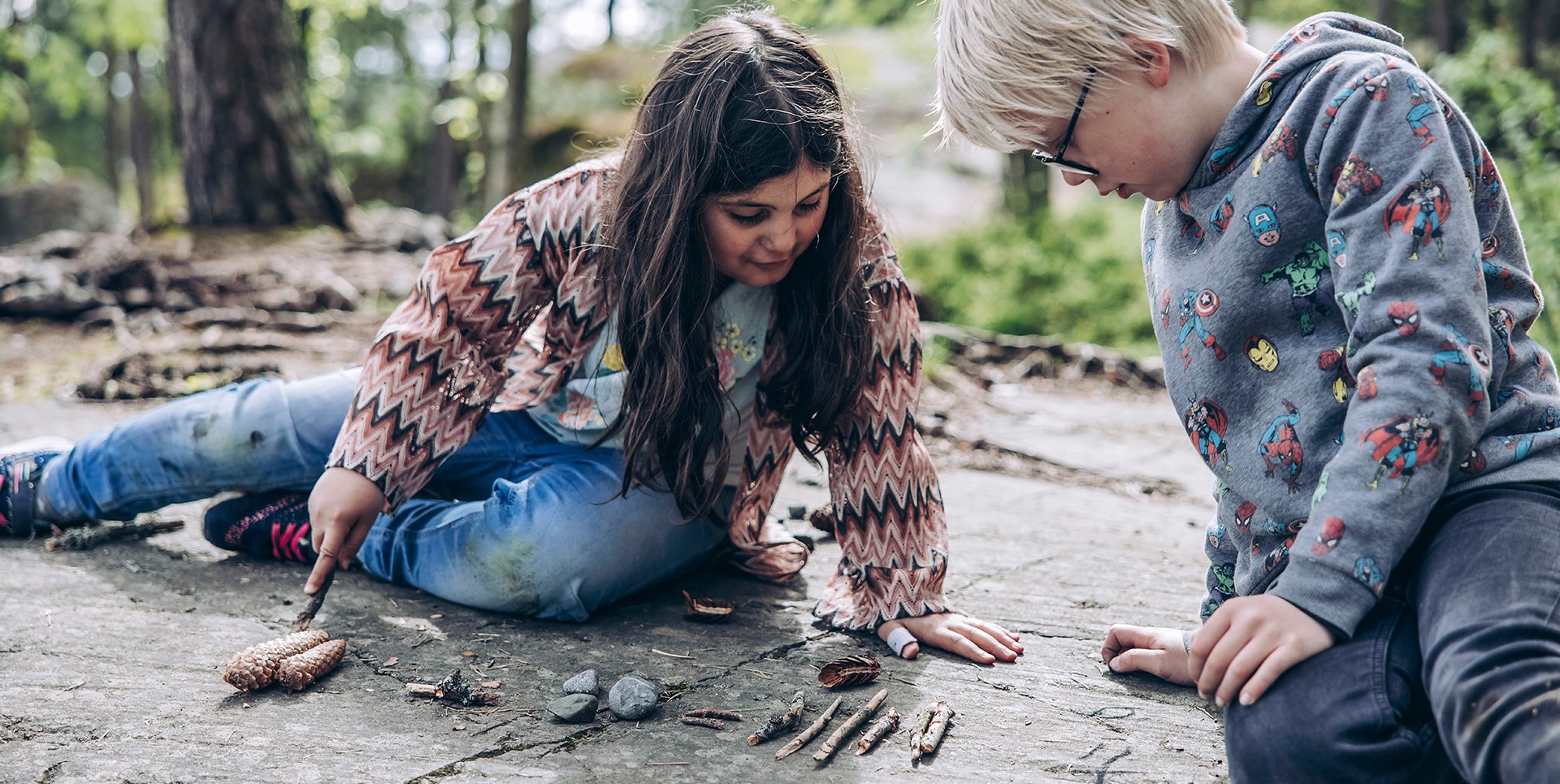
Kuvassa työttä ja poika ratkovat matemaattista tehtävää kävyillä ja kivillä kalliolla istuen.

In spring 2013 the LUMA Centre launched a novel science club model for 3 to 6-year old children. Project coordinator Jenni Vartiainen gives her insights on the design-based research project.

Curiosity towards our surroundings is something we recognize as a deeply human characteristic.

This ability to wonder is linked to our ability and willingness to learn new things. Small children especially display candid interest in everyday phenomena. For adults these phenomena have long since lost their novelty, but upon reflection they may reveal fundamental matters about the world and nature. By encouraging children’s curiosity educators can support and nourish their awareness of natural phenomena and even spark further interest in science.

First steps into STEM

Researchers at Finland’s Science Education Centre LUMA have explored ways of supporting the curiosity and interest of young children. Project coordinator Jenni Vartiainen used design-based research to develop a science club model for 3 to 6 year-olds.

The club model draws on the principles of socio-emotional learning to construct informal and inspiring STEM learning environments for young children. “Design research is an excellent way to develop a completely new approach. It is a great tool for analyzing the achievement of set goals and for redefining aims and research questions in further development cycles,” Vartiainen describes her method.

How to engage young children and their families in science?

The first clubs were organized as a pilot project in spring 2013 in Helsinki for 25 children in total. The club meetings were held for two age groups, 3 to 4 year-olds and 5 to 6 year-olds.

A similar structure was used for the club meetings in both age groups consisting of three stages: motivation, inquiry and sum up. In each meeting a different theme was explored, for example colors, density, space and dimensions and states of matter. In addition to the scientific themes and activities the club sessions were built on the development of social and emotional skills and motivation through art, narratives, music, drama and play. Repeated elements such as familiar songs were employed to emphasize a sense of security and familiarity in the children.

According to Vartiainen successful engagement in STEM begins with promoting a child’s natural ability to wonder and explore their surroundings.

“In my opinion it is crucial to familiarize children with the role of natural sciences and mathematics in their daily lives and to help them connect everyday phenomena to science and technology,” she says and continues to explain how “Long-term engagement cannot be sparked with cheap tricks. Children should be given a chance to wonder and ponder on something that interests them and, with the guidance of an adult, to realize their own solution. Interest and motivation in children is often awakened by exploring together the diverse ways in which natural sciences, technology and mathematics affect our lives.”

The club model encourages parental involvement and the participation of families. Vartiainen gives an example of how families participate: “After each club session the children are given an activity or excercise to be completed at home together with the rest of the family. The homework includes for example mathematics puzzles and simple practical experiments with household equipment. Parent can help the children record their answers, solutions and questions, which are discussed together at the next club meeting.”

According to feedback from the participants in the pilot clubs the model had successfully achieved its goals of increasing enthusiasm and curiosity towards natural sciences and supporting the development of personal thinking skills as well as social skills.

“The science clubs have been very important for the children: every club meeting is eagerly awaited and the children want to continue with the experiments at home. The dramatization of guide roles and the narrative framework have been successful in helping the children immerse themselves in inquiries and experiments,” says Vartiainen.

Vartiainen’s current research focuses on analyzing the questions children asked during club discussions and in developing new concepts based on the pilot club model.

“Our next plan is to launch virtual science clubs to increase the number of children involved in this kind of informal STEM education. Virtual clubs have the advantage of wider availability as participation becomes possible for children living further away,” Vartiainen reveals about future plans.

Next steps: virtual clubs to offer possibilities for all

Vartiainen sums up that there is a growing need for science clubs for young children. “Currently we need to solve the challenge of spreading and sharing the club model. The number of willing participants far exceeds our capacity and sadly we are not able to offer a club spot for all. This is an indication that despite the demand there are limited opportunities for science hobbies at a young age,” she says.

For Vartiainen, the best feedback comes directly from the responses of the young club participants: “Every time it moves me to see how fascinated the children are when they understand what they are doing and find a solution to the task at hand. The best reward is to witness how young eyes are lit by the excitement of discovery: “I understood, I figured this out, I could do this!”

Read more from Vartiainen, J., & Aksela, M. (2013). Science clubs for 3 to 6-year-olds: Science with joy of learning and achievement. LUMAT, 1(3), 315–321.

Text: Maija Pollari. Photo: Elisa Lautala.

Evästeasetukset
LUMA-kukka ilman tekstiä

This website uses cookies so that we can provide you with the best user experience possible. Cookie information is stored in your browser and performs functions such as recognizing you when you return to our website and helping our team to understand which sections of the website you find most interesting and useful.

You can adjust all of your cookie settings in this view.

Strictly Necessary Cookies

Strictly Necessary Cookie should be enabled at all times so that we can save your preferences for cookie settings.

Analytics

This website uses Google Analytics to collect anonymous information such as the number of visitors to the site, and the most popular pages.

Keeping this cookie enabled helps us to improve our website.