LUMA Centre Finland Invites All Nations to StarT

StarT brings people together to celebrate the joy of learning – we would like to take this opportunity to warmly welcome you into the project. StarT promotes interdisciplinary, project-based and phenomenon-based learning – it puts science and technology into a context that is relevant for students and makes learning exciting and meaningful.

The project has been launched in honour of Finland’s centennial by the LUMA Centre Finland, and its network of cooperation partners. Schools, kindergartens, families and extracurricular activity groups from all around the world are invited to take part in StarT to share the excitement of collaborative learning. The project involves students carrying out science projects, which will be on display at science fair events organized as a part of StarT.

The main objective of StarT is to emphasize the role of the school or kindergarten as a collaborative learning environment. Project work is a wonderful and effective way to learn in a collaborative, interdisciplinary, and phenomenon-based way! The project topics in StarT are free of choice – the only requirement is a connection of some sort to science, mathematics, or technology and to StarT’s themes. They could be small-scale projects or longer learning modules related to, for instance, space, health and environment, designing mobile toys, programming robots, learning about scientific innovations through drama, or perhaps thinking about the function of mathematics in everyday life and art. StarT encourages schools and kindergartens to develop their own model of integrative project-based learning that works best for them!

The StarT five star programme deals with science, technology, art, career, and the future. It focuses around seven central themes, which can give ideas for the project work:

1. Everyday Mathematics
2. Nature and environment
3. Programming and robotics
4. Stars and space
5. This works: Mobile toys
6. Technology around us
7. Well-being (health, food, exercise)

StarT gives student projects and educational models developed by schools and kindergartens the visibility and fame they deserve through science fair events and the media. In the project student projects and innovative ideas are displayed and awarded. Welcome along!

The registration to sign up as a StarT learning community is open on the website from May to December 2016. Projects are to be carried out in schools, kindergartens, extracurricular activity groups and families from September 2016 to February 2017. Each community is free to decide on the exact duration of the project.

From January to February 2017 communities are free to organize their own StarT fairs in their own country, if they wish to, and report these in the Best Practices section of StarT. By the end of February 2017, the schools need to have submitted their top projects and best practices (submitted separately) through the StarT website. Extracurricular activity groups and families apply for nomination with their projects separately through the website. The StarT jury will assess the submitted projects and choose the ones that will make it to the StarT final.

The final – the international StarT gala – will be organized in Finland in May 2017. All participating groups will receive a StarT diploma, and other awards will be decided on by the StarT jury at a later date.

LUMA Centre Finland launches StarT initiative as a part of Finland 100 celebrations.

We kindly ask you to pass on this invitation to other schools in your home country. All are warmly welcome to StarT!

Let’s be in touch! Welcome, once more, to StarT!

More information about StarT »

Best regards,

Professor Maija Aksela
StarT Director
University of Helsinki, Finland / LUMA Centre Finland
StarT of a New Project-based Operating Culture in Schools

LUMA Centre Finland will celebrate the 100th anniversary of Finnish independence by launching an innovative StarT initiative to give concrete tools and practical support for implementing interdisciplinary project work in schools and hobby groups. The aim of StarT is to create a novel operating culture focusing on project work by children and youth to support the Finnish National Curriculum. The most distinguished projects will be presented in regional StarT Festivals and national StarT Gala. Through StarT, every child and youth can be a Star!

StarT is all about building the future through science, technology, research, arts, skills, volition, wellbeing, emotions, and teamwork.

Communality and learning through projects
In StarT model, children and youth, aged 3 to 19, work on bigger or smaller science and technology projects in teams. The goal is to implement project work in kindergartens, schools and hobby groups in close collaboration with e.g. universities and businesses.

Learning material and ideas for projects
LUMA Centre Finland will produce material in Finnish and Swedish (and partly also in English) to support the project work. All material will be freely available on StarT website that is also the hub for spreading good practices and providing online support for instructors. In addition, StarT will offer training in project work for teachers and instructors at all levels of education.

Enthusiastic StarT ambassadors help in implementation
LUMA Centre Finland will train Finnish pre-service science teachers and engineers as well as other volunteers to be StarT ambassadors, who will help the kindergartens, schools and hobby groups to launch project work and acquire StarT operating culture.

Combining science and arts in learning
Through combining science and arts it is possible to implement communal activities such as science theatre. The aim is that the projects will combine science subjects, mathematics, and technology in creative ways with other disciplines and forms of art, such as music, visual arts, drama, and physical exercise.

Every child can be a Star!
StarT is a four-step model. The possibility to move on to the next level motivates the children or youth in their project work. Each participant gets recognition for their work at StarT Days, held at their kindergarten, school or hobby group, where all projects are presented. The projects that are voted the best will move on to regional StarT Festivals, where the participants’ peers can cheer the team. The best teams will be awarded at the national StarT Gala.

More information on StarT coming soon at LUMA.fi and in LUMA newsletter.

LUMA Centre Finland launches StarT initiative as a part of Finland 100 celebrations.

The collaborative partners will be announced later.

The aim is to implement StarT to be part of Finnish education culture.

Text: Jenni Vartiainen. Translation: Elisa Lautala.

Sustainable Energy in Education MOOC starts on January

Sustainable Energy in Education is an international massive open online course for STEM teachers. The course, organized by LUMA Centre Finland, is an excellent introduction to current themes in sustainable energy and offers ideas and material on integrating the topic in STEM education.

Global challenges and their impacts on ecosystems, biodiversity and human lives have become a part of our daily lives through media coverage and even personal experiences.

Sustainable energy refers to producing and using energy in a way that supports sustainable development. Therefore, sustainable energy is not only renewable, it also supports social and economical sustainability

Inventing new sustainable solutions to worldwide climate and energy challenges requires a better understanding of these interconnected issues. What are our current options? How could we develop better technologies to counter negative human impact on the planet?

Enabling a sustainable future for young generations is a major concern. The theme integrates smoothly into several STEM subjects and it could be beneficial to discuss the theme with students.

Join the MOOC on Sustainable Energy in Education

Sustainable Energy in Education is an international English-language MOOC organized by the LUMA Centre Finland. The course is organized free of charge and it is aimed at secondary school teachers, teacher students, teacher educators and other education experts who are interested in the topic.

Starting on January 18th 2016, the course delivers a concrete look into the processes, technologies and development of sustainable energy solutions. It also offers practical pedagogical ideas, materials and resources for integrating the theme in STEM education.

The course materials include contributions and materials from Finnish researchers, experts and other professionals involved in sustainable energy and STEM education research.

Participants have until June 5th, 2016 to study the materials and to work on the required assignments. The estimated time required for completing the course is 30 hours.

Director of the course is Professor, Dr. Maija Aksela, University of Helsinki, Finland.

You are warmly welcome to the course!


Course dates: January 18th – June 5th, 2016

The detailed schedule will be published on the course platform at latest on January 18th.

Create account at mooc.helsinki.fi and enrol yourself to the course. Please register at latest on January 31st.

Finnish STEM Teacher Education in Motion

Finnish STEM teacher education pulls its ranks together in a new discussion forum which aims to strengthen collaboration between universities’ teacher training units and to promote the development of STEM teacher education. A recent special issue of the LUMAT journal gives insights into current trends of STEM teacher education in Finland and casts a look into future targets.

Teacher educators shape the future. They have a key role in training and educating motivated teachers who will put their skills and knowledge to use in schools. Although teaching as a profession is still valued highly in Finland, it is important to make sure we will have enough enthusiastic STEM teacher students and skilled teachers also in the future.

Strengthening STEM teacher education and teachers’ continued professional development is one of the goals of LUMA Centre Finland.

Finnish STEM teacher education is based on research, which is an important tool for developing new teaching innovations. Significant advantages could also be achieved through meaningful collaboration between different departments at universities and teachers training schools.

In 2014 these aspirations took a step forward when a national forum for STEM teacher educators was established. The initiative – set up to improve and invigorate STEM teacher education – includes STEM teacher educators from universities and institutes around Finland, and extends connections to policy makers as well.

Emphasis was first put into creating connections and increasing co-operation between teacher educators and education researchers. Their aim is to meet biannually to discuss timely issues on education and research, and to find ways to drive STEM teacher education forward.

For example the directions and demands of the ongoing curriculum reform in basic education are taken into account in planning and developing STEM teacher education. These include a stronger emphasis on inquiry-based learning, the use of technology, integration of subjects and the use to non-formal learning environments, to mention a few.

Innovations and news from STEM teacher education forum were gathered to a special issue of the LUMAT (Research and Practice in Math, Science and Technology Education) journal, which highlights the enthusiasm and creativity of Finnish STEM teacher educators.

Published on October 29th 2015, the issue provides a thorough overview of the current trends in STEM teacher training in Finland and some interesting outlooks into future pedagogical innovations.

It includes 13 general articles, three research articles and two perspective article.

The editors of the journal hope to encourage wider discussion about STEM teacher education and to advance its progress in Finland.

LUMAT 6/2015

Millennium Youth Course – Sustainable Energy

Are you interested in exploring current issues in one of the most important global challenges of our time? The first international Millennium Youth Course on sustainable energy kicks off on November 21st 2015. This international MOOC will offer an overview not only on modern technologies but also on the societal and economic aspects of sustainable energy issues.

Sustainable energy refers to producing and using energy in a way that supports sustainable development. Therefore, sustainable energy is not only renewable, it also supports social and economical sustainability.

Starting on November 21 st 2015, the first Millennium Youth Course offers young people around the world the chance to broaden their knowledge on current solutions and technological advances in sustainable energy issues.

The MOOC is aimed at 15+ year-old young adults from all corners of the world who are interested in learning more about global challenges and how energy could be produced in a more sustainable way.

Diverse views into the challenges and solutions of global energy issues

The Millennium Youth Course -Sustainable Energy MOOC will explore the possibilities and challenges of sustainable energy production and usage and broaden your view on energy production, energy policy and energy efficiency.

The main aims of the free of charge course are to increase students’ understanding of sustainable energy and its production based on the latest research and technological innovations, to help them understand future energy production as a complex system and to increase their ability to evaluate the role of sustainable energy in their everyday life choices. The course also encourages students to critically follow and participate in societal and technical discussions on sustainable energy.

Top Finnish researchers and business representatives have been brought together to provide the material for this learning experience.

The organizers hope this course will inspire You to join the ranks of those who are trying to create a better world through innovative energy solutions.

The course is organized by LUMA Centre Finland, University of Helsinki and Aalto University in co-operation with Technology Academy Finland.

It celebrates the fifth anniversary of the International Millennium Youth Camp and highlights the Millennium Technology Prize awarded every other year by Technology Academy Finland.

The course is headed by professor Maija Aksela, director of LUMA Centre Finland.

“Our goal for the first Millennium Youth Course MOOC is to inspire young people to study STEM subjects by showcasing Finnish scientists, know-how and opportunities in sustainable energy research and business. After all our motto is “together we are more,” encourages professor Aksela.

The first Millennium Youth Course starts on November 21st 2015 and ends on December 31st 2015.


ECRICE 2014 Conference Proceedings: New Trends in Research-based Chemistry Education

Explore new trends in research-based chemistry education. The recent special issues of the LUMAT: Research and Practice in Science, Technology and Mathematics Education journal present proceedings of the 12th European Conference on Research in Chemistry Education held in Jyväskylä, Finland in July 2014.

The 12th European Conference on Research in Chemistry Education (ECRICE 2014) held in Jyväskylä, Finland, explored the theme “new trends in research-based chemistry education”.

Proceedings from the ECRICE conference have recently been published in two issues of the LUMAT: Research and Practice in Science, Technology and Mathematics Education –journal. The proceedings include both research papers and general articles from studies presented at the ECRICE conference.

STEM education, learning and teaching is rapidly changing around the world. Currently STEM teachers in many countries are experimenting with new, student-centered, inquiry-based approaches, bringing technology and virtual learning tools into the classroom and boldly introducing students to non-formal learning environments to engage and motivate them. The ECRICE conference was a platform for sharing research and practical knowledge about such experiments.

Highlights include results on STEM curriculum reforms and their implementation in teaching, out-of-school learning environments and the impact of inquiry-based approaches on STEM learning.

First volume of ECRICE2014 conference proceedings in the LUMAT special issue 3/2015.

Second volume of ECRICE2014 conference proceedings in the LUMAT special issue 4/2015

LUMAT: Research and Practice in Math, Science and Technology Education publishes peer-reviewed scientific articles, perspective articles and general articles in three languages, English, Finnish and Swedish. The journal is published by LUMA Centre Finland and all content is open access.

ESERA 2015: Collaboration Is Key

The 11th Conference of the European Science Education Research Association (ESERA) brought STEM education experts from all over the world to the Finnish capital, Helsinki, last week.

About 1300 participants–from almost 60 different countries –traveled to the ESERA 2015 conference in Helsinki to discuss and share research, designs and practices within the theme “Science education research: Engaging learners for a sustainable future”.

While underlining the importance of sustainability, the conference theme was flexible enough to allow the merging of different approaches and viewpoints. The programme was packed with interesting sessions, talks, posters and presentations. One could choose, for example, to focus on the role of context in science education or importance of pedagogical content knowledge.

It was not a great surprise that the poster session on informal, non-formal and outdoor education was one of the most popular ones on Wednesday September 2nd. The topic attracted a big crowd and soon the room was bustling with excited conversation.

Collaboration between teachers is the key to relevant science education

The session on Environment looked into climate change, sustainable development and even ecological considerations. Dr. Heba EL-Deghaidy from the American University in Cairo presented a conceptual model which integrates STEAM education with sustainable development.

“The model I’m presenting is trying to make science as relevant as possible – not only to the students to make use of it in their daily lives but also to address the needs of the society, which relates to the environmental and economical aspects of sustainable development,” she says.

EL-Deghaidy hopes that the model will progress to pilot testing in schools so that students and teachers will be able to implement the learning modules the project is producing.

She encourages teachers to work together in order to learn from each other and to make science more relevant to the students.

“Collaboration, that’s the key to it. [Teachers] need to work together with various teachers in the other disciplines and I think that requires –depending on the country –a shift in culture. Knowing that teachers work on their own, science teachers only deal with other science teachers, math teachers only deal with other math teachers –so I think it needs to change in terms of working culture so they can sit down and do some planning together.”

Visibility and international contacts

The ESERA conference is the largest Science education conference in Europe. Conference secretary Kaisa Hahl was happy that the participants were enjoying the event:

“We have received a lot of positive feedback –all the way from the start there has been a very positive energy, people are obviously so excited to be here. People have spontaneously given positive feedback about the arrangements. We’ve had some challaneges but mostly everything has gone smoothly. Our student assistants have been praised that they are cheerful, helpful, active and speak excellent English.”

According to Hahl the ESERA 2015 conference promotes the visibility of the University of Helsinki and the city itself. She also hopes that networking in the conference will help researchers establish international collaborations and contacts.

“And of course it would be great if STEM teachers could try out the new teaching ideas and methods that have been discussed here at the conference,” she says.

Text: Maija Pollari.

Sustainable Development Needs a Holistic Approach

Researchers call for holistic and student-centered approaches in sustainable development education. Two PhD theses form the University of Helsinki focus on sustainable development education bringing new knowledge and suggestions on meaningful and relevant approaches in STEM teaching.

Global environmental problems are dramatically affecting natural environments and, ultimately, the way we live. Science and technology are generally recognized as the best options to deal with global challenges including climate change and to secure a sustainable future.

To drive forward sustainable development we need more science, technology and engineering experts who are aware of the complex environmental, societal and economical aspects of the issues at hand. In education development could be used as a meaningful and relevant context to engage students in learning.

Two recent PhD dissertations published at the University of Helsinki examine the role of sustainable development education and propose new pedagogical methods.

In her thesis Marianne Juntunen carried out design research to study the features of holistic and inquiry-based learning methods in sustainable development education in the context of secondary school chemistry. Her aims were to explore sustainable development education through varied approaches such as green chemistry, product life-cycles analysis, argumentation and environmental literacy.

“Students find it relevant when content knowledge in chemistry is connected to societal aspects and action competencies. When the context of the subject is personal in some way students are interested in learning. It also increases the students’ ability to take actively part in building a sustainable future,” Juntunen says.

Sakari Tolppanen shares Juntunen’s holistic point of view in sustainable development education.

Tolppanen’s PhD thesis focused on sustainable development education from the point of view of gifted international students. To discover what the students found relevant about sustainable development and its education he analyzed the types of questions the students asked about sustainable development, what actions they took to make a difference and what kind of expectations they had from non-formal education, a science camp, with the theme of sustainable development.

“Young people have an essential role in building a sustainable future so it is very important to take into account their questions, actions and expectations in teaching sustainable development. This approach would also help them to develop a cross-disciplinary understanding of sustainable development,” Tolppanen says.

”The students were interested in both scientific, societal and ethical questions regarding sustainable development. The results indicate sustainable development education should be holistic instead of separating the scientific side from the social and ethical questions,” he continues.

According to Tolppanen’s studies STEM teachers should move towards student-centered learning by taking the students’ questions and interests into account in sustainable development education.

”Sustainable development education could use the opportunity to give students more autonomy and responsibility of their own learning,” Tolppanen concludes.

Read more:

Juntunen, M. (2015). Holistic and Inquiry-Based Education for Sustainable Development in Chemistry. Department of Chemistry, Faculty of Mathematics and Natural Sciences, University of Helsinki.

Tolppanen, S. (2015). Creating a Better World – Questions, Actions and Expectations of International Students on Sustainable Development and Its Education. Department of Chemistry, Faculty of Mathematics and Natural Sciences, University of Helsinki.

Text: Maija Pollari.

New Export Product: Science Education for Kids

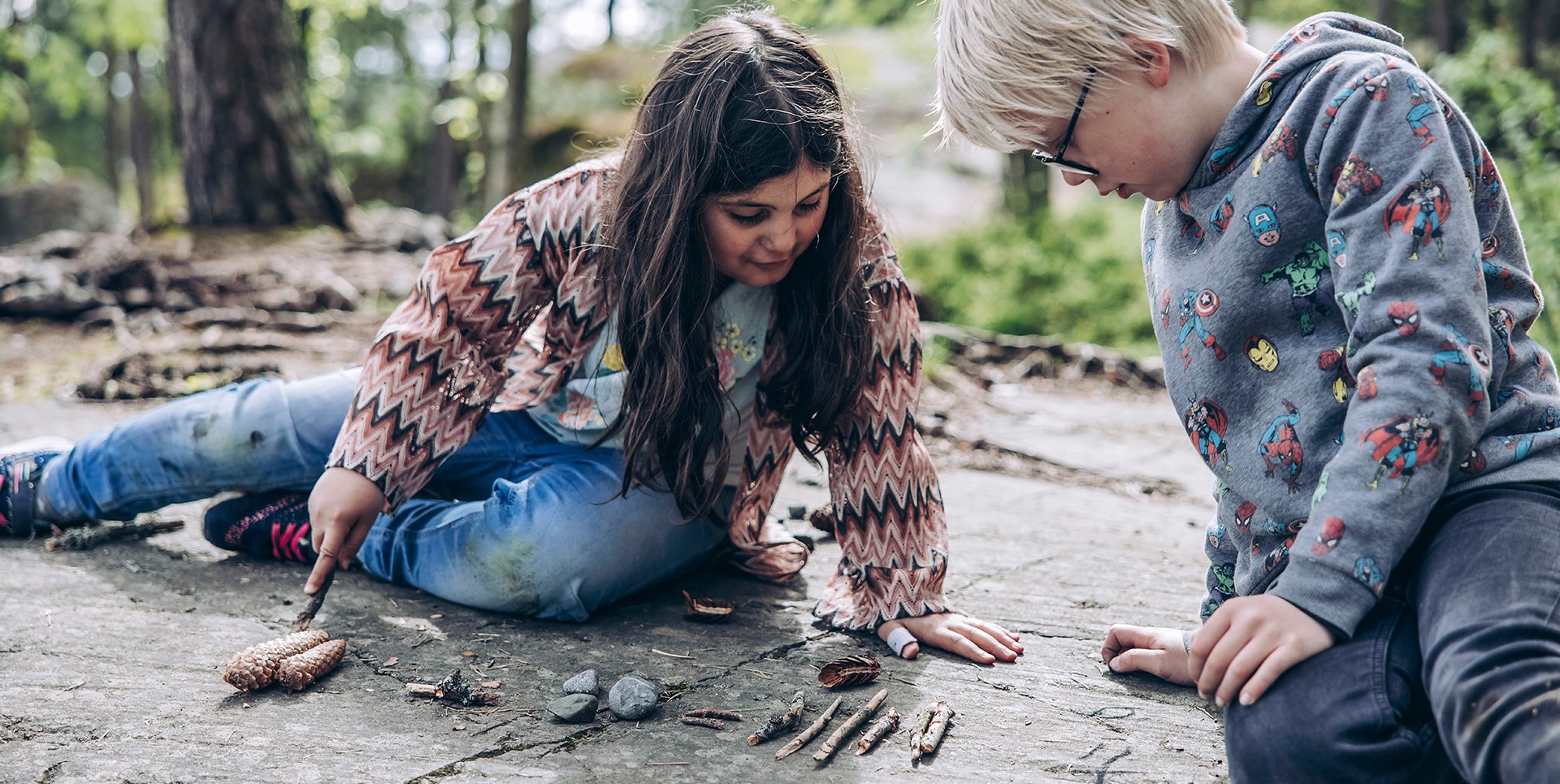
Kuvassa työttä ja poika ratkovat matemaattista tehtävää kävyillä ja kivillä kalliolla istuen.

Finnish innovations spread the joy of math and science learning to kindergartens, families and online environments. Virtual clubs and science classes are being made into export products, offering research-based learning and teaching.

The LUMA Centres of Finnish universities inspire children and young people to study science, technology, engineering and mathematics (STEM), develop learning innovations, and educate teachers.

The Centres’ best known education products include science clubs and camps. Science classes for school children are also very popular. The Gadolin chemistry lab in Helsinki, for example, caters to over 4,000 children a year. The classrooms also offer an opportunity to study which teaching methods work and why they do so.

The network of LUMA Centres is led by Professor Maija Aksela of the University of Helsinki, who is one of the most innovative developers of Finnish education.

Aksela knows that small children learn better through games, play and stories. Their learning is based not only on intellect, but also on emotion. Research indicates that early experiences of comprehension and success are the best support for later education at school.

Little scientists at home

One of the latest novelties is the Jippo virtual club, based on cutting-edge research, which introduces 3–10 year-olds to online science at home. The participants receive weekly videos with a math- or science-related exercise, which they can solve at home and then discuss the results at the club sessions.

Since children learn through play and joy, the pleasure of comprehension and success is very important. The clubs are a hobby shared by the entire family.

Graduate student Jenni Vartiainen, who coordinates the Jippo project and has developed the virtual clubs, emphasises the extensive research behind the clubs.

“Everything is based on research on elements that support learning,” she says.

Chemistry and physics have not been discussed much in Finnish kindergartens, because the staff often feel they do not know enough about the fields. Virtual clubs offer tools and learning material for science education in day care. Even three-year-olds can study natural science phenomena through games and play.

Finnish miracles

Both the science classes and the Jippo virtual clubs have attracted a great deal of attention outside Finland.

“We aim at education export,” says Vartiainen. “Science education for small children is getting lots of attention, and Finland has a good reputation for education. Little research has been conducted in this field, and the topic carries novelty value.”

Maija Aksela is also familiar with the interest shown towards the Finnish school system. Thanks for this go to the high standards of the universities’ teacher education and Finland’s good results in PISA surveys.

“Teachers influence society for a century – first through their own careers and then through that of their pupils and students,” Aksela points out. “As long as teachers and universities interact and learn from one another, the latest research data can spread throughout society.”

 Text: Kimmo Luukkonen. Photo: Elisa Lautala.

STEM Education Meets Citizen Science

The Finnish Meteorological Institute puts science into high school STEM courses by offering students the possibility to collect actual data and to do real science alongside researchers. Mixing citizen science with STEM education could benefit both in the future, thinks researcher Atte Harjanne.

The 5T project coordinated by the Finnish Meteorological Institute offers high school students the opportunity to participate in actual research under the guidance of scientists. The two-year project is financed by the Finnish Ministry of Education and Culture.

Participation in the project is open to all interested high school groups. The process usually begins with a visit to the FMI in Helsinki where the students meet the scientists and get an overview of the research topics. The students can choose their projects among several themes, for example measurements of the depth and coverage of snow, phenology, the amount of pollen, observations of the Aurora Borealis and climate change actions taken by local communities. They can also help by designing novel mobile weather services -some may even have the skills to code these applications.

In the field the students contribute to research by for example making observations on different phenomena in their everyday environment. The work can be included in a STEM subject course or it can extend over a longer period of time and include several subjects.

The role of the teacher is to integrate the research projects to the context and pedagogical goals of the subject or course.

Citizen science benefits both researchers and the public

The 5T project links the traditional aspects of outreach and STEM education with the trending global movement of citizen science, says the project’s contact person, researcher Atte Harjanne from FMI:

“Citizen science is a rising trend around the world. It is a big thing especially in meteorology and climate research, which rely on observations.”

Millions of people around the world have already participated in citizen science projects that take advantage of the power of crowdsourcing. Anyone with a smartphone can participate in making and recording observations or simple measurements or screen data for specific findings.

Citizen science could become a powerful tool in STEM teaching: interest in the natural sciences and STEM education could benefit from citizen science as students will feel more involved with research.

“The kids will get an idea of what STEM areas could offer as a career choice and they will be more familiar with how science is done in real life. Our aim is to study if and how participating in this project changes the students’ conceptions about science,” Harjanne says.

According to feedback from the students and teachers contributing to research motivates the students and has engaged them successfully in STEM studies.

So far snow has been the most popular research topic. Harjanne thinks this could be due to the straightforward and scalable nature of the tasks. “Snow measurements were probably the most easily approachable topic also from the teachers’ point of view,” he says.

The project has received positive feedback also from the researchers who, according to Harjanne, are happy with the work of their teenage research assistants. The students collect real data, Hajanne emphasizes: they are a part of actual research.

“We expect all students to do their best in the project: all observations must be made carefully and recorded diligently according to the researchers’ instructions. Otherwise they are of no use to science.”

The Finnish Meteorological Institute offers information, open access data and educational resources on climate and climate change: Visit the Climate Guide portal.

Text: Maija Pollari.

Evästeasetukset
LUMA-kukka ilman tekstiä

This website uses cookies so that we can provide you with the best user experience possible. Cookie information is stored in your browser and performs functions such as recognizing you when you return to our website and helping our team to understand which sections of the website you find most interesting and useful.

You can adjust all of your cookie settings in this view.

Strictly Necessary Cookies

Strictly Necessary Cookie should be enabled at all times so that we can save your preferences for cookie settings.

Analytics

This website uses Google Analytics to collect anonymous information such as the number of visitors to the site, and the most popular pages.

Keeping this cookie enabled helps us to improve our website.