StarT – Inspiring Learning Together Worldwide

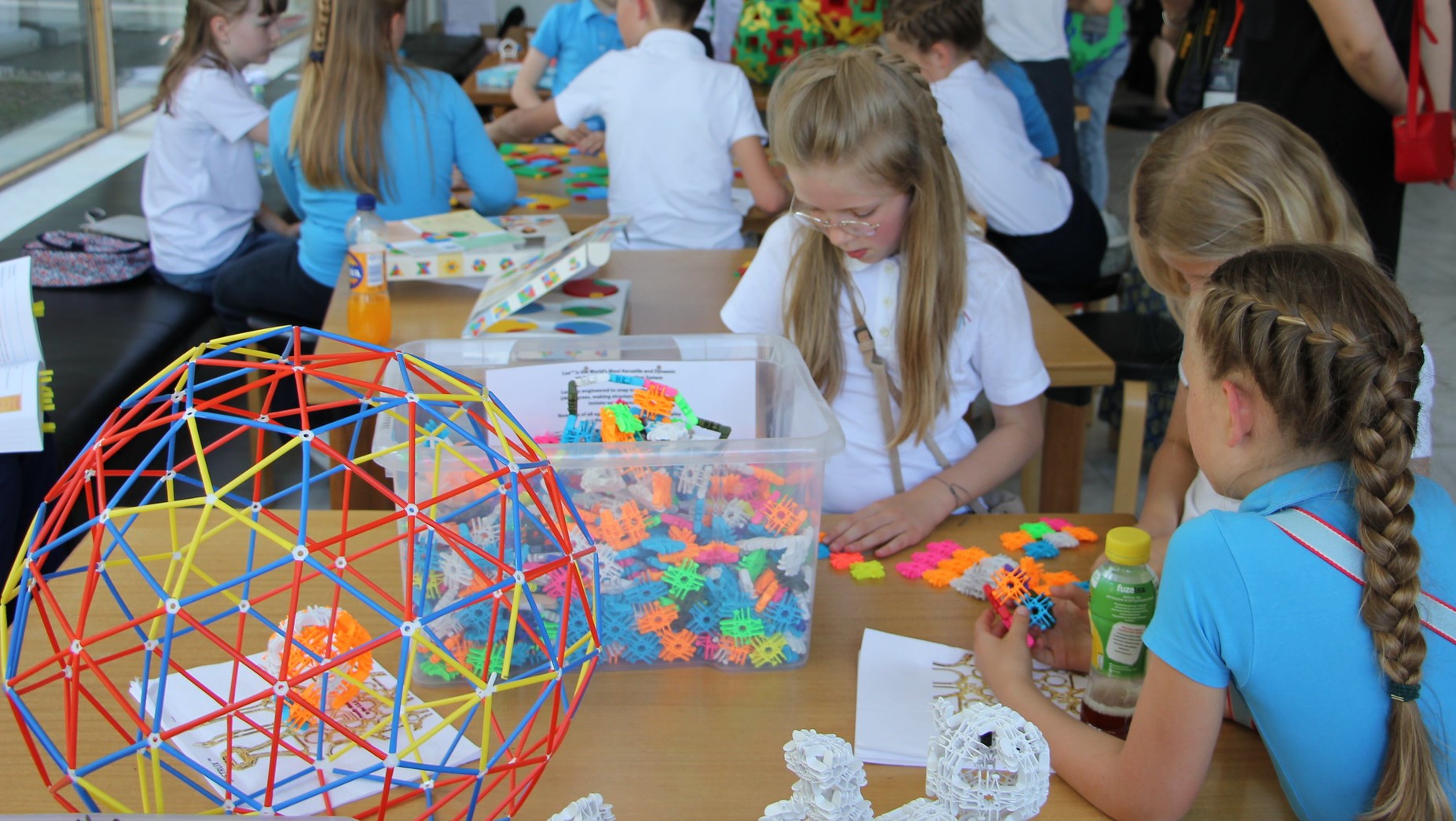
Lapset työskentelevät StarT-kerhossa. Kuva on vuodelta 2019.

Since 2016, StarT, created by LUMA Centre Finland, has grown into a global movement that transforms science, mathematics, technology, and sustainability education through creativity and collaboration. The name says it all: every child and young person can be a Star, and the T stands for teamwork. At its core, StarT is about learning together through projects and sharing ideas across borders to make education meaningful and exciting.

StarT ignites curiosity and creativity, empowering children, young people, and educators to imagine, design, and share projects that offer solutions to real-world challenges, guided by their own passions and questions. These projects often explore themes such as sustainability, climate solutions, and innovative technologies, encouraging learners to apply scientific thinking to issues that matter. Along the way, participants develop essential skills like problem-solving, communication, and collaboration.

From 2016 to 2022, the International StarT LUMA Competition brought together thousands of participants from more than 60 countries. Each year culminated in the International StarT Gala, a vibrant celebration of creativity and best practices, where young innovators and educators inspired one another. In addition, local LUMA Centres have organized regional StarT festivals with award ceremonies in Finland. Many of the projects and teaching practices are freely available in our open material bank.

Since 2023, StarT has expanded through the International StarT LUMA Science Clubs Programme, linking formal education with informal learning environments. These clubs, co-designed through research, offer children, teachers, and student teachers opportunities to engage in project-based STE(A)M learning beyond the classroom. StarT LUMA also inspires families: they are welcome to join the final club session and see their children’s projects. Read more from the LUMAT Journal.

An open online course on project-based learning supports teachers and educators with implementing clubs and projects that foster creativity, collaboration, and culturally sustainable practices. As highlighted in The Best Day I’ve Had in Ages – Learning Together in a Science Club, these experiences spark joy and curiosity, reminding us that science is a shared adventure.

Today, StarT is more than a programme; it is a community-driven platform for sustainable STE(A)M education, aligned with global goals and local needs. It invites everyone – students, teachers, and families – to become co-creators of knowledge and solutions. By fostering creativity and a sense of agency, StarT helps young people see themselves as active contributors to a better future.

StarT is a movement for learning together, shaping a world where science and collaboration lead the way towards sustainability. Whether through innovative school projects, inspiring teaching practices, or international networking, StarT continues to light the path for educators and learners worldwide.

Nowadays, the StarT LUMA Programme also serves as an international research and development initiative within the LUMAlab Gadolin. To date, several research papers have been published in this context, including:

    For more information:
    Director, Professor Maija Aksela, and Project Manager, Dr Outi Haatainen
    LUMAlab Gadolin Hub

    LUMAT special issue discusses STEAM in education

    The special issue “Promoting STEAM in education” has now been published in the LUMAT journal. STEAM (science, technology, engineering, art/aesthetics/architecture/all and mathematics) has been an increasingly popular approach in education. However, what it entails theoretically and practically, is still unclear. 

    To address the challenges of the 21st century skills, there is a need to educate citizens capable of seeing and exploring the interconnections within STEM subjects and between STEM and other areas. It is also important to educate teachers who can support students in becoming STEAM-literate citizens. We need to educate students who understand basic science and mathematics, and in addition to that, who are curious and knowledgeable about how things work (engineering), and how modern technology is affecting our life. In addition, it will be required from tomorrow’s leaders to be able to make connections between fields, such as between  STEM and arts (STEAM), STEM and social sciences, STEM and policies.

    The STEAM-special issue includes an editorial and three articles that challenge us to rethink STEAM education, reveal the potential of STEAM, and offer ideas for future research. 

    Articles offer insights on the practical applications of STEAM education

    The editorial (Jaana Herranen, Erik Cyrus Fooladi, and Marina Milner-Bolotin) introduces some key notions, discourses, and challenges of STEAM education, as a relatively novel concept and briefly discusses the history of STEAM and its evolution over the last decades. It also problematizes STEAM and its roots through asking a question: What is “A” in STEAM representing?

    The first article (Seamus Delaney and Daniel White), “Full STEAM ahead, but who has the   map? – A PRISMA systematic review on the incorporation of interdisciplinary learning  into  schools”, reviews existing literature on interdisciplinary STEAM learning and teaching in high schools. The reviewed articles showed that improved learning outcomes, such  as  better  results in academic tests, could be achieved in project- and  problem-learning environments.   In  addition,  the authors  find  that  STEAM-based  approaches  in  interdisciplinary  teaching could potentially increase  student  collaboration and interaction with professionals. 

    The  second  article  “Promoting  STEAM  learning  in  the  early  years:  ‘Pequeños Científicos’  Program”  (Valeria  Cabello,  Maria  Loreto  Martinez,  Solange  Armijo  Solis, and Lesly Maldonado) describes and examines a non-formal education program among   3–10-year old children. The  article  discusses the strengths, weaknesses, and opportunities of the program based on the perceptions  of  the  students,  teachers,  and  educators. A  number  of  strengths  of  the  program  were  identified: the  students  were  engaged  in  learning processes; holistic perspectives  and  integration  between  STEM  and  ‘A’  were achieved  and  clear  signs were found of increased motivation and interest among the participants. One of the major  challenges  identified  in this  program  was  the handling  of  young  learners’ emotions, frustration and behavior by an all-scientists/artist staff with limited or no pedagogical background in handling such issues.

    The third article “Promoting student interest in science: The impact of a science theatre project” (Lydia  Schulze  Heuling) reports  on  a science  theatre  project in  a  heterogeneous teaching context in a disadvantaged area, and its effects on students’ interest in STEM and their artistic expression. The quantitative analysis presented in the  study  indicated an increased student interest  in  the  topic  of  galvanization,   and physics  and  chemistry  in  general. In  addition,  the  approach  resulted  in  increased student appreciation of artistic practices and positive classroom spirit, knowledge of cultural  practices, and student self-confidence.


    Evästeasetukset
    LUMA-kukka ilman tekstiä

    This website uses cookies so that we can provide you with the best user experience possible. Cookie information is stored in your browser and performs functions such as recognizing you when you return to our website and helping our team to understand which sections of the website you find most interesting and useful.

    You can adjust all of your cookie settings in this view.

    Strictly Necessary Cookies

    Strictly Necessary Cookie should be enabled at all times so that we can save your preferences for cookie settings.

    Analytics

    This website uses Google Analytics to collect anonymous information such as the number of visitors to the site, and the most popular pages.

    Keeping this cookie enabled helps us to improve our website.