StarT – Inspiring Learning Together Worldwide

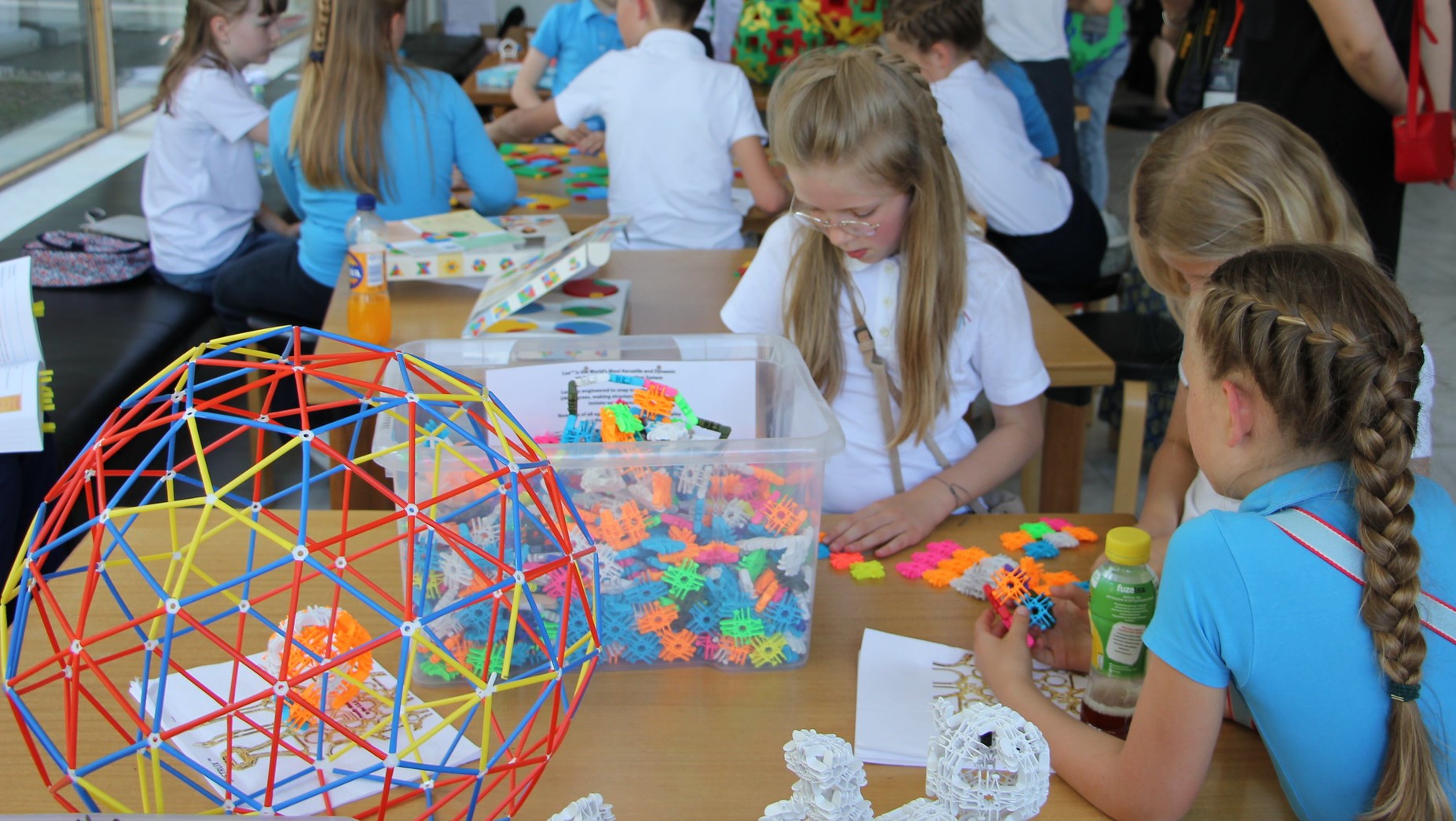
Lapset työskentelevät StarT-kerhossa. Kuva on vuodelta 2019.

Since 2016, StarT, created by LUMA Centre Finland, has grown into a global movement that transforms science, mathematics, technology, and sustainability education through creativity and collaboration. The name says it all: every child and young person can be a Star, and the T stands for teamwork. At its core, StarT is about learning together through projects and sharing ideas across borders to make education meaningful and exciting.

StarT ignites curiosity and creativity, empowering children, young people, and educators to imagine, design, and share projects that offer solutions to real-world challenges, guided by their own passions and questions. These projects often explore themes such as sustainability, climate solutions, and innovative technologies, encouraging learners to apply scientific thinking to issues that matter. Along the way, participants develop essential skills like problem-solving, communication, and collaboration.

From 2016 to 2022, the International StarT LUMA Competition brought together thousands of participants from more than 60 countries. Each year culminated in the International StarT Gala, a vibrant celebration of creativity and best practices, where young innovators and educators inspired one another. In addition, local LUMA Centres have organized regional StarT festivals with award ceremonies in Finland. Many of the projects and teaching practices are freely available in our open material bank.

Since 2023, StarT has expanded through the International StarT LUMA Science Clubs Programme, linking formal education with informal learning environments. These clubs, co-designed through research, offer children, teachers, and student teachers opportunities to engage in project-based STE(A)M learning beyond the classroom. StarT LUMA also inspires families: they are welcome to join the final club session and see their children’s projects. Read more from the LUMAT Journal.

An open online course on project-based learning supports teachers and educators with implementing clubs and projects that foster creativity, collaboration, and culturally sustainable practices. As highlighted in The Best Day I’ve Had in Ages – Learning Together in a Science Club, these experiences spark joy and curiosity, reminding us that science is a shared adventure.

Today, StarT is more than a programme; it is a community-driven platform for sustainable STE(A)M education, aligned with global goals and local needs. It invites everyone – students, teachers, and families – to become co-creators of knowledge and solutions. By fostering creativity and a sense of agency, StarT helps young people see themselves as active contributors to a better future.

StarT is a movement for learning together, shaping a world where science and collaboration lead the way towards sustainability. Whether through innovative school projects, inspiring teaching practices, or international networking, StarT continues to light the path for educators and learners worldwide.

Nowadays, the StarT LUMA Programme also serves as an international research and development initiative within the LUMAlab Gadolin. To date, several research papers have been published in this context, including:

    For more information:
    Director, Professor Maija Aksela, and Project Manager, Dr Outi Haatainen
    LUMAlab Gadolin Hub

    LUMA Centre Finland – International cooperation and STEM-development at heart

    LUMA Centre Finland has reached 100 000 kids and youth makers of the future face to face and over one million participants online during the year of 2023; now, the number is only growing. STEM-fields and the learning in these are at heart of the operations.

    The LUMA Centre Finland network – comprising of 11 universities – is developing new models of learning and innovations in pedagogy and science. Teachers and students are the main groups of interest, in this effort to establish a solid knowledge of STEM in Finland and even globally.

    LUMA Centre Finland is committed to the continuous education of students and teachers in the STEM-fields.

    Next year, our operations will increasingly expand, and international development will go hand in hand with our national operations.

    We hope that you will continue collaborating with us, as a new chapter in our story begins. Subscribe to our international newsletter.

    – Makers of the future are in our hearts globally. Kids and youth need inspiring evidence-based education for a good, sustainable future. We are open for collaboration nationally and globally. Together we are more! encourages Maija Aksela, leader of the national LUMA Centre Finland network.

    Written by: Jemima Unger, Communications specialist, LUMA Centre Finland (University of Helsinki)

    International Teachers’ Climate Change Forum is held on 2.–3. September 2024 as a hybrid event

    University of Helsinki Science Education, a part of LUMA Centre Finland, and the Institute for Atmospheric and Earth System Research (INAR) are again organizing the international Teachers’ Climate Change Forum 2024 (TCCF). The hybrid event is a chance for continuous professional development for teachers at all levels of education.

    Teachers’ Climate Change Forum is about climate science, climate education, and the connection between these two domains. This year, the Teachers’ Climate Change Forum will be held on the 2nd and 3rd of September 2024 as a hybrid event.

    Collaboration between scientists and teachers is important in climate change education. It has been our pleasure to organize this forum together with the INAR scientists since the year 2017. Together we are more! says the founder and director of the forum, Professor Maija Aksela from LUMA Centre Finland, University of Helsinki.

    Morning sessions are on-site in Hyytiälä Forest Station, where there is hands-on work with teachers. Afternoon sessions are hybrid so that everyone can attend also online. There is a possibility to create hubs outside Finland where local teachers can attend the forum together, meet each other, and discuss afternoon workshop topics. You can also choose to attend only the virtual event in the mornings.

    Registration for remote participation is now open. The registration fee is 24.80€. The program for remote participants is on Monday, September 2. from 14:30 to 16:30 and on Tuesday 3.9. from 12:00 to 16:00.

    Read more about the program and register through this link.

    Online program

    Monday September 2nd at 14.00–16.30 

    Keynote lectures and group discussions on-site and remotely

    Chair, Professor Maija Aksela, online moderator Julia Friedrichsen, University of Helsinki

    • Co-designing for innovative climate change education, Professor Ying-Shao Hsu, National Taiwan Normal University (NTNU). Dr. Ying-Shao Hsu’s (M.S., Ph.D.) primary research interests include socio-scientific issues (SSI) learning, technology-infused science education, curriculum design, metacognition, and STEM education. She specializes in developing SSI-based curricula and investigating scaffolds that improve students’ decision-making and metacognition in SSI contexts.
    • Insights to Hyytiälä Living Lab research: Climate impacts of sustainable wood constructions, Professor Pasi Puttonen, University of Helsinki. Wooden buildings as a learning environment, Professor Tuula Jyske, University of Helsinki
    • Climate education networks, University Lecturer Laura Riuttanen, University of Helsinki
    • Climate mobilities education: The power of art-science-school collaboration in Finland and Greece, Postdoctoral Research Fellow Vilhemiina Vainikka, Tampere University

    Tuesday September 3rd at 12.00–16.00

    • Visioning sustainable futures through creative methods, Hybrid workshop, Postdoctoral Researcher Anna Lehtonen, University of Jyväskylä
    • Oranssi Lumi – an exploratory journey through atmospheric events, Ana Álvarez Piedehierro, Finnish Meteorological Institute
    • Teaching and learning climate-related issues in discipline-based upper secondary school through project-based learning, Professor Jari Lavonen, University of Helsinki
    • Closing discussion, Professor Maija Aksela, University of Helsinki

    Read about the whole program through this link.

    “The best day I’ve had in ages!” – Learning together in a science club 

    This spring – children, future and current teachers, and even parents – studied the wonders of science in clubs organised at schools. As part of the international multiannual StarT programme coordinated by LUMA Centre Finland, a new type of science club has been trialled and developed. In it, learners are the stars – their questions, creativity and skills lie at the heart of the activities.

    Science clubs are effective and meaningful learning environments that may be integrated into school curricula, teacher training or extracurricular science education for families. This spring, the StarT programme organised by the LUMA Centre Finland network, has been testing a new collaborative model of science club activities in Finland and three other countries: South Africa, Indonesia and Jordan. Besides a learner-centred emphasis, the key to the model is collaboration, which supports emotional skills and inclusivity. Project-based learning is the working style and and an important research topic in the programme. 

    The multiannual StarT programme also includes an English-language online course. The course provides support for collaborative project-based learning as well as examples of studying in StarT science clubs. Collaborative learning is also supported by a webinar and the international StarT LUMA Science Camp event. 

    Research and innovation

    Through the programme’s research, the aim is to find new solutions for blended and integrative STEM education in schools and teacher training. New models and solutions can benefit both those studying to become teachers and teachers who wish to supplement their skills.

    “This is fun! When will the science club continue?” said one participant at the last session, organised as a small-scale science fair where children presented projects completed in small groups in the club and introduced their parents to the joys of science through selected experimental efforts. 

    Experimental project-based learning together. In the picture collaborative chemical experiments can be seen.

    Over the course of the club, parents sent messages on the children’s enthusiasm via a WhatsApp channel for club communications, also describing how the children showed photos of sugar rainbows they had made at the club, when they arrived back home. “The best day I’ve had in ages,” another club participant mentioned to their parents.

    In the spring, the science clubs convened once a week for six weeks. Future teachers design the content of the sessions as part of their teacher training, consulting school teachers and engaging in listening to participating children’s wishes and questions. Each session involves activities that engage the children. In the StarT science clubs, the participants are the stars.

    Collaborative project-based learning as the starting point

    The versatile science clubs rely on collaborative project-based learning. The clubs are organised as part of the teacher training at the University of Helsinki and science education organised by LUMA Centre Finland, in cooperation with the City of Helsinki. The science clubs of the schools that participate in the pilot include learners from a wide range of nationalities. The languages of the clubs are, as a rule, Finnish and when necessary English.

    “Basing the activities on projects enables inspirational collaborative learning. When carrying out their projects, learners are broadly honing important future skills – creativity, problem-solving, critical thinking and collaboration. Science clubs establish an excellent learning environment for completing research-based projects with children and adolescents, while providing teacher students genuine experiences with them, listening to and discussing their questions,” says Postdoctoral Researcher Outi Haatainen, project manager for the StarT programme. Haatainen teaches a course at the University in which future teachers lead science club sessions in collaboration with schools. Haatainen also investigates collaborative project-based learning, particularly from the perspective of teacher training. 

    Reija Pesonen and Aleksi Takala from the University of Helsinki also contributed to supervising future teachers at the science clubs. Pesonen is interested in teachers’ continuous STEM learning, while Takala’s interests lie in modern learning environments, such as the use of artificial intelligence in teaching.

    Inspiration from doing things yourself

    The fascinating practical projects designed by children were related to removing dirt from clothing with various chemical solutions, and to the phenomena of burning and extinguishing in a range of materials. 

    In the final session, the participants presented their findings in person, with posters and videos as a support. According to one participant, the science club is the best thing ever. When feedback was requested from the learners at the end, everyone gave the club a full 10 with their hands – some of them even three times. Each club participant also received a StarT diploma and molecule-themed playing cards for collaborative learning at home after the club.

    At the last session, parents have the chance to explore a lava lamp project and make bubbles with dry ice during the guidance of their children. These are the children’s favourite projects at the science club. The parents noticed that they learned a lot. 

    The received feedback was encouraging – with expressed wishes for more family-oriented science education in the immediate future. According to the parents, the children were very enthusiastic and learned a great deal. It was considered important that the children had the opportunity to do things on their own and ask questions, with time reserved for it.

    Novel teacher training

    The goal of the international StarT programme is to support a new kind of inspiring blended teacher training as well as the continuous learning of future and current teachers, in a new way in non-formal learning environments.

    The project for the development of novel science clubs aims to apply new research-based solutions both nationally and internationally. It is a new initiative and a continuation of the internationally acclaimed StarT programme. You can read more about the award-winning programme via this link.

    Maija Aksela gives students their diploma's-

    “The preliminary results of the first implementation round are interesting. Future and current teachers who participated in the science clubs consider them a very sensible way of learning together and experimenting with new things without urgency. The teachers said they would also put their learning from the clubs into practice in their lessons. The science clubs appear to function as a new form of continuing education. However, more research-based knowledge is needed. The science clubs offer the joy of insights and success in science for everyone,” says Professor Maija Aksela from the University of Helsinki, director of the StarT programme.

    The first international and collaborative StarT programme was launched in 2017 under Aksela’s direction. The new international StarT initiative and research programme constitute the fourth edition of the programme.

    Through STEM education, new pedagogical solutions for a good and sustainable future are developed and studied collaboratively.

    In August 2024, you can explore the top teacher projects from different European countries in the Science on Stage section of the LUMA Days conference.

    International collaboration with Thailand: Equality, reciprocity and understanding

    LUMA Centre Finland, the University of Helsinki and Nakhon Phanom University from Thailand have started an international collaboration in order to develop academic and educational co-operation.

    The international guests from Thailand visited the department of Chemistry at the University of Helsinki on August 3rd, 2023.

    The guests were thrilled to learn more about LUMA Centre Finland and equality, reciprocity and mutual understanding between the universities were promoted.

    The importance of international collaboration

    LUMA Centre Finland is a science education network of Finnish universities.

    Professor Maija Aksela, director of the LUMA Centre Finland-network, highlights the importance of international collaboration.

    “We all learn from each other and build a sustainable future together. Together we are more!”

    Read more about LUMA Centre Finland and international cooperation in our new e-book.

    A total of about one hundred people from the LUMA Center Finland network (11 Universities and 13 LUMA Centers) have participated in the design and creation of the book.

    Evästeasetukset
    LUMA-kukka ilman tekstiä

    This website uses cookies so that we can provide you with the best user experience possible. Cookie information is stored in your browser and performs functions such as recognizing you when you return to our website and helping our team to understand which sections of the website you find most interesting and useful.

    You can adjust all of your cookie settings in this view.

    Strictly Necessary Cookies

    Strictly Necessary Cookie should be enabled at all times so that we can save your preferences for cookie settings.

    Analytics

    This website uses Google Analytics to collect anonymous information such as the number of visitors to the site, and the most popular pages.

    Keeping this cookie enabled helps us to improve our website.