
UNESCO Chair at University of Helsinki to boost youngpeople’s science skills for a sustainable future

Valokuvassa Maija Aksela.

The United Nations Educational, Scientific and Cultural Organization (UNESCO) has granted a UNESCO Chair to Professor Maija Aksela.

Maija Aksela has been appointed UNESCO Chair in STEM Literacy and Future Agency for Sustainability for the period 2027–2030, a role she will combine with her research.

Through international collaboration, the Chair aims to foster young people’s participation, hope and science skills for a sustainable future, and encourage them to study STEM subjects: science, technology, engineering and mathematics.

“Young people want to understand the major sustainability challenges of our time, but above all they want to understand the opportunities that science and innovation offer, and to help solve those challenges in the future,” says Professor Aksela.

The Chair’s main research and development project will be the LUMA Stars programme, a multidisciplinary international collaboration involving seven other countries besides Finland. Young people taking part visit research groups, attend science camps and meet researchers at universities and companies. They also serve as science ambassadors to their peers, and plan the activities themselves. The programme also develops, together with young people, new models of continuous learning for teachers, as well as open digital learning environments.

UNESCO Chair to boost research-based science education

Based at the Faculty of Science, the UNESCO Chair will work closely with the University of Helsinki–coordinated LUMA Centre Finland network, which brings together 11 universities and 13 LUMA centres, and with businesses and research networks. The programme supports the Finnish National STEM Strategy and UNESCO’s sustainable development strategy.

The international work is backed by a scientific advisory board whose researcher members come from seven countries and every continent.

“This is our Faculty’s first UNESCO Chair,” says Dean Sasu Tarkoma of the Faculty of Science. “It will strengthen the standing of both the University of Helsinki and Finland as pioneers in research-based STEM education. The Chair builds on two decades of national STEM work, in which Professor Aksela has been involved from the very beginning. The natural sciences and mathematics help us find sustainable solutions, so it’s important that more and more young people are inspired to study them.”

“The UNESCO Chair is well-deserved recognition for Maija Aksela’s long-standing work,” notes Director Ilkka Kilpeläinen of the Department of Chemistry. “Chemistry is part of many everyday phenomena, from clean energy to recyclable materials. At our Department, research, teaching and teacher training go hand in hand, and the Chair will further strengthen that link.”

Over 30 years of experience in science education

Maija Aksela is a pioneer of natural sciences education and Finland’s first professor in the field. She has more than 30 years of experience in research, teacher training and the development of educational innovations, and has been actively involved in UNESCO collaboration since 2019. In 2025 she was named the world’s first LUMA Science Ambassador.

Her research and development work focuses on sustainable development, climate education, teaching and teacher training in the natural sciences, the use of modern technology, and strengthening young people’s future agency.

Aksela led the national LUMA Centre Finland network she had founded from 2013 to 2025, and has produced around 450 academic and professional publications. She currently heads two research groups – the multidisciplinary LUMA Science Helsinki group and the Science and Chemistry Education Collaboration (SECO) group – and is a professor at the University of Helsinki’s Department of Chemistry.

University of Helsinki’s third UNESCO Chair

UNESCO Chairs advance the organisation’s goals through research, teaching and international collaboration, with a particular emphasis on bringing research knowledge to schools, teachers and policymakers.

Aksela’s Chair is the third of its kind at the University of Helsinki. The first two were established in 2017 and awarded to Professor Emerita Hannele Niemi and Professor Arto Kallioniemi. Niemi held the UNESCO Chair on Educational Ecosystems for Equity and Quality of Learning, and Kallioniemi holds the UNESCO Chair in Values, Dialogue and Human Rights in Education.

The Chairs form part of the UNITWIN/UNESCO Chairs Programme, launched in 1992, which now includes roughly 1,100 Chairs in over 130 countries.

The article was originally published on the University of Helsinki website.
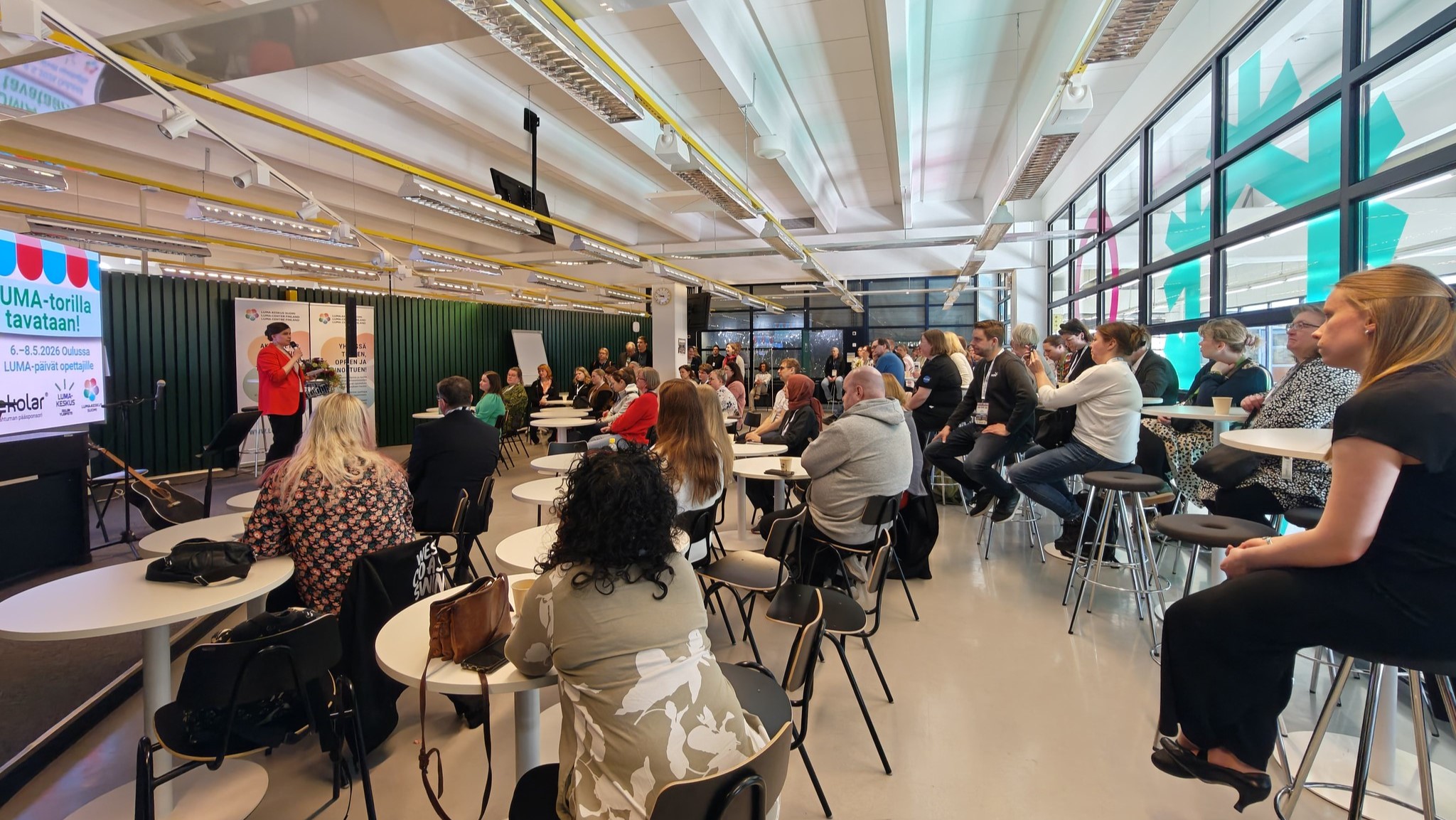
Finland and LUMA Centre Finland at the Forefront of STEM Education Development in Europe

The National LUMA Days 2026 gathered Finnish educators from all levels to discuss about STEM education.

A recent European Commission report on STEM education in schools provides a comprehensive overview of the current state of STEM across Europe. While the report identifies a wide range of structural challenges, it also highlights countries that have already taken significant steps towards more integrated and future-oriented STEM education. Finland is among these leading countries, and the LUMA Centre Finland network is recognised as one of the most important examples of successful systemic innovation.

A shared European challenge – and a Finnish perspective

Across Europe, education systems are facing similar structural challenges in advancing STEM education. These include fragmented governance, shortages of qualified teachers, rigid curricula, unequal access to modern learning environments, limited use of non-formal learning opportunities, and insufficient evaluation frameworks to guide long-term development.

Although Finland performs well in international comparisons and has a long tradition of high-quality education, these challenges are not entirely absent. For example, teacher shortages are emerging in certain regions, and the implementation of interdisciplinary approaches still varies between schools. Furthermore, like in many other countries, there is an increasing need to strengthen the evaluation of STEM education initiatives and their long-term impact.

At the same time, the report highlights that countries with strong national STEM strategies and cross-sectoral coordination are better positioned to address these challenges. Finland is explicitly mentioned as one of the countries where STEM is strategically embedded across education, research, and innovation systems.

Finland’s strengths: a system aligned with future needs

Finland’s education system already reflects many of the key directions identified in the report. These include a strong emphasis on interdisciplinary learning, digital competence, and student-centred pedagogy. Approaches such as phenomenon-based learning encourage students to explore real-world challenges through multiple disciplines, fostering critical thinking, collaboration, and creativity.

Another key strength is Finland’s teacher education system, which is research-based and highly valued. Teachers are supported through continuous professional development and encouraged to develop innovative teaching methods. Programmes such as LUMATIKKA provide flexible, research-informed training opportunities that strengthen both subject knowledge and pedagogical expertise.

Finland also places strong emphasis on equity and inclusion, ensuring that STEM opportunities are accessible to all learners regardless of gender, background, or location. This aligns closely with European priorities to broaden participation in STEM and address skills shortages in the future.

The LUMA Centre Finland network as a model for collaboration

One of the most significant strengths of the Finnish approach is the LUMA Centre Finland network. The report highlights LUMA as a good practice example of how to build sustainable partnerships between schools, universities, research institutions, and industry.

The LUMA network operates through regional centres connected to universities across Finland, creating a nationwide ecosystem that supports STEM education at all levels. These centres provide teacher training, develop learning materials, organise student activities, and promote collaboration between different stakeholders.

Through its activities, LUMA reaches a large number of teachers and students each year. It supports inquiry-based and interdisciplinary learning, strengthens connections between research and education, and brings real-world relevance into classrooms. This kind of ecosystem approach is identified in the report as a key factor in successful STEM education systems.

Alignment with the Finnish STEM strategy

The findings of the European report strongly align with the goals of Finland’s national STEM strategy. In Finland, STEM is not seen as a separate policy area but as an integrated part of broader societal goals, including digitalisation, sustainability, and innovation.

The Finnish approach emphasises the following key elements:

  • The integration of STEM across education levels
  • Strong teacher competence and continuous professional development
  • Interdisciplinary and inquiry-based learning
  • Collaboration between schools, universities, and industry
  • Equity and inclusion in access to STEM education

The LUMA Centre Finland network plays a central role in implementing these priorities in practice. It acts as a bridge between policy, research, and schools, ensuring that strategic goals are translated into concrete actions.

Strategic implications for Finland

While Finland is in a strong position, the report also points to important areas for future development.

Firstly, there is a need to ensure that successful approaches, such as interdisciplinary learning, are implemented consistently across all schools. Scaling up good practices requires continued investment in teacher training, school leadership, and collaboration structures.

Secondly, strengthening evaluation and data use will be essential. More systematic monitoring of STEM education outcomes can support evidence-based decision-making and help to identify effective practices.

Thirdly, addressing teacher shortages, particularly in rural areas, remains a priority. This includes developing attractive career pathways, supporting early-career teachers, and ensuring access to continuous professional development.

Fourthly, greater emphasis should be placed on early childhood and primary education. Engaging children in STEM from an early age is critical for building long-term interest and competence.

Finally, Finland has an opportunity to further strengthen its role in European cooperation. By building on the strengths of networks such as LUMA, Finland can contribute to the development of shared approaches and support the scaling of successful models across Europe.

Looking ahead: from national success to European leadership

The European report underlines the need to move from fragmented, project-based initiatives to coherent, system-wide approaches in STEM education. Finland, together with the LUMA Centre Finland network, already demonstrates many of the elements required for this transition.

The next step is to deepen and scale this work. By strengthening collaboration, investing in teachers, and building robust evaluation systems, Finland can continue to lead the development of high-quality, inclusive STEM education.

At the same time, the Finnish experience offers valuable lessons for other countries. The LUMA model shows how long-term partnerships, strong teacher support, and a whole-system approach can create sustainable impact.

In this context, LUMA Centre Finland is not only a national success story but also an important contributor to the future of STEM education in Europe.


This blog is based on findings from the European Commission’s report Promoting STEM Education in Schools (2026), published by the Publications Office of the European Union.

Text: Prof. Jan Lundell, Director of LUMA Centre Finland

International collaboration with Thailand: Equality, reciprocity and understanding

LUMA Centre Finland, the University of Helsinki and Nakhon Phanom University from Thailand have started an international collaboration in order to develop academic and educational co-operation.

The international guests from Thailand visited the department of Chemistry at the University of Helsinki on August 3rd, 2023.

The guests were thrilled to learn more about LUMA Centre Finland and equality, reciprocity and mutual understanding between the universities were promoted.

The importance of international collaboration

LUMA Centre Finland is a science education network of Finnish universities.

Professor Maija Aksela, director of the LUMA Centre Finland-network, highlights the importance of international collaboration.

“We all learn from each other and build a sustainable future together. Together we are more!”

Read more about LUMA Centre Finland and international cooperation in our new e-book.

A total of about one hundred people from the LUMA Center Finland network (11 Universities and 13 LUMA Centers) have participated in the design and creation of the book.

Evästeasetukset
LUMA-kukka ilman tekstiä

This website uses cookies so that we can provide you with the best user experience possible. Cookie information is stored in your browser and performs functions such as recognizing you when you return to our website and helping our team to understand which sections of the website you find most interesting and useful.

You can adjust all of your cookie settings in this view.

Strictly Necessary Cookies

Strictly Necessary Cookie should be enabled at all times so that we can save your preferences for cookie settings.

Analytics

This website uses Google Analytics to collect anonymous information such as the number of visitors to the site, and the most popular pages.

Keeping this cookie enabled helps us to improve our website.