Finland and LUMA Centre Finland at the Forefront of STEM Education Development in Europe

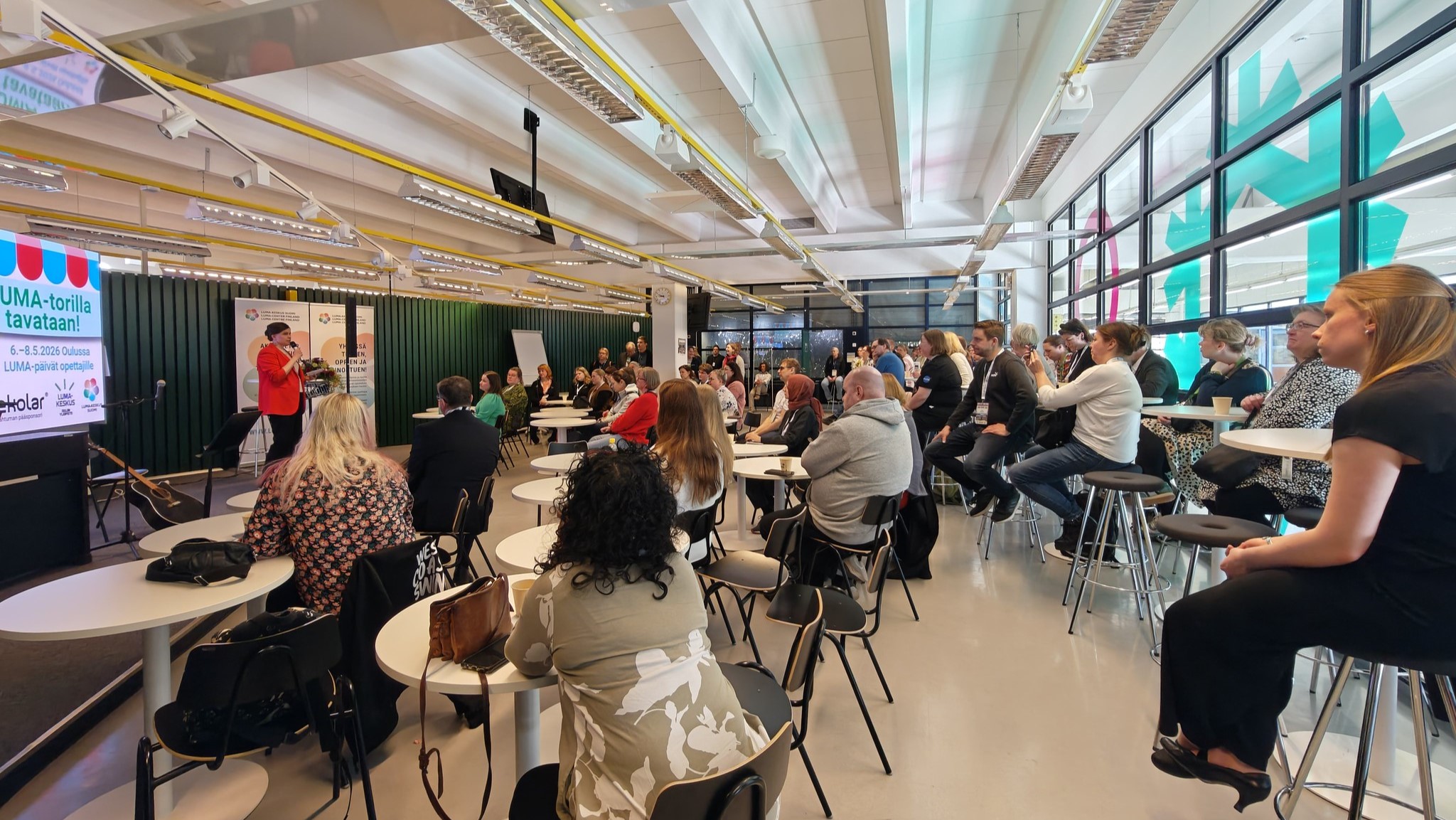
The National LUMA Days 2026 gathered Finnish educators from all levels to discuss about STEM education.

A recent European Commission report on STEM education in schools provides a comprehensive overview of the current state of STEM across Europe. While the report identifies a wide range of structural challenges, it also highlights countries that have already taken significant steps towards more integrated and future-oriented STEM education. Finland is among these leading countries, and the LUMA Centre Finland network is recognised as one of the most important examples of successful systemic innovation.

A shared European challenge – and a Finnish perspective

Across Europe, education systems are facing similar structural challenges in advancing STEM education. These include fragmented governance, shortages of qualified teachers, rigid curricula, unequal access to modern learning environments, limited use of non-formal learning opportunities, and insufficient evaluation frameworks to guide long-term development.

Although Finland performs well in international comparisons and has a long tradition of high-quality education, these challenges are not entirely absent. For example, teacher shortages are emerging in certain regions, and the implementation of interdisciplinary approaches still varies between schools. Furthermore, like in many other countries, there is an increasing need to strengthen the evaluation of STEM education initiatives and their long-term impact.

At the same time, the report highlights that countries with strong national STEM strategies and cross-sectoral coordination are better positioned to address these challenges. Finland is explicitly mentioned as one of the countries where STEM is strategically embedded across education, research, and innovation systems.

Finland’s strengths: a system aligned with future needs

Finland’s education system already reflects many of the key directions identified in the report. These include a strong emphasis on interdisciplinary learning, digital competence, and student-centred pedagogy. Approaches such as phenomenon-based learning encourage students to explore real-world challenges through multiple disciplines, fostering critical thinking, collaboration, and creativity.

Another key strength is Finland’s teacher education system, which is research-based and highly valued. Teachers are supported through continuous professional development and encouraged to develop innovative teaching methods. Programmes such as LUMATIKKA provide flexible, research-informed training opportunities that strengthen both subject knowledge and pedagogical expertise.

Finland also places strong emphasis on equity and inclusion, ensuring that STEM opportunities are accessible to all learners regardless of gender, background, or location. This aligns closely with European priorities to broaden participation in STEM and address skills shortages in the future.

The LUMA Centre Finland network as a model for collaboration

One of the most significant strengths of the Finnish approach is the LUMA Centre Finland network. The report highlights LUMA as a good practice example of how to build sustainable partnerships between schools, universities, research institutions, and industry.

The LUMA network operates through regional centres connected to universities across Finland, creating a nationwide ecosystem that supports STEM education at all levels. These centres provide teacher training, develop learning materials, organise student activities, and promote collaboration between different stakeholders.

Through its activities, LUMA reaches a large number of teachers and students each year. It supports inquiry-based and interdisciplinary learning, strengthens connections between research and education, and brings real-world relevance into classrooms. This kind of ecosystem approach is identified in the report as a key factor in successful STEM education systems.

Alignment with the Finnish STEM strategy

The findings of the European report strongly align with the goals of Finland’s national STEM strategy. In Finland, STEM is not seen as a separate policy area but as an integrated part of broader societal goals, including digitalisation, sustainability, and innovation.

The Finnish approach emphasises the following key elements:

  • The integration of STEM across education levels
  • Strong teacher competence and continuous professional development
  • Interdisciplinary and inquiry-based learning
  • Collaboration between schools, universities, and industry
  • Equity and inclusion in access to STEM education

The LUMA Centre Finland network plays a central role in implementing these priorities in practice. It acts as a bridge between policy, research, and schools, ensuring that strategic goals are translated into concrete actions.

Strategic implications for Finland

While Finland is in a strong position, the report also points to important areas for future development.

Firstly, there is a need to ensure that successful approaches, such as interdisciplinary learning, are implemented consistently across all schools. Scaling up good practices requires continued investment in teacher training, school leadership, and collaboration structures.

Secondly, strengthening evaluation and data use will be essential. More systematic monitoring of STEM education outcomes can support evidence-based decision-making and help to identify effective practices.

Thirdly, addressing teacher shortages, particularly in rural areas, remains a priority. This includes developing attractive career pathways, supporting early-career teachers, and ensuring access to continuous professional development.

Fourthly, greater emphasis should be placed on early childhood and primary education. Engaging children in STEM from an early age is critical for building long-term interest and competence.

Finally, Finland has an opportunity to further strengthen its role in European cooperation. By building on the strengths of networks such as LUMA, Finland can contribute to the development of shared approaches and support the scaling of successful models across Europe.

Looking ahead: from national success to European leadership

The European report underlines the need to move from fragmented, project-based initiatives to coherent, system-wide approaches in STEM education. Finland, together with the LUMA Centre Finland network, already demonstrates many of the elements required for this transition.

The next step is to deepen and scale this work. By strengthening collaboration, investing in teachers, and building robust evaluation systems, Finland can continue to lead the development of high-quality, inclusive STEM education.

At the same time, the Finnish experience offers valuable lessons for other countries. The LUMA model shows how long-term partnerships, strong teacher support, and a whole-system approach can create sustainable impact.

In this context, LUMA Centre Finland is not only a national success story but also an important contributor to the future of STEM education in Europe.


This blog is based on findings from the European Commission’s report Promoting STEM Education in Schools (2026), published by the Publications Office of the European Union.

Text: Prof. Jan Lundell, Director of LUMA Centre Finland

MoocWise Project Advances AI‑Supported STEM and Well‑being Education Through Finnish–Chinese Collaboration

MoocWise Project Banner. Made by AI.

The MoocWise project is a joint initiative between Finnish and Chinese higher education institutions, bringing together educators and PhD students to co-create a Massive Open Online Course (MOOC) on AI in STEM Education and Well-being. The project exemplifies the goals of the Team Finland Knowledge programme by fostering cross-cultural and interdisciplinary cooperation across continents. It is funded by the Finnish National Agency for Education and forms part of LUMA Centre Finland’s operations.

Building a joint MOOC on shared expertise

Designed as a blended international collaboration, the MOOC development will combine ongoing online work with intensive onsite meetings held in both Finland and China. The Finnish partners include the University of Helsinki (UH) and the University of Turku (UTU), while the Chinese partners are Beijing Normal University (BNU) and Shanghai Jiao Tong University (SJTU). This mirrored structure ensures balanced exchange and shared ownership from the outset.

The MOOC will introduce cutting-edge AI tools for use in STEM and well-being education, with a strong emphasis on cultivating a critical and ethical understanding of their pedagogical potential and limitations. The aim is to support educators in integrating AI into teaching with confidence and creativity – enhancing student agency, critical thinking, equity, and well-being.

Co-creation and research-based design at the heart of the project

A distinctive feature of the project is its co-creation model. PhD students and teacher educators from both countries will develop course materials together, testing and iterating them during onsite sessions. This participatory approach ensures that the MOOC reflects diverse cultural and disciplinary perspectives and is grounded in research-based pedagogies. Course participants will be encouraged to explore AI tools hands-on, while interactive peer activities will support shared reflection and collaborative learning.

The first onsite collaboration will take place in Helsinki and Turku in August 2026, followed by a second intensive working period in Beijing and Shanghai in October 2026. These meetings will enable deep academic exchange, cultural learning, and real-time refinement of course materials with the support of participating students and educators.

Creating sustainable partnerships and future-ready education

By combining Finnish expertise in student‑centered STEM education with Chinese strengths in well‑being‑oriented AI applications, the project builds a powerful synergy. It strengthens sustainable academic partnerships, enhances digital readiness, and expands international learning opportunities. The initiative aligns closely with the goals of the Sino‑Finnish JoLII network, contributing a forward-looking model for global collaboration in higher education.

The MoocWise project is led by Professor László Major from LUMA Centre South-West (read more on the Centre’s website). Collaboration includes LUMAlab Gadolin at the University of Helsinki, coordinated by Professor Maija Aksela (read more on LUMA news), together with deputy coordinator Maikki Roiha, who also serves as MoocWise project coordinator. Professor Jun Wang (BNU), Associate Professor Pengfei Xu (BNU), and Associate Professor Xin Tang (SJTU, UH) play key roles in shaping the course content and supporting research based design. The project team also includes Postdoctoral Researcher Jenny Niu (UH) and JoLII representative Sammy Yang Jing (BNU) whose contributions in pedagogy, curriculum design, and co-creation further strengthen the collaborative effort.

Finland has established a national STEM strategy (Ministry of Education and Culture, 2023), aiming to ensure a sufficient level of science competence and societal understanding to support well-being and sustainable growth. The MoocWise project contributes to these national objectives. The strategy is available on the Ministry’s website.