
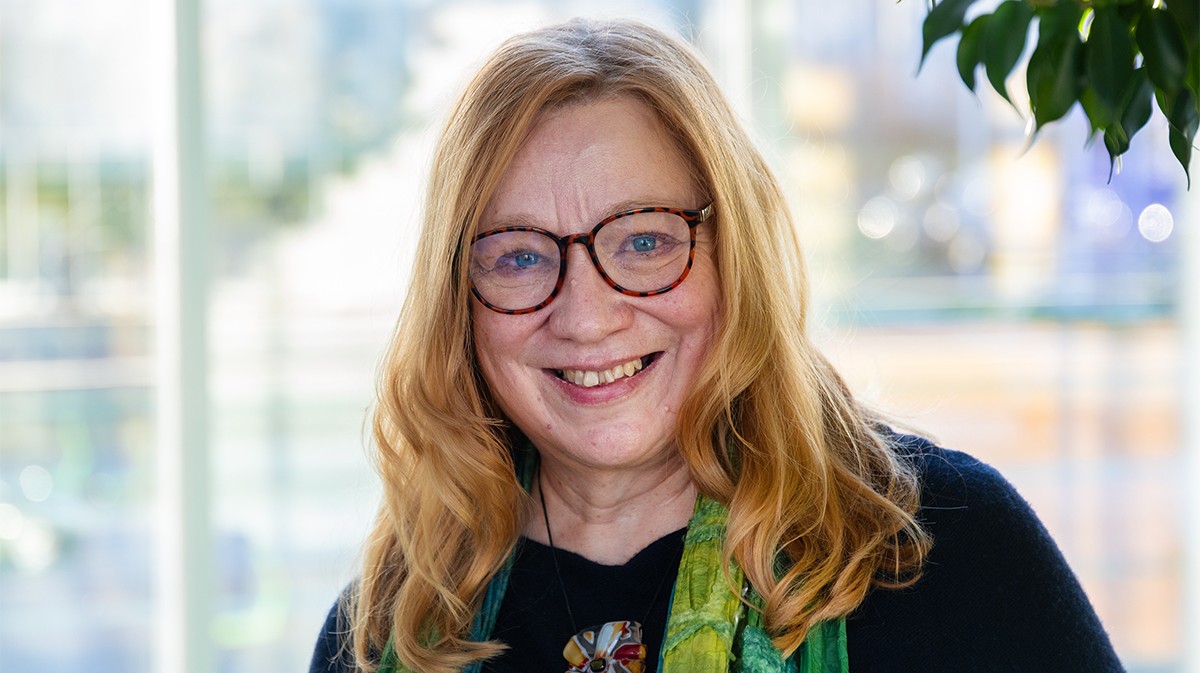
The United Nations Educational, Scientific and Cultural Organization (UNESCO) has granted a UNESCO Chair to Professor Maija Aksela.
Maija Aksela has been appointed UNESCO Chair in STEM Literacy and Future Agency for Sustainability for the period 2027–2030, a role she will combine with her research.
Through international collaboration, the Chair aims to foster young people’s participation, hope and science skills for a sustainable future, and encourage them to study STEM subjects: science, technology, engineering and mathematics.
“Young people want to understand the major sustainability challenges of our time, but above all they want to understand the opportunities that science and innovation offer, and to help solve those challenges in the future,” says Professor Aksela.
The Chair’s main research and development project will be the LUMA Stars programme, a multidisciplinary international collaboration involving seven other countries besides Finland. Young people taking part visit research groups, attend science camps and meet researchers at universities and companies. They also serve as science ambassadors to their peers, and plan the activities themselves. The programme also develops, together with young people, new models of continuous learning for teachers, as well as open digital learning environments.
UNESCO Chair to boost research-based science education
Based at the Faculty of Science, the UNESCO Chair will work closely with the University of Helsinki–coordinated LUMA Centre Finland network, which brings together 11 universities and 13 LUMA centres, and with businesses and research networks. The programme supports the Finnish National STEM Strategy and UNESCO’s sustainable development strategy.
The international work is backed by a scientific advisory board whose researcher members come from seven countries and every continent.
“This is our Faculty’s first UNESCO Chair,” says Dean Sasu Tarkoma of the Faculty of Science. “It will strengthen the standing of both the University of Helsinki and Finland as pioneers in research-based STEM education. The Chair builds on two decades of national STEM work, in which Professor Aksela has been involved from the very beginning. The natural sciences and mathematics help us find sustainable solutions, so it’s important that more and more young people are inspired to study them.”
“The UNESCO Chair is well-deserved recognition for Maija Aksela’s long-standing work,” notes Director Ilkka Kilpeläinen of the Department of Chemistry. “Chemistry is part of many everyday phenomena, from clean energy to recyclable materials. At our Department, research, teaching and teacher training go hand in hand, and the Chair will further strengthen that link.”
Over 30 years of experience in science education
Maija Aksela is a pioneer of natural sciences education and Finland’s first professor in the field. She has more than 30 years of experience in research, teacher training and the development of educational innovations, and has been actively involved in UNESCO collaboration since 2019. In 2025 she was named the world’s first LUMA Science Ambassador.
Her research and development work focuses on sustainable development, climate education, teaching and teacher training in the natural sciences, the use of modern technology, and strengthening young people’s future agency.
Aksela led the national LUMA Centre Finland network she had founded from 2013 to 2025, and has produced around 450 academic and professional publications. She currently heads two research groups – the multidisciplinary LUMA Science Helsinki group and the Science and Chemistry Education Collaboration (SECO) group – and is a professor at the University of Helsinki’s Department of Chemistry.
University of Helsinki’s third UNESCO Chair
UNESCO Chairs advance the organisation’s goals through research, teaching and international collaboration, with a particular emphasis on bringing research knowledge to schools, teachers and policymakers.
Aksela’s Chair is the third of its kind at the University of Helsinki. The first two were established in 2017 and awarded to Professor Emerita Hannele Niemi and Professor Arto Kallioniemi. Niemi held the UNESCO Chair on Educational Ecosystems for Equity and Quality of Learning, and Kallioniemi holds the UNESCO Chair in Values, Dialogue and Human Rights in Education.
The Chairs form part of the UNITWIN/UNESCO Chairs Programme, launched in 1992, which now includes roughly 1,100 Chairs in over 130 countries.