StarT – Inspiring Learning Together Worldwide

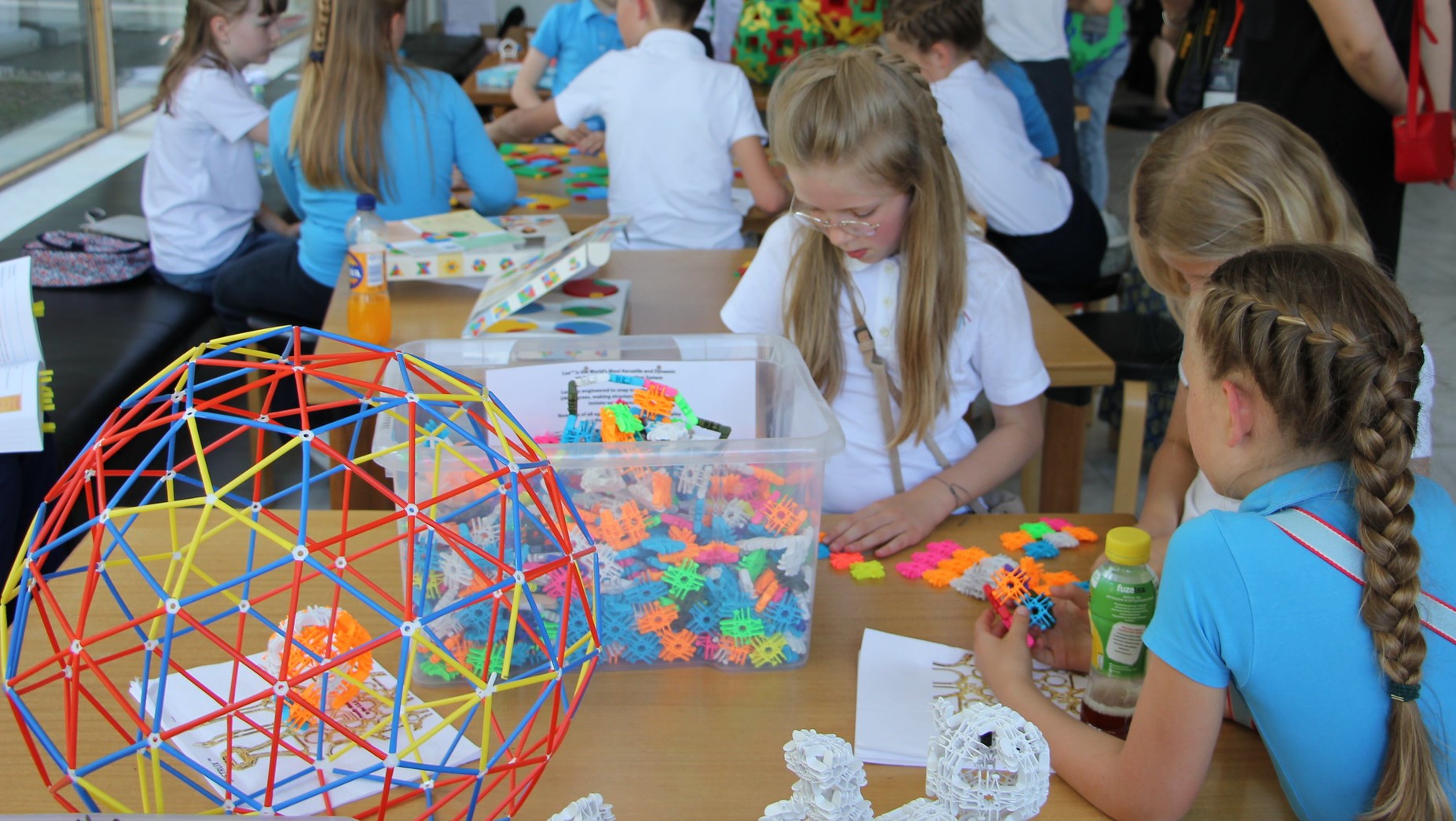
Lapset työskentelevät StarT-kerhossa. Kuva on vuodelta 2019.

Since 2016, StarT, created by LUMA Centre Finland, has grown into a global movement that transforms science, mathematics, technology, and sustainability education through creativity and collaboration. The name says it all: every child and young person can be a Star, and the T stands for teamwork. At its core, StarT is about learning together through projects and sharing ideas across borders to make education meaningful and exciting.

StarT ignites curiosity and creativity, empowering children, young people, and educators to imagine, design, and share projects that offer solutions to real-world challenges, guided by their own passions and questions. These projects often explore themes such as sustainability, climate solutions, and innovative technologies, encouraging learners to apply scientific thinking to issues that matter. Along the way, participants develop essential skills like problem-solving, communication, and collaboration.

From 2016 to 2022, the International StarT LUMA Competition brought together thousands of participants from more than 60 countries. Each year culminated in the International StarT Gala, a vibrant celebration of creativity and best practices, where young innovators and educators inspired one another. In addition, local LUMA Centres have organized regional StarT festivals with award ceremonies in Finland. Many of the projects and teaching practices are freely available in our open material bank.

Since 2023, StarT has expanded through the International StarT LUMA Science Clubs Programme, linking formal education with informal learning environments. These clubs, co-designed through research, offer children, teachers, and student teachers opportunities to engage in project-based STE(A)M learning beyond the classroom. StarT LUMA also inspires families: they are welcome to join the final club session and see their children’s projects. Read more from the LUMAT Journal.

An open online course on project-based learning supports teachers and educators with implementing clubs and projects that foster creativity, collaboration, and culturally sustainable practices. As highlighted in The Best Day I’ve Had in Ages – Learning Together in a Science Club, these experiences spark joy and curiosity, reminding us that science is a shared adventure.

Today, StarT is more than a programme; it is a community-driven platform for sustainable STE(A)M education, aligned with global goals and local needs. It invites everyone – students, teachers, and families – to become co-creators of knowledge and solutions. By fostering creativity and a sense of agency, StarT helps young people see themselves as active contributors to a better future.

StarT is a movement for learning together, shaping a world where science and collaboration lead the way towards sustainability. Whether through innovative school projects, inspiring teaching practices, or international networking, StarT continues to light the path for educators and learners worldwide.

Nowadays, the StarT LUMA Programme also serves as an international research and development initiative within the LUMAlab Gadolin. To date, several research papers have been published in this context, including:

    For more information:
    Director, Professor Maija Aksela, and Project Manager, Dr Outi Haatainen
    LUMAlab Gadolin Hub

    LUMA Centre Finland – International cooperation and STEM-development at heart

    LUMA Centre Finland has reached 100 000 kids and youth makers of the future face to face and over one million participants online during the year of 2023; now, the number is only growing. STEM-fields and the learning in these are at heart of the operations.

    The LUMA Centre Finland network – comprising of 11 universities – is developing new models of learning and innovations in pedagogy and science. Teachers and students are the main groups of interest, in this effort to establish a solid knowledge of STEM in Finland and even globally.

    LUMA Centre Finland is committed to the continuous education of students and teachers in the STEM-fields.

    Next year, our operations will increasingly expand, and international development will go hand in hand with our national operations.

    We hope that you will continue collaborating with us, as a new chapter in our story begins. Subscribe to our international newsletter.

    – Makers of the future are in our hearts globally. Kids and youth need inspiring evidence-based education for a good, sustainable future. We are open for collaboration nationally and globally. Together we are more! encourages Maija Aksela, leader of the national LUMA Centre Finland network.

    Written by: Jemima Unger, Communications specialist, LUMA Centre Finland (University of Helsinki)

    New Memorandum of Understanding signed with Bhutan – Taking STEM-education a step ahead

    LUMA Centre Finland and the Royal University of Bhutan signed a Memorandum of Understanding on August 13, 2023. Photograph: Dr Som Gurung (left), professor Maija Aksela (centre) and chair of the board of LUMA Centre Finland, professor Jan Lundell (right). 

    Collaboration started when director, professor Maija Aksela, was invited to Bhutan in the year of 2023. 

    Dr Som Gurung from the Royal University of Bhutan says that he is excited about the collaboration. During his visit to Finland he familiarized himself with the Kumpula Campus at the University of Helsinki, Aalto University and the STEM-activities at the University of Turku, according to his wishes. In addition, he participated in the 20th LUMA-days (STEM-days) and the international Science on Stage event in Turku. The event gathered participants from over 50 different countries

    – The new agreement that we have signed between LUMA Centre Finland, and the Royal University of Bhutan, will give novel horizons of learning and teaching and taking STEM-education a step ahead, from the experience that Finland has shared with so many other countries. We are very proud that STEM and its benefits that people and countries around Europe have built, which I can see very much at the Science on Stage festival in Turku.

    In Finland, Dr Gurung has learned about the extraordinary initiative from teachers to teachers. It is a remarkable effort for educating young children for the future. Soon, Dr Gurung is looking forward to the exchange of knowledge and strengthening communication, between Finland and Bhutan.

    – In the near future, we would like to have a lot of exchange of knowledge between our people, our students and our faculty and we wish that we have several mobility programs between Bhutan and Finland, where our students and faculty can come and go to Finland and learn from Finland. And maybe some faculties, and students from Finland, and get immersed in our values and STEM-education as well as enjoy the beauty of the Himalayas.

    Dr Gurung challenges teachers to continuously ask themselves to teach better and to have a heart for the student. To be constantly prepared for the pursuit of sharing knowledge and to be ready for tomorrows citizen.

    – How can I prepare my students for tomorrows world? This is in the heart of the teacher. The student is the center point for the teacher.

    Professor Maija Aksela from the University of Helsinki highlights the importance of collaboration and learning from each other.

    – Together we are more! The teaching in Bhutan involves a lot of things that we can learn from. For example, spiritual happiness, valuing nature and traditions, Aksela mentions.

    Teachers as keys to success

    The teachers are the keys to success in bringing the STEM-education forward. Dr Gurung mentions the admirable efforts of Finnish teachers and the Science on Stage festival in Turku, Finland.

    – Teachers in Finland think their students are a real achievement. But to let your students shine in the future you must have it in your heart.

    – Teachers to teachers and the forum that LUMA has organized, what is happening in Europe and outside. It is a great idea. It is not just the students who are coming to learn. But it is the teachers who are creating the learning environment. The students don’t have the fear of going to school but have an excitement to go to school.

    Another key thing that Dr. Gurung mentions is trust. Trust and collaboration go hand in hand. Growing in the STEM-field and strengthening cooperation and communication is also on the agenda.

    – The most important part of collaboration in is trust. We need to trust each other. And when we have the trust in each party we are already there – counting on our success.

    Maikki Roiha is writing a master’s thesis in chemistry in collaboration with Nokia

    Chemistry student Maikki Roiha of the University of Helsinki is working on her master’s thesis in collaboration with Nokia Corporation. She is studying immersion, specifically the opportunities and challenges of using immersive 360-degree videos to teach chemistry on virtual school trips.

    “I began to work on my thesis last June, first completing preliminary assignments and the training periods associated with the business collaboration.”

    Roiha has been writing parts of her thesis almost from the start, typing up the literature review as soon as she had collected her data.

    How to establish business collaboration

    Roiha says that the key to business collaboration is networking. Connecting the academic and corporate worlds requires an active approach from the student.

    “You have to network. Talk to your thesis supervisors about your interest in business collaboration, as they may know potential partners.”

    If this does not work, students can contact companies of interest directly. Alternatively, they should keep track of their university’s job-seeking portal for thesis commissions.

    Showing an interest can make the difference

    Roiha is interested in exploring an educational technology initiative and using it in chemistry teaching. This type of basic research almost inevitably produces intriguing results.

    “I particularly appreciated the chance to witness the development of this kind of technology from the corporate perspective.”

    “I was able to participate in other areas of product development too, such as the research-based design of website texts and the compilation of marketing material. Collaboration with experts at Nokia was fascinating, as it gave me the chance to learn more about the culture in a big company and connect it to the academic world. It was a brilliant opportunity to be part of the Nokia work community and meet experts from a wide range of fields.”

    Tips for thesis writers

    Roiha advises students to choose a topic that interests them and not to be afraid even if they know nothing about it in advance. She also recommends that students create a schedule, take breaks and not aim too high.

    “Make a clear schedule to write, for example, Monday through Wednesday from 9 in the morning to 3 in the afternoon. This gives you structure and helps you get started. Take breaks and recharge your brain by getting up and stretching. Fit hobbies into your calendar and respect it,” she says.

    The text you write need not be perfect from the get-go. In fact, striving for perfection early on may prevent you from getting anything done.

    “In the most difficult moments, it’s enough to open the document for just 10 minutes. This will help you overcome the biggest hurdle – getting started. If you can then keep up the momentum, great! If not, return to the text later.”

    Free time and immersion

    In her free time, Roiha enjoys physical activity and being outside in nature. Every now and then she plays the guitar.

    “Concentrating on activities like these is a great way for me to relax my mind.”

    When asked what immersion means, Roiha explains it is about being deeply involved in something, or giving the user a heightened sense of presence in the environment.

    “In a virtual environment, you can enhance immersion, for example, with VR glasses or 3D audio. You can increase immersion further by adding interactive elements or visualising the user’s real-world hand movements in the virtual environment.”

    Cornerstones of collaboration with Nokia

    Roiha has enjoyed her collaboration with Nokia. She has developed new skills and received technical support, supplementing what she has learned at the University.  

    “Nokia gave me free rein to test the company’s immersive technology solutions in the context of my choice. I learned to use them better and got help when I needed it. In turn, I’ve been able to offer Nokia my expertise in educational research and provided useful knowledge through my research.”

    Skills learned at the University and elsewhere have equipped Roiha well for planning, coordinating and implementing a project with multiple partners.

    “I’m grateful to everyone who has given their time to support my project. Big thanks to the HelsinkiALD team and Doctoral Researcher Alexander Weiß, Senior University Lecturer Sami Hietala and Senior Engineer Sami Heikkinen. Thanks also to ChemistryLab Gadolin, all research participants and the persons supervising my work at Nokia and the University.”

    Roiha’s thesis supervisors are Professor Maija Aksela and Docent Johannes Pernaa of the University’s Chemistry Teacher Education Unit. The project is part of LUMA Centre Finland’s science education research on modern technologies.

    The Finnish version of this article has been published on the LUMA Centre Finland website.


    Publication on impact networks: Networks enhance innovative early STEM Education – suggests new learning paper by leading international STEM organizations

    The six-member organizations of the International Dialogue on STEM Education (IDoS peers) release a learning paper: “How can networks help encourage the development and professionalization of innovative early STEM Education in a changing world?”, that highlights the impact of networks among diverse actors and initiatives engaged in early STEM Education. In a world marred by crises and growing complexities, the paper recommends network-building and collaboration to ensure children receive quality STEM Education.

    The world is becoming more complex. In the face of the climate crisis, the Covid-19 pandemic, social inequality, and the changes brought by digitalization, children today need to acquire skills and competencies to cope with future challenges. Thus, extensive advocacy for quality early education in science, technology, engineering/ computer science, and mathematics (STEM) is needed, as it promotes critical thinking and problem-solving skills in children and benefits community members and societies around the globe. In their learning paper, the six IDoS peers “Haus der kleinen Forscher” Foundation, Siemens Stiftung, Smithsonian Science Education Center, LUMA Centre Finland, Fondation La main à la pâte, and the Office for Climate Education (OCE) demonstrate how impact networks (formed to address complex social or environmental issues) can enhance innovative early STEM Education. As experts in this field, the peers aim to support field-developing institutions to increase the impact of their work for a better and easily accessible education worldwide.

    Paper lists criteria for successful networking in STEM Education

    In the paper, the peers draw on scientific findings combined with their own experiences of impactful collaborations. The paper presents five types of networks (Resilience Networks, Scale Networks, Action Networks, Movement Networks, and Learning Networks) and identifies key factors that determine the success of a collaborative network. These include a good strategy and stewardship of the network, sufficient resources and funding, high motivation and commitment of network members, the application of effective practices of monitoring, evaluation, accountability, and learning (MEAL), as well as the network’s ability to adapt to the context and complexity they are faced with.

    We can address the global challenges only by connecting people, communities, and societies. The IDoS network’s learning paper bears testimony to this: Joint exchanges help identify meaningful and pressing themes in the STEM field. By learning, exchanging, and experiencing together as sparring partners and in the process realising United Nation’s Sustainable Development Goal (SDG) number 17: ‘Revitalising the global partnership for sustainable development’. The 17 SDGs can only be met if the global community combines forces to work together. 
    
    - Dr. Nina Smidt, Managing Director and Spokesperson of the Board at Siemens Stiftung
    Our network partners in Germany enable us to scale up our continuing professional development programme for teachers and educators all over the country, thus ensuring that as many children as possible get a quality STEM Education. Similarly, other IDoS organisations cooperate with networks in their respective countries and even across borders. This paper demonstrates how a strategic interplay of actors from education, politics, business, science, and society gives the field of early STEM Education the attention and support it deserves.
    
    - Michael Fritz, Executive Manager of “Haus der kleinen Forscher” Foundation

    Combined expertise to drive change

    IDoS defines itself as a learning network, formed to exchange and combine knowledge and best practices from organizations around the world to deal with the growing intricacy of STEM Education. Not only do STEM disciplines become more intertwined as sustainable development goals evolve, but the environments in which they are being taught are changing as well, as they come to include digital tools like Open Educational Resources (OER), blended- or hybrid learning, and online learning. Organizations that specialize in teachers’ training and in the provision of pedagogical resources need to be able to adapt to these new environments. IDoS peers pave the way for networks to become “education ecosystems”: supporting and implementing national education policies, increasing the capacity of teachers and educators, and improving access to STEM Education worldwide. IDoS peers share a common vision of educational innovation, whereby STEM Education concepts are developed, professionalized, and effectively implemented in networks of different countries in a way that is tailored to local needs on the ground.

    Their learning paper is the second publication by members of IDoS. The first publication in 2019 argued for an integrated approach to STEM Education for Sustainable Development. In 2023, the peer dialogue will focus on the topic of “STEM Education in a digitalized world”.

    Read the original story from Stiftung Kinder forschen | Little Scientists Foundation webpage.

    For further information about the IDoS project: the blog post.

    Evästeasetukset
    LUMA-kukka ilman tekstiä

    This website uses cookies so that we can provide you with the best user experience possible. Cookie information is stored in your browser and performs functions such as recognizing you when you return to our website and helping our team to understand which sections of the website you find most interesting and useful.

    You can adjust all of your cookie settings in this view.

    Strictly Necessary Cookies

    Strictly Necessary Cookie should be enabled at all times so that we can save your preferences for cookie settings.

    Analytics

    This website uses Google Analytics to collect anonymous information such as the number of visitors to the site, and the most popular pages.

    Keeping this cookie enabled helps us to improve our website.