BLUE-TEACH Project Strengthens Finnish-Indonesian Cooperation in Sustainable Teacher Education

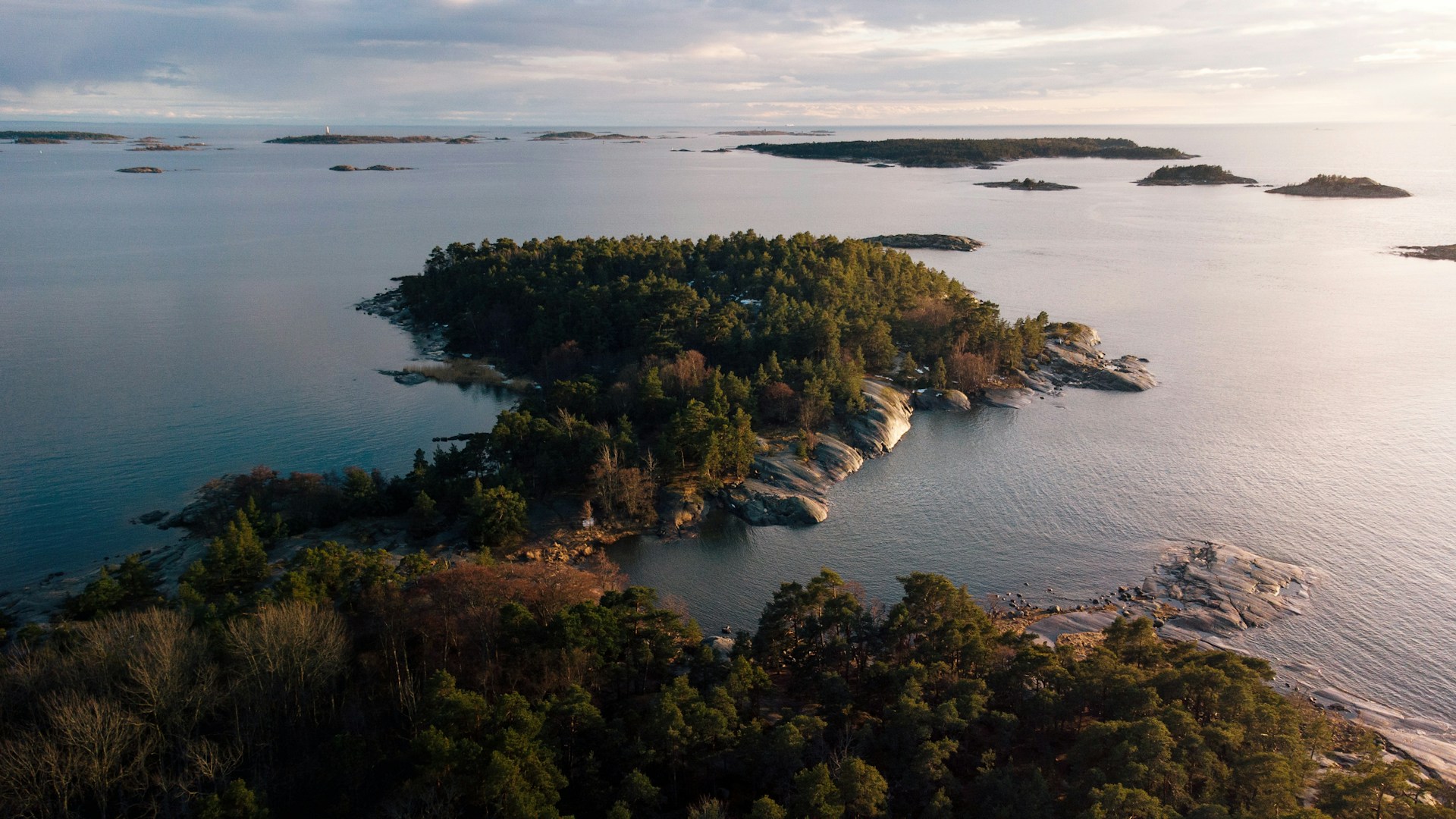
Aerial photo of a peninsula on the Finnish coast. Photo by Mika Wegelius.

LUMA Centre Finland is pleased to announce that the BLUE-TEACH project (Blue Competence in Teacher Education: Finland-Indonesia Partnership for STEAM, AI, and Sustainable Learning) has been awarded funding through the Team Finland Knowledge (TFK) Programme in 2026.

The project brings together leading teacher education institutions from Finland and Indonesia to develop innovative approaches that connect sustainability, STEAM education, artificial intelligence, and real-world learning environments in teacher education.

The project is coordinated by the University of Helsinki and LUMA Centre Finland in partnership with the University of Jyväskylä, Universitas Pendidikan Indonesia (UPI), Universitas Sebelas Maret (UNS), and Universitas Maritim Raja Ali Haji (UMRAH). Over the course of the project, the partners will co-design and implement a joint 5 ECTS teacher education module comprising 15 thematic units aligned with the European BlueComp competence framework. The materials will be integrated into both pre-service and in-service teacher education programmes in Finland and Indonesia, ensuring long-term impact beyond the project period.

Why Blue Competence Matters

As climate change, biodiversity loss, marine pollution, and sustainable resource management increasingly shape our societies, education systems need new ways of preparing learners for these challenges. The European BlueComp framework provides a competence model for understanding the relationship between people, water systems, oceans, coastal environments, and sustainable development. It emphasises systems thinking, environmental responsibility, innovation, community engagement, and informed decision-making related to marine and aquatic environments.

Despite the growing importance of blue sustainability issues, blue competences remain only partially embedded in teacher education and school curricula worldwide. BLUE-TEACH addresses this gap by translating the BlueComp framework into practical learning modules, pedagogical models, and digital resources that can be applied across educational contexts.

The project partners believe that BlueComp should become an integral component of sustainability education at all levels of education, from early childhood education to higher education and lifelong learning. Likewise, teacher education must equip future educators with the competencies needed to guide learners in understanding the interconnected challenges of oceans, freshwater systems, climate resilience, sustainable livelihoods, and environmental stewardship. These themes connect naturally with STEM, STEAM, AI-supported inquiry, and phenomenon-based learning approaches that are central to modern education.

Finland and Indonesia Learning Together

Indonesia offers a uniquely valuable context for developing blue competences. As the world’s largest archipelagic nation, comprising more than 17,000 islands, Indonesia faces significant challenges and opportunities related to marine ecosystems, coastal communities, fisheries, sustainable development, and climate adaptation. BLUE-TEACH enables Finnish and Indonesian educators to learn from one another while developing globally relevant educational models rooted in local realities.

The project combines Finnish expertise in research-based teacher education, STEAM pedagogy, curriculum design, and digital learning with Indonesian strengths in community-based learning, maritime education, and contextual sustainability challenges. Through intensive teaching periods, hybrid learning, and joint curriculum development, the partnership aims to create educational solutions that are both internationally relevant and locally meaningful.

Professor Jan Lundell, Director of LUMA Centre Finland and project coordinator, highlights the strategic importance of the collaboration:

“LUMA Centre Finland has a long tradition of international cooperation in STEM education and teacher education. Indonesia is a particularly important partner because it is the world’s largest archipelago and faces many of the sustainability challenges that will increasingly affect societies globally. By working together, Finnish and Indonesian educators can develop new educational approaches that connect science, sustainability, technology, and local communities.”

“BLUE-TEACH provides an excellent opportunity to bring Blue Competence into teacher education and to prepare future teachers to address complex socio-ecological challenges through interdisciplinary and research-based pedagogies.”

Looking Ahead

The BLUE-TEACH project will run from 2026 to 2028 and produce a jointly developed international teacher education module, open digital learning resources, and an electronic handbook for teacher educators. Through curriculum integration, large-scale participation of teacher students and educators, and collaboration between higher education institutions, the project seeks to establish a sustainable model for embedding BlueComp competencies into teacher education and sustainability education in both Finland and Indonesia.

References

European Commission. (2024). BlueComp: The European framework for ocean sustainability competence. Publications Office of the European Union

Finnish National Agency for Education. (2026). Team Finland Knowledge programme.

A Dynamic Vision for Finnish STEM Education

Valokuvassa opettaja näyttää kahdelle alakouluikäiselle, miten USB-mikroskooppi toimii. He ovat luonnossa ja työskentelevät kannettavalla tietokoneella.

In May 2026, LUMA Centre Finland approved its renewed Vision and Strategy 2030. It is a forward-looking roadmap that redefines how science education can inspire, include, and empower the next generation across Finland. Built through extensive collaboration across the national LUMA network and aligned with key European and global competence frameworks, the strategy represents a holistic and systemic approach to STEM and STEAM education, where “A” stands for All Sciences.

A Living Strategy Built Together

The new strategy is not a static document. It is the result of broad co-creation, involving universities, schools, policymakers, and stakeholders from across sectors. It integrates national goals, such as Finland’s LUMA strategies and teacher education vision, with international frameworks, including digital, green, and emerging STEM competence models.

This collaborative process ensures that the strategy responds not only to current educational needs but also anticipates future challenges. It positions LUMA Centre Finland as an active builder of learning ecosystems rather than a single actor. It bridges research, education, and working life in a continuously evolving environment.

A Vision Rooted in Curiosity and Inclusion

At the heart of the vision is a simple but powerful idea: every child and young person should have the opportunity to explore, experiment, and discover science in ways that are meaningful and inspiring.

The strategy envisions a nationwide, inclusive learning environment supported by a vibrant teacher community and enriched by encounters with science in multiple contexts. It acknowledges that learning happens everywhere across formal education, informal settings, and everyday life, and seeks to connect these into a coherent whole.

By strengthening the role of science in society, the vision also underlines the importance of scientific literacy as a foundation for democracy, well-being, and innovation.

Responding to a Changing World

The Strategy 2030 is explicitly future-oriented, even though adjusted now foremost to the existing national STEM strategy time interval. LUMA Centre Finland currently has a mandate from the Ministry of Education and Culture for a national task to support and develop Finnish STEM education till 2028. Nevertheless, the strategy has a focal horizon far beyond the upcoming years as it aligns itself with the long-term targets of the national teacher education vision 2050.

The strategy addresses two defining global challenges: digital transformation and planetary sustainability. Rather than treating these as separate themes, LUMA Centre Finland integrates them into a broad STEAM framework. This means combining mathematics, natural sciences, technology, and all sciences with interdisciplinary thinking, creativity, and societal relevance.

Through this approach, learners are encouraged not only to acquire knowledge but also to develop the skills and mindsets needed to solve complex, real-world problems from climate change to technological disruption.

A Systemic Approach Across the Learning Continuum

One of the defining strengths of the strategy is its system-wide perspective. LUMA Centre Finland already reaches over 175,000 participants annually across Finland, spanning early childhood education to higher education and lifelong learning environments.

The new strategy builds on this foundation by strengthening connections across all levels of education and beyond. It promotes:

  • Seamless learning pathways from early curiosity to advanced expertise
  • Integration of formal, informal, and non-formal learning environments
  • Equal access to high-quality science education regardless of location or background

This systemic approach ensures that STEM and STEAM education are accessible, continuous, and impactful throughout life.

Five Strategic Pillars for Impact

The implementation of the vision is guided by five interconnected strategic priorities:

  1. Inspiring children and youth by expanding engaging and accessible learning opportunities across Finland
  2. Increasing societal awareness of the importance of STEM/STEAM skills and career pathways
  3. Strengthening educator expertise through research-based continuous professional development
  4. Advancing research-based teaching and the use of emerging technologies in learning
  5. Deepening partnerships and co-creation across sectors and internationally

Together, these priorities form a dynamic framework that supports both immediate actions and long-term transformation.

Teachers, Networks, and Co-Creation at the Core

A key driver of success is the emphasis on teachers and educators as change-makers. The strategy highlights continuous professional learning, modern pedagogy, and strong links to research and working life.

Equally important is the role of networks and partnerships. By working closely with universities, research institutes, industry, NGOs, and the public sector, LUMA Centre Finland ensures that educational content remains relevant in a rapidly changing world.

This collaborative model transforms science education into a shared societal project, where innovation emerges from interaction between disciplines and sectors.

Building the Future, Together

The Vision and Strategy 2030 is more than a plan -it is an invitation. It calls on educators, researchers, students, and partners to join in building a future where science education is inclusive, inspiring, and deeply connected to society.

By supporting curiosity, strengthening competencies, and fostering collaboration, LUMA Centre Finland contributes to a Finland that is more innovative, sustainable, and resilient.

Together, we are shaping an ecosystem where every learner can grow into a confident problem-solver: Where STEM becomes STEAM, embracing all sciences as part of a shared journey toward the future.

Evästeasetukset
LUMA-kukka ilman tekstiä

This website uses cookies so that we can provide you with the best user experience possible. Cookie information is stored in your browser and performs functions such as recognizing you when you return to our website and helping our team to understand which sections of the website you find most interesting and useful.

You can adjust all of your cookie settings in this view.

Strictly Necessary Cookies

Strictly Necessary Cookie should be enabled at all times so that we can save your preferences for cookie settings.

Analytics

This website uses Google Analytics to collect anonymous information such as the number of visitors to the site, and the most popular pages.

Keeping this cookie enabled helps us to improve our website.