International Teachers’ Climate Change Forum is held on 2.–3. September 2024 as a hybrid event

University of Helsinki Science Education, a part of LUMA Centre Finland, and the Institute for Atmospheric and Earth System Research (INAR) are again organizing the international Teachers’ Climate Change Forum 2024 (TCCF). The hybrid event is a chance for continuous professional development for teachers at all levels of education.

Teachers’ Climate Change Forum is about climate science, climate education, and the connection between these two domains. This year, the Teachers’ Climate Change Forum will be held on the 2nd and 3rd of September 2024 as a hybrid event.

Collaboration between scientists and teachers is important in climate change education. It has been our pleasure to organize this forum together with the INAR scientists since the year 2017. Together we are more! says the founder and director of the forum, Professor Maija Aksela from LUMA Centre Finland, University of Helsinki.

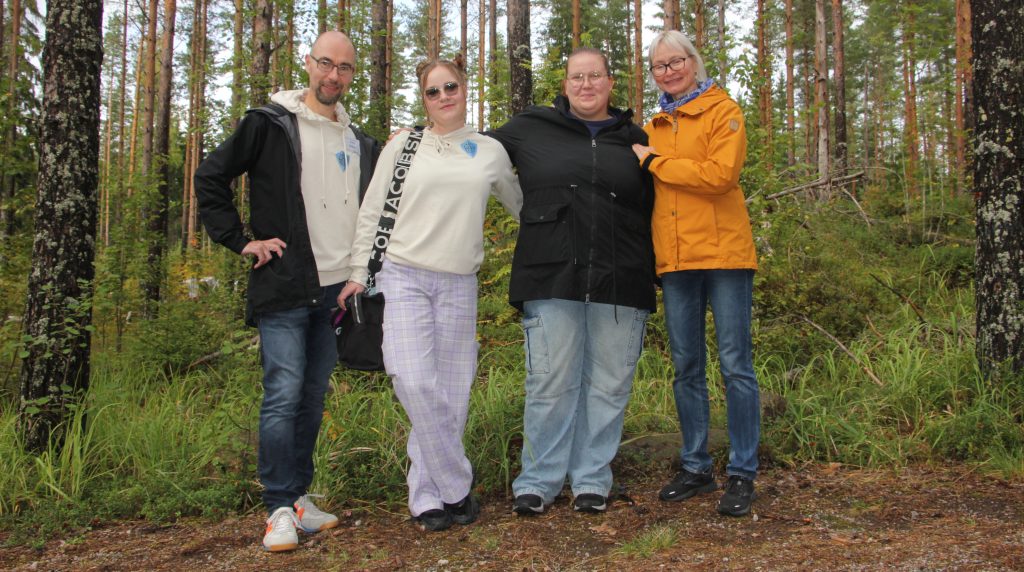
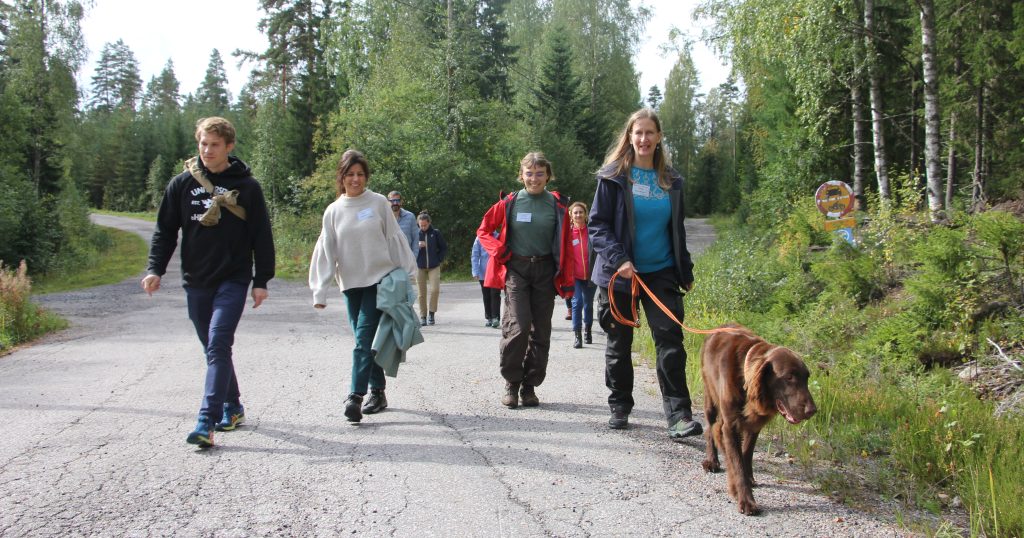
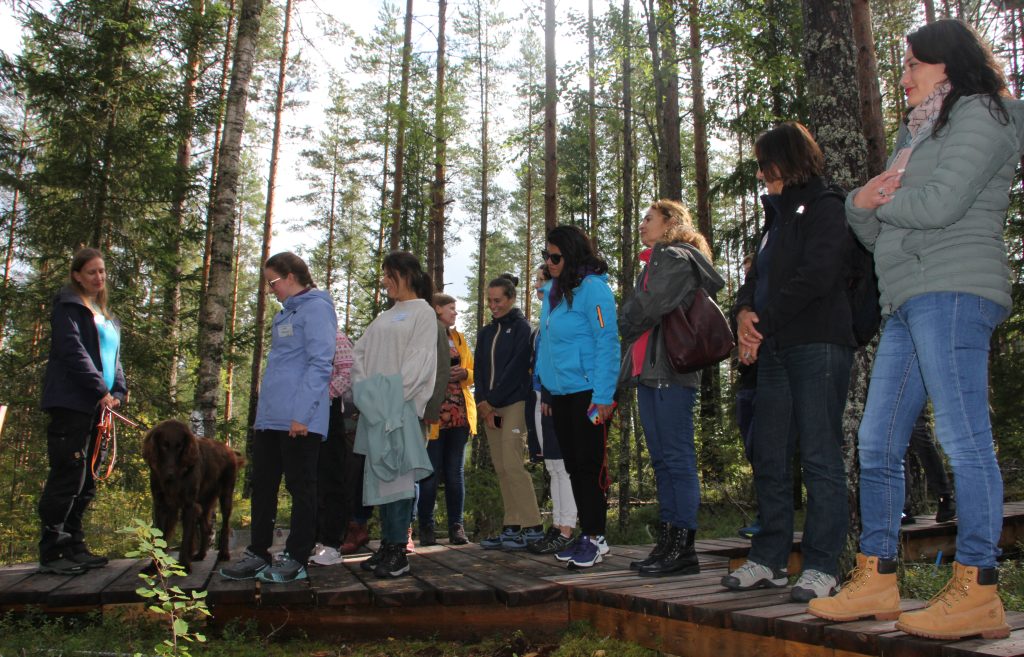
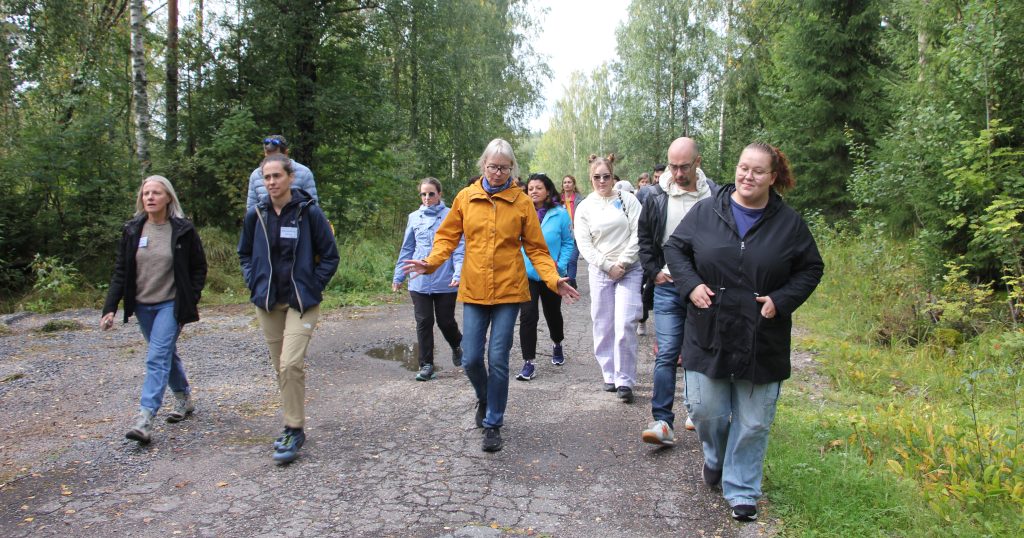
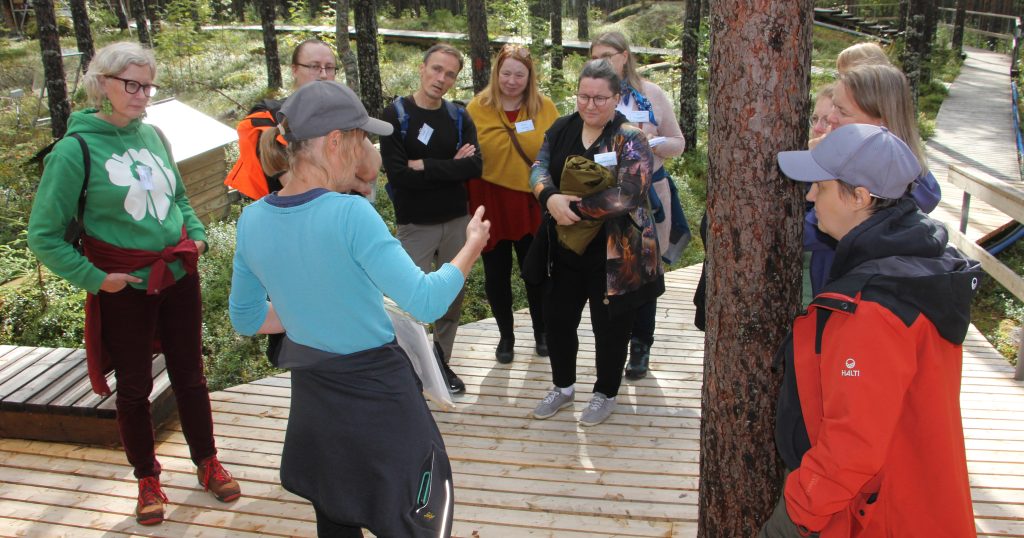
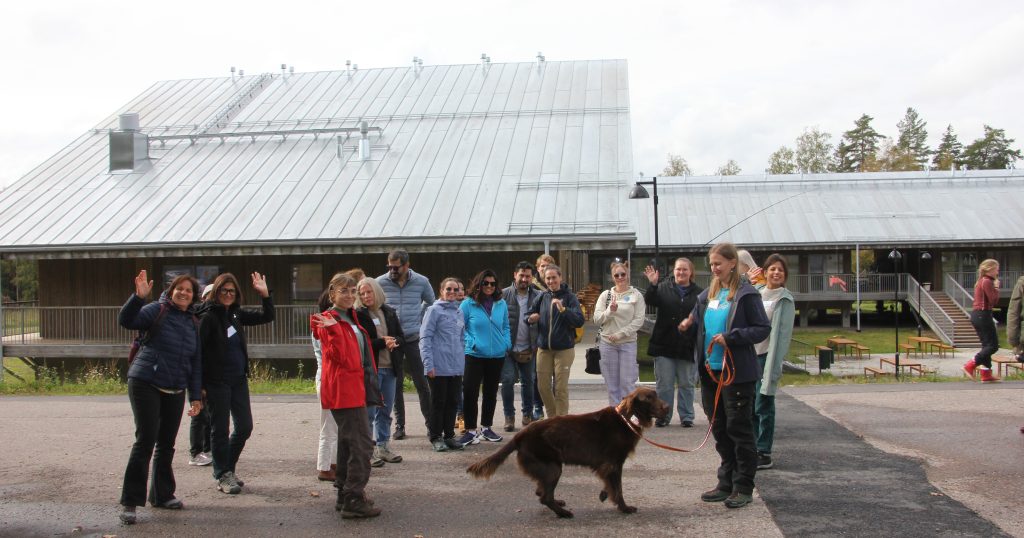
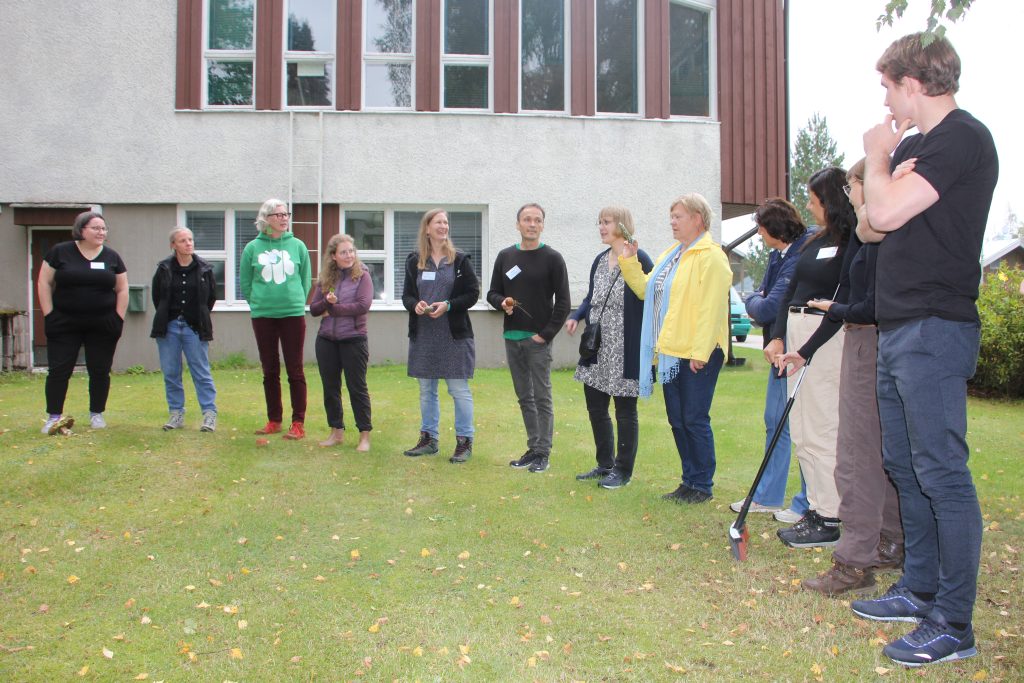
Morning sessions are on-site in Hyytiälä Forest Station, where there is hands-on work with teachers. Afternoon sessions are hybrid so that everyone can attend also online. There is a possibility to create hubs outside Finland where local teachers can attend the forum together, meet each other, and discuss afternoon workshop topics. You can also choose to attend only the virtual event in the mornings.

Registration for remote participation is now open. The registration fee is 24.80€. The program for remote participants is on Monday, September 2. from 14:30 to 16:30 and on Tuesday 3.9. from 12:00 to 16:00.

Read more about the program and register through this link.

Online program

Monday September 2nd at 14.00–16.30 

Keynote lectures and group discussions on-site and remotely

Chair, Professor Maija Aksela, online moderator Julia Friedrichsen, University of Helsinki

  • Co-designing for innovative climate change education, Professor Ying-Shao Hsu, National Taiwan Normal University (NTNU). Dr. Ying-Shao Hsu’s (M.S., Ph.D.) primary research interests include socio-scientific issues (SSI) learning, technology-infused science education, curriculum design, metacognition, and STEM education. She specializes in developing SSI-based curricula and investigating scaffolds that improve students’ decision-making and metacognition in SSI contexts.
  • Insights to Hyytiälä Living Lab research: Climate impacts of sustainable wood constructions, Professor Pasi Puttonen, University of Helsinki. Wooden buildings as a learning environment, Professor Tuula Jyske, University of Helsinki
  • Climate education networks, University Lecturer Laura Riuttanen, University of Helsinki
  • Climate mobilities education: The power of art-science-school collaboration in Finland and Greece, Postdoctoral Research Fellow Vilhemiina Vainikka, Tampere University

Tuesday September 3rd at 12.00–16.00

  • Visioning sustainable futures through creative methods, Hybrid workshop, Postdoctoral Researcher Anna Lehtonen, University of Jyväskylä
  • Oranssi Lumi – an exploratory journey through atmospheric events, Ana Álvarez Piedehierro, Finnish Meteorological Institute
  • Teaching and learning climate-related issues in discipline-based upper secondary school through project-based learning, Professor Jari Lavonen, University of Helsinki
  • Closing discussion, Professor Maija Aksela, University of Helsinki

Read about the whole program through this link.

New Memorandum of Understanding signed with Bhutan – Taking STEM-education a step ahead

LUMA Centre Finland and the Royal University of Bhutan signed a Memorandum of Understanding on August 13, 2023. Photograph: Dr Som Gurung (left), professor Maija Aksela (centre) and chair of the board of LUMA Centre Finland, professor Jan Lundell (right). 

Collaboration started when director, professor Maija Aksela, was invited to Bhutan in the year of 2023. 

Dr Som Gurung from the Royal University of Bhutan says that he is excited about the collaboration. During his visit to Finland he familiarized himself with the Kumpula Campus at the University of Helsinki, Aalto University and the STEM-activities at the University of Turku, according to his wishes. In addition, he participated in the 20th LUMA-days (STEM-days) and the international Science on Stage event in Turku. The event gathered participants from over 50 different countries

– The new agreement that we have signed between LUMA Centre Finland, and the Royal University of Bhutan, will give novel horizons of learning and teaching and taking STEM-education a step ahead, from the experience that Finland has shared with so many other countries. We are very proud that STEM and its benefits that people and countries around Europe have built, which I can see very much at the Science on Stage festival in Turku.

In Finland, Dr Gurung has learned about the extraordinary initiative from teachers to teachers. It is a remarkable effort for educating young children for the future. Soon, Dr Gurung is looking forward to the exchange of knowledge and strengthening communication, between Finland and Bhutan.

– In the near future, we would like to have a lot of exchange of knowledge between our people, our students and our faculty and we wish that we have several mobility programs between Bhutan and Finland, where our students and faculty can come and go to Finland and learn from Finland. And maybe some faculties, and students from Finland, and get immersed in our values and STEM-education as well as enjoy the beauty of the Himalayas.

Dr Gurung challenges teachers to continuously ask themselves to teach better and to have a heart for the student. To be constantly prepared for the pursuit of sharing knowledge and to be ready for tomorrows citizen.

– How can I prepare my students for tomorrows world? This is in the heart of the teacher. The student is the center point for the teacher.

Professor Maija Aksela from the University of Helsinki highlights the importance of collaboration and learning from each other.

– Together we are more! The teaching in Bhutan involves a lot of things that we can learn from. For example, spiritual happiness, valuing nature and traditions, Aksela mentions.

Teachers as keys to success

The teachers are the keys to success in bringing the STEM-education forward. Dr Gurung mentions the admirable efforts of Finnish teachers and the Science on Stage festival in Turku, Finland.

– Teachers in Finland think their students are a real achievement. But to let your students shine in the future you must have it in your heart.

– Teachers to teachers and the forum that LUMA has organized, what is happening in Europe and outside. It is a great idea. It is not just the students who are coming to learn. But it is the teachers who are creating the learning environment. The students don’t have the fear of going to school but have an excitement to go to school.

Another key thing that Dr. Gurung mentions is trust. Trust and collaboration go hand in hand. Growing in the STEM-field and strengthening cooperation and communication is also on the agenda.

– The most important part of collaboration in is trust. We need to trust each other. And when we have the trust in each party we are already there – counting on our success.

LUMA Centre Finland Brings International STEM Teachers’ Mega Event to Finland for the First Time

For the first time, Finland will host one of Europe’s largest teaching events, the Science on Stage festival, as part of the national LUMA Days for teachers. The event showcases the best practices in teaching mathematics and science worldwide. LUMA Days will be held on August 14-15 in Turku, gathering over 800 teachers from more than 50 countries. You can participate virtually too and join the opening ceremony on the 12th of August already.

Celebrating its 20th anniversary, the national LUMA Days will feature various activities, including international workshops and open house events. Participation is free, and the event offers programs in Finnish, Swedish, and English. Registration is still open; attendees can participate for one day or join a single workshop. Detailed information and registration can be found on the event website.

– Teachers play a crucial role as change agents for a sustainable future. They deserve all the appreciation, support, and opportunities to learn from and meet each other. Together we are more! says Maija Aksela, Director of the LUMA Centre Finland network.

Participate in the event – also online

The Science on Stage festival, a non-profit fair event, recognizes the essential role of teachers in building a sustainable future. In 2024, the festival will focus on sustainability and celebrate dedicated teachers and their excellent teaching ideas. Teachers from different countries will present their educational practices and methods in mathematics and science. Finland will showcase 28 projects, ranging from art gardens to AI tutor robots and marine physics studies. The event can also be followed online through the event website. The online program consists of the main stage program:

  • Opening Ceremony, Mon 12.8. at 17:00 Including a pre-recorded video greeting by Commissioner Ms Iliana Ivanova
  • Keynote sessions, Tue-Thu 13.-15.8. at 09:00
  • Award Ceremony, Thu 15.8. at 12:00

Partners for this major event include Science on Stage Finland and Science on Stage Europe, supported by the City of Turku, local universities, various organizations, and companies. The highlight, however, is on the teachers. From Taipalsaari’s Kirkonkylä School, preschool teachers Kirsi Rehunen and Sanna Kolhonen will participate with their project How Long is a Second and Other Time Studies. This project, which began with children’s questions, explores and develops time-related studies, encouraging children’s natural curiosity about the world around them.

Taipalsaari has a long tradition of research projects related to the preschool year. The best research stems from everyday wonder, from questions about everyday phenomena that preschoolers want to explore and investigate. It is an honor to be among Finnish teachers showcasing our expertise to international colleagues, say Rehunen and Kolhonen.

Every teaching project selected for the fair is summarized in a poster, available on the event website

In addition to the Wednesday fair, LUMA Days will offer numerous workshops on various topics. Thursday’s workshops will feature new approaches to teaching mathematics using virtual reality, artificial intelligence, and mathematical linguistics. Participants can also explore the science education efforts of the LUMA Centre of Southwestern Finland at the University of Turku and Åbo Akademi University’s Skolresurs.

Interested to learn more?

Subscribe to our newsletter here and read a book about the network here.

“The best day I’ve had in ages!” – Learning together in a science club 

This spring – children, future and current teachers, and even parents – studied the wonders of science in clubs organised at schools. As part of the international multiannual StarT programme coordinated by LUMA Centre Finland, a new type of science club has been trialled and developed. In it, learners are the stars – their questions, creativity and skills lie at the heart of the activities.

Science clubs are effective and meaningful learning environments that may be integrated into school curricula, teacher training or extracurricular science education for families. This spring, the StarT programme organised by the LUMA Centre Finland network, has been testing a new collaborative model of science club activities in Finland and three other countries: South Africa, Indonesia and Jordan. Besides a learner-centred emphasis, the key to the model is collaboration, which supports emotional skills and inclusivity. Project-based learning is the working style and and an important research topic in the programme. 

The multiannual StarT programme also includes an English-language online course. The course provides support for collaborative project-based learning as well as examples of studying in StarT science clubs. Collaborative learning is also supported by a webinar and the international StarT LUMA Science Camp event. 

Research and innovation

Through the programme’s research, the aim is to find new solutions for blended and integrative STEM education in schools and teacher training. New models and solutions can benefit both those studying to become teachers and teachers who wish to supplement their skills.

“This is fun! When will the science club continue?” said one participant at the last session, organised as a small-scale science fair where children presented projects completed in small groups in the club and introduced their parents to the joys of science through selected experimental efforts. 

Experimental project-based learning together. In the picture collaborative chemical experiments can be seen.

Over the course of the club, parents sent messages on the children’s enthusiasm via a WhatsApp channel for club communications, also describing how the children showed photos of sugar rainbows they had made at the club, when they arrived back home. “The best day I’ve had in ages,” another club participant mentioned to their parents.

In the spring, the science clubs convened once a week for six weeks. Future teachers design the content of the sessions as part of their teacher training, consulting school teachers and engaging in listening to participating children’s wishes and questions. Each session involves activities that engage the children. In the StarT science clubs, the participants are the stars.

Collaborative project-based learning as the starting point

The versatile science clubs rely on collaborative project-based learning. The clubs are organised as part of the teacher training at the University of Helsinki and science education organised by LUMA Centre Finland, in cooperation with the City of Helsinki. The science clubs of the schools that participate in the pilot include learners from a wide range of nationalities. The languages of the clubs are, as a rule, Finnish and when necessary English.

“Basing the activities on projects enables inspirational collaborative learning. When carrying out their projects, learners are broadly honing important future skills – creativity, problem-solving, critical thinking and collaboration. Science clubs establish an excellent learning environment for completing research-based projects with children and adolescents, while providing teacher students genuine experiences with them, listening to and discussing their questions,” says Postdoctoral Researcher Outi Haatainen, project manager for the StarT programme. Haatainen teaches a course at the University in which future teachers lead science club sessions in collaboration with schools. Haatainen also investigates collaborative project-based learning, particularly from the perspective of teacher training. 

Reija Pesonen and Aleksi Takala from the University of Helsinki also contributed to supervising future teachers at the science clubs. Pesonen is interested in teachers’ continuous STEM learning, while Takala’s interests lie in modern learning environments, such as the use of artificial intelligence in teaching.

Inspiration from doing things yourself

The fascinating practical projects designed by children were related to removing dirt from clothing with various chemical solutions, and to the phenomena of burning and extinguishing in a range of materials. 

In the final session, the participants presented their findings in person, with posters and videos as a support. According to one participant, the science club is the best thing ever. When feedback was requested from the learners at the end, everyone gave the club a full 10 with their hands – some of them even three times. Each club participant also received a StarT diploma and molecule-themed playing cards for collaborative learning at home after the club.

At the last session, parents have the chance to explore a lava lamp project and make bubbles with dry ice during the guidance of their children. These are the children’s favourite projects at the science club. The parents noticed that they learned a lot. 

The received feedback was encouraging – with expressed wishes for more family-oriented science education in the immediate future. According to the parents, the children were very enthusiastic and learned a great deal. It was considered important that the children had the opportunity to do things on their own and ask questions, with time reserved for it.

Novel teacher training

The goal of the international StarT programme is to support a new kind of inspiring blended teacher training as well as the continuous learning of future and current teachers, in a new way in non-formal learning environments.

The project for the development of novel science clubs aims to apply new research-based solutions both nationally and internationally. It is a new initiative and a continuation of the internationally acclaimed StarT programme. You can read more about the award-winning programme via this link.

Maija Aksela gives students their diploma's-

“The preliminary results of the first implementation round are interesting. Future and current teachers who participated in the science clubs consider them a very sensible way of learning together and experimenting with new things without urgency. The teachers said they would also put their learning from the clubs into practice in their lessons. The science clubs appear to function as a new form of continuing education. However, more research-based knowledge is needed. The science clubs offer the joy of insights and success in science for everyone,” says Professor Maija Aksela from the University of Helsinki, director of the StarT programme.

The first international and collaborative StarT programme was launched in 2017 under Aksela’s direction. The new international StarT initiative and research programme constitute the fourth edition of the programme.

Through STEM education, new pedagogical solutions for a good and sustainable future are developed and studied collaboratively.

In August 2024, you can explore the top teacher projects from different European countries in the Science on Stage section of the LUMA Days conference.

International cooperation strengthens – new Memorandum of Understanding signed

On Friday the 15th of February a Memorandum of Understanding was signed with Ilia State University in Tbilisi, Georgia. The cooperation concerns LUMA-activity (STEM-activity) in relation to the education of teachers and research. The agreement lasts over a five-year span.

”We learn from each other during international cooperation. The Memorandum of Understanding is an important opening to develop a science based new teacher education and teaching in schools. Together we are more!” says director, professor Maija Aksela, LUMA Centre Finland, University of Helsinki.

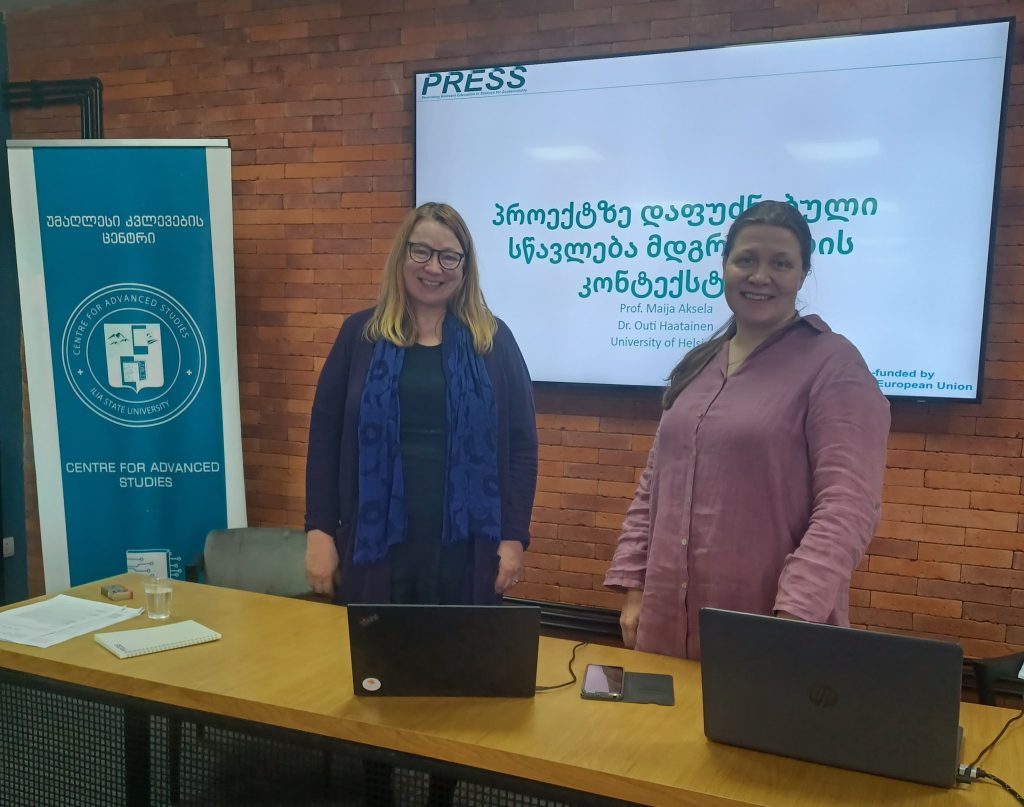
The Memorandum of Understanding was signed at the end of the PRESS-project, which is a part of the Erasmus+ programme.

Our international model can be found in our E-books: In Finnish and in English.

Maija Aksela an postodoctoral researcher Outi Haatainen.
Professor Dr. Maija Aksela and postdoctoral researcher Dr. Outi Haatainen train educators of teachers in sustainability matters. The training took place in Georgia.

Teachers nurturing sustainable development

The latest study published in the LUMAT journal demonstrates the key role of teachers in education related to sustainability and climate change. Teachers’ knowledge and skills related to the content and pedagogy of climate change are linked to their self-efficacy beliefs. The refereed scholarly article is part of the sustainability and climate change research programme of the LUMA Science Helsinki group. The programme collaborates closely with the LUMA Centre Finland network, which comprises 11 universities and 13 centres.

The study is a multimethod case study carried out at the Teachers’ Climate Change Forum continuing education event. A total of 22 teachers from different backgrounds responded to a survey, while 18 teachers from different countries took part in the continuing education session. Of the respondents, 19 participated in semi-structured interviews to supplement quantitative data. The results demonstrate that, on the basis of the interviews, the teachers are willing to engage in continuous learning and develop the teaching of sustainable development.

Sustainability and self-efficacy

Teachers have beliefs about not only sustainability education, but also themselves as sustainability educators. This should be considered in any future use of tools that measure teachers’ perceptions. However, the results of the survey demonstrated that teachers had the lowest self-efficacy beliefs in supporting students’ actions for sustainable development. The above should be taken into consideration in the development of new teaching methods and materials.

Watch a brief video introducing the study. In the video, Professor Maija Aksela, head of the LUMA Science Helsinki research group, introduces the study.

Written by:

Jemima Unger

Further information:

International Journal on Math, Science and Technology Education (helsinki.fi)
International Teachers’ Climate Change Education Forum 2024

If you wish to learn more about research in the field, you can find publications by Professor Maija Aksela and the above-mentioned publications in the field via the following links:

1)Towards Student-Centered Climate Change Education Through Co-design Approach in Science Teacher Education | SpringerLink
2) Teacher agency in using students’ questions in climate change education – Interdisciplinary Journal of Environmental and Science Education (ijese.com)

Maikki Roiha is writing a master’s thesis in chemistry in collaboration with Nokia

Chemistry student Maikki Roiha of the University of Helsinki is working on her master’s thesis in collaboration with Nokia Corporation. She is studying immersion, specifically the opportunities and challenges of using immersive 360-degree videos to teach chemistry on virtual school trips.

“I began to work on my thesis last June, first completing preliminary assignments and the training periods associated with the business collaboration.”

Roiha has been writing parts of her thesis almost from the start, typing up the literature review as soon as she had collected her data.

How to establish business collaboration

Roiha says that the key to business collaboration is networking. Connecting the academic and corporate worlds requires an active approach from the student.

“You have to network. Talk to your thesis supervisors about your interest in business collaboration, as they may know potential partners.”

If this does not work, students can contact companies of interest directly. Alternatively, they should keep track of their university’s job-seeking portal for thesis commissions.

Showing an interest can make the difference

Roiha is interested in exploring an educational technology initiative and using it in chemistry teaching. This type of basic research almost inevitably produces intriguing results.

“I particularly appreciated the chance to witness the development of this kind of technology from the corporate perspective.”

“I was able to participate in other areas of product development too, such as the research-based design of website texts and the compilation of marketing material. Collaboration with experts at Nokia was fascinating, as it gave me the chance to learn more about the culture in a big company and connect it to the academic world. It was a brilliant opportunity to be part of the Nokia work community and meet experts from a wide range of fields.”

Tips for thesis writers

Roiha advises students to choose a topic that interests them and not to be afraid even if they know nothing about it in advance. She also recommends that students create a schedule, take breaks and not aim too high.

“Make a clear schedule to write, for example, Monday through Wednesday from 9 in the morning to 3 in the afternoon. This gives you structure and helps you get started. Take breaks and recharge your brain by getting up and stretching. Fit hobbies into your calendar and respect it,” she says.

The text you write need not be perfect from the get-go. In fact, striving for perfection early on may prevent you from getting anything done.

“In the most difficult moments, it’s enough to open the document for just 10 minutes. This will help you overcome the biggest hurdle – getting started. If you can then keep up the momentum, great! If not, return to the text later.”

Free time and immersion

In her free time, Roiha enjoys physical activity and being outside in nature. Every now and then she plays the guitar.

“Concentrating on activities like these is a great way for me to relax my mind.”

When asked what immersion means, Roiha explains it is about being deeply involved in something, or giving the user a heightened sense of presence in the environment.

“In a virtual environment, you can enhance immersion, for example, with VR glasses or 3D audio. You can increase immersion further by adding interactive elements or visualising the user’s real-world hand movements in the virtual environment.”

Cornerstones of collaboration with Nokia

Roiha has enjoyed her collaboration with Nokia. She has developed new skills and received technical support, supplementing what she has learned at the University.  

“Nokia gave me free rein to test the company’s immersive technology solutions in the context of my choice. I learned to use them better and got help when I needed it. In turn, I’ve been able to offer Nokia my expertise in educational research and provided useful knowledge through my research.”

Skills learned at the University and elsewhere have equipped Roiha well for planning, coordinating and implementing a project with multiple partners.

“I’m grateful to everyone who has given their time to support my project. Big thanks to the HelsinkiALD team and Doctoral Researcher Alexander Weiß, Senior University Lecturer Sami Hietala and Senior Engineer Sami Heikkinen. Thanks also to ChemistryLab Gadolin, all research participants and the persons supervising my work at Nokia and the University.”

Roiha’s thesis supervisors are Professor Maija Aksela and Docent Johannes Pernaa of the University’s Chemistry Teacher Education Unit. The project is part of LUMA Centre Finland’s science education research on modern technologies.

The Finnish version of this article has been published on the LUMA Centre Finland website.


Celebrating the 20th anniversary of LUMA work in Finland – Joy of science!

LUMA Centre Finland is a science education network of 11 universities and 13 centres in Finland. The aim of our activity is to motivate and inspire children and youth into the STEM-fields, mathematics, science and technology. In this anniversary article Maija Aksela, the Director of the LUMA-network (LUMA meaning STEM in English) will share her views on the anniversary and the impact of LUMA.

– Science belongs to everyone! The best part of our operations during the past 20 years have been the joy of learning and success of the children and young people, the makers of the future! In addition, doing together and learning from each other about science. Together with teachers, the scientific community and other cooperative partners we have built new openings in a research-based way, new best approaches and materials for a sustainable future, also globally. Together we are more! says Director, Professor Maija Aksela, LUMA “mother”, LUMA Centre Finland (11 universities, 13 centres), from the University of Helsinki.

LUMA is an abbreviation of the Finnish words for natural sciences and mathematics. According to international PISA-results, Finnish youth achieve good results in the fields of natural sciences and mathematics.

National LUMA-strategy

The national LUMA-strategy involves ensuring that there is science and mathematics competence and understanding in society to promote wellbeing and growth that is socially, ecologically and economically sustainable.

LUMA Centre at the University of Helsinki started 20 years ago. LUMA Centre Finland (11 universities, 13 centres) started 10 years ago. On the other hand, ChemistryLab Gadolin, was founded 15 years ago.

Please view our LUMA book for more information here.

Anniversary celebration

LUMA Centre Finland celebrates its 20th anniversary with an anniversary seminar on Friday, 10th of November at 13.15 pm at the University of Helsinki. You have the possibility to participate on-site at Unioninkatu 33, in the banquet hall, or online. The event will begin with cake and coffee at 12.15, for those who are interested, and will end at 15.00.

The Minister of Science and Culture, Sari Multala, will be speaking at the event. In addition, Kai Nordlund, Vice rector of the University of Helsinki will be sharing his views in the event. Furthermore, Laura Taajamaa, Senior Ministerial Adviser, Ministry of Education & Culture, will be sharing the LUMA-strategy and its meaning. Awards will also be given to schools and teachers, as a recognition of their work. We would like to thank and encourage teachers in their important work. 

For more information about the programme, please view our anniversary schedule here – the seminar will be held in Finnish and partially in Swedish.

Furthermore, we receive congratulation responses at the address luma-keskus@helsinki.fi. Please feel free to contact us and cheer us on!

You have the possibility to donate and support our projects financially here.

Thank you all, who have supported us in previous years.

International StarT LUMA programme: A successful story from Jordania

Participating nations in the StarT programme met in Jordania in August. The director of the Ministry of Education awarded LUMA Centre Finland with a certification of collaboration with Jordania at the Jordan University. Since the year 2016 LUMA Centre Finland (11 universities and 13 centres) has organized the awarded international StarT LUMA programme. Over 70 countries have participated in it. More than 10 countries have been its official partners. A lot of joy for makers of the future!

Jordania has organized a successful StarT LUMA Jordania programme since the year 2018 – managed by the Innovation for Creativity Development Association (ICDA). This year they invited the director, professor Maija Aksela from the LUMA Centre Finland, to visit their award event at the University of Jordania, and their innovative camp for the best StarT LUMA participants in Jordania, at the German Jordan University. 

– The StarT LUMA model in Jordania is innovative and collaborative. Their talented students and teachers presented successful projects. Makers of the future in our hearts! We all are going to strengthen our collaboration in the near future. One dream is an international StarT LUMA science camp in Helsinki, next August before our LUMA days and Science on Stage event. Together we are more! says director and professor Maija Aksela from the University of Helsinki.

She is also grateful for a certification for LUMA Centre Finland regarding our collaboration that has lasted 5 years. 

The collaboration and partnership between the ICDA and LUMA Centre Finland, began after the association won the international grand prize for best educational practices in the LUMA StarT competition, for its project “Future Scientists National Program.”

Excellence in education

The recognition by LUMA Centre Finland served as an acknowledgment of this initiative and an incentive for the association to continue its efforts, adhering to global standards. This recognition extends to the association’s leadership, partners, students, schools, and teachers alike.

– What stands out in this collaboration is the unique formulation of excellent educational practices, built upon collaborative work, an integrated approach, and the STEAM approach, says Surayya Ayyad, chair for the ICDA.

A first StarT Ambassador certification of great collaboration and success was given to chair Surayya Ayyad by director Maija Aksela.

Moreover, it encourages schools to delve into topics addressing global and national issues, fostering the creation of activities and projects involving students and teachers from various subjects, enhancing learning through projects and topics.

– This collaboration acted as a driving force for students and supervisors to explore global experiences and work according to international standards, cultivating a broad perspective to serve humanity, the country, and the world in these projects. Lastly, the focus is on 21st-century skills and sustainable development goals, explains Surayya Ayyad, chair for the ICDA.

Harnessing the creativity of young minds

The Future Scientists National Program competition was initially implemented at the Jordanian level, with aspirations to extend its reach to the Arab and international levels through collaboration with international partners.

– We firmly believe in collaborative work and the necessity of exposing our youth to global issues, working towards serving humanity and achieving a bright future by harnessing the potential, knowledge, and creativity of young minds, explains Surayya Ayyad.

The collaboration with LUMA Centre Finland provided a wonderful opportunity to work with a global professional initiative that operates with a high level of transparency, professionalism, and educational standards. This initiative is based on a robust educational system that has achieved outstanding global accomplishments. Operating according to these standards has bestowed us with significant experience in acquiring and sharing knowledge, contributing to the educational system and schools participating in the StarT competition. Specifically, our focus has been on integrating project-based teaching through the integrative approach.

Collaboration and solving global challenges together

A part of Surayya’s dreams of collaboration are that international cooperation would result in solving global challenges, through for example providing winning opportunities for collaborative projects between schools from Finland and Jordan.

–  These projects could address global issues such as sustainable development goals, climate change, renewable energy, and 21st-century skills.

StarT LUMA Programme

In the international StarT LUMA programme we aim to implement a new interdisciplinary and collaborative StarT way of working and thinking to schools. It is based on research and enforced by the newest core curriculum of Finland. StarT is operated by LUMA Centre Finland, which is a network of Finnish universities. We are working to ensure the high quality of science, technology, and mathematics teaching in Finland. Through StarT we also aim to encourage young people to take up an interest in science, technology, and mathematics and to strengthen their science skills.

The Innovation Development Association (ICDA) is a Jordanian voluntary cultural association founded in 2013, focusing on discovering, developing, and empowering the abilities of children and youth. Its motto is “Investing in Human”.                                                               

Read more about Surayya Ayyad and StarT in the World gifted newsletter.

Science on Stage Festivals 2024 in Turku – apply now with your project!

Lue lisää tapahtumasta suomeksi.
Läs mer om festivalen på svenska.

Teacher, early childhood educator, or teacher-student in the field of STEM education, do you have a teaching idea, material, or best practice that you would like to share with other teachers around Europe?

Science on Stage festivals is Europe’s largest educational event for STEM teachers. The international fair aims to share ideas, learn new things, and get to know international colleagues. In 2022, the festivals brought together 450 European teachers from more than 30 countries.

In 2024, the festivals will be held in Turku, Finland at the same time as the national LUMA days. Finnish teachers, among teachers from all Europan countries, will have an incredible opportunity to get to know the ideas of their European colleagues. The theme of the 2024 festival will be Sustainability in STEM education. We have compiled important information on this page for those interested in participating. You can read more about the event itself here.

How can I participate in the event?

There are three ways to participate in the Science on Stage festival:

  • By applying to present your idea at the event. The teacher presenting their idea or project has the opportunity to participate in all the programs throughout the event from 12 to 15 August 2024 for free. The presenters’ travel, accommodation, and meals are paid for during the event.
  • By applying to present your “Joint project”. Have you seen a project at the festival you especially like? Do you want to continue the exchange with an international colleague you met at the festival? School teachers from different countries who met each other at the European Science on Stage festival or at another conference/workshop (at least one of them must have attended the festival as a delegate) can apply for a travel scholarship to deepen the exchange or develop a new STEM project together. Read more here
  • As an event visitor, i.e. public, on the open day for free. We do not cover the public’s travel, accommodation, or dining expenses.

Apply now to join the Finnish delegation!

By filling out the application form within the application period, you are on your way to becoming a fair exhibitor. You can find more information about the search on this page. All teachers and teacher-students or other employees in the field of teaching and education who are over 18 years old and live and teach permanently in Finland can apply to be part of the Finnish delegation.

During the fall of 2023, 30 projects or practices will be selected from Finland, whose presenters will be able to participate in the festival for the entire four days. The project must be related to one of the guiding themes of the event, which are listed below. You can implement the project itself well before the application, for example in autumn 2022 or spring 2023. 

Guiding themes

All projects presented in the festival represent inquiry-based learning approaches.

  • STEM for the Youngest: Projects to promote STEM in elementary school for kids, 10 years or younger
  • STEM Education for Sustainable Development: Projects that contribute to the achievement of the 17 Sustainable Development Goals
  • Digital Technologies in STEM Education: Projects on programming, digital education, ICT, Big Data, artificial intelligence, virtual reality, etc.
  • Diversity in STEM Teaching: Projects that reflect the heterogeneity and diversity of our society, e.g. teaching methods that engage students with different learning levels or different cultural backgrounds.
  • STEAM in Education: Projects combining natural science with other disciplines, e.g. science, technology, engineering, or mathematics with arts, music, sports, history, etc.
  • Low-Cost Experiments in STEM Education: Projects that are low-cost to implement
  • Joint Projects: Projects developed collaboratively by teachers who have met at one of the past Science on Stage events (e.g., festival, webinar, professional development, network meeting, project)
  • STEM for Teachers in Training: Projects that have been developed during pre-service teacher training or teacher traineeship

The application period for the Finnish delegation was August 1–October 31, 2023. 

Project assessment criteria

The projects and practices presented at the Science on Stage festival must meet one or more of the following criteria:

  • is from teachers to teachers,
  • promotes research-based teaching of STEM subjects (natural sciences, mathematics, technology, and environmental studies),
  • integrates into learners’ everyday life or can easily be implemented as part of teaching,
  • is easy to implement with reasonable resources,
  • promotes sustainable development know-how.

In addition, we hope that selected teachers, supervisors, or students:

  • the ability to present a project or teaching practice in English,
  • a curious mind to get to know the teaching practices of other countries,
  • interest in European cooperation,
  • and an interest in sharing teaching practices within your own school, kindergarten, or learning community.


When and how are applications evaluated?

The applications are reviewed by a team of LUMA Center Finland educational experts. The team selects the 40 best applications from all the applications, after which the Science on Stage Finland steering group selects 30 projects or practices that will participate in the event. The remaining 10 applicants are on a waiting list if one of those selected cannot participate in the event.

We welcome applications from teachers, instructors, and teacher-students of all ages from all over Finland. In our selections, we try to take the following things into account:

  • different subjects and themes,
  • different levels of education and
  • the location of the school, kindergarten, or other learning community in Finland.

Selections will be made during November and applicants will be notified of the selections by email no later than 31 November 2023.

What happens when my project is selected for the Science on Stage festival?

First of all, we congratulate you! After that, we ask you to fill out the application with additional information, in English, during the winter:

  • A short summary of the project (max. 700 characters) in English.
  • An English-language poster about the project or practice, you will get more detailed instructions for this after the selection.

We will publish the name of the learning community, the name of the project or practice, and a description on the event’s website.

When the time for the event comes, we ask you to come to Turku on August 12-15, 2024. We pay for one project/practice presenter’s travel tickets/transportation, overnight stay during the event, and meals. We do not reimburse participants’ per diems or possible substitute expenses. The program of the event is free for participants.

Due to limited resources, we can only cover the travel costs of one presenter per project/practice. If you want to participate in the event with a colleague or friend, you can purchase another event ticket via the event registration form. The event ticket includes accommodation and meals during the event. The ticket office automatically calculates the ticket price and the ticket must be paid at the time of registration. Registration for the event and the ticket office will open in early 2024.

Do you have any questions?

Contact us by email at luma-keskus ((at)) helsinki.fi

We reserve the right to make changes to the information on the page.

Evästeasetukset
LUMA-kukka ilman tekstiä

This website uses cookies so that we can provide you with the best user experience possible. Cookie information is stored in your browser and performs functions such as recognizing you when you return to our website and helping our team to understand which sections of the website you find most interesting and useful.

You can adjust all of your cookie settings in this view.

Strictly Necessary Cookies

Strictly Necessary Cookie should be enabled at all times so that we can save your preferences for cookie settings.

Analytics

This website uses Google Analytics to collect anonymous information such as the number of visitors to the site, and the most popular pages.

Keeping this cookie enabled helps us to improve our website.