“No Demon, no saviour”: International white paper dispels myths about digital media

LUMA Centre Finland is a long-time member of the “International Dialogue on STEM Education” (IDoS) network. The network has published a new white paper “Early STEM Education in the Digital Age” that shows how digital tools can improve STEM education for young learners. It presents research findings and best practices from six of the world’s leading STEM Education organisations (the “IDoS peers”) and provides clear recommendations for weighing up the benefits and risks of using technology in early education. 

“Are technologies making us dumber?”, “Are technologies good tools for learning?”, “Why are we seduced by the screens?” Questions like these dominate the debate on digital media in early STEM Education. Conflicting theories, myths, and polarised opinions make it increasingly difficult for educators and decision-makers to choose how, or if, to integrate these technologies in pre-school learning or the classroom.

“Are technologies making us dumber?” Paper debunks myths about digital media

The white paper offers six recommendations to advance early STEM Education with digital tools. The authors suggest a “pedagogy first” approach, whereby the teaching methods and learning objectives drive the use of the tool, not the other way around. Each recommendation is backed by practical examples from the network members.

“We aimed to dispel the myths that present digital tools as either the ‘demon’ or the ‘saviour’ of education,” says Dr Elena Pasquinelli, Head of the Research & Evaluation sector at the French Fondation La main à la pâte and the leading author of the paper. “The truth is, digital tools are neither – as our research in this field shows. Their effectiveness depends entirely on how they are used by pedagogues.”

Six recommendations to advance early STEM Education with digital tools

  1. Integrate technology with purpose: Justify digital tools based on clear learning objectives in STEM Education.
  2. Prioritise pedagogy: Effective teaching methods must drive technology use in STEM – not vice versa.
  3. Enhance, don’t replace: Use digital tools to complement real-world STEM learning.
  4. Prepare for success: Invest in teacher training and infrastructure for effective digital integration that benefits all.
  5. Empower digital literacy: Transform STEM Education to navigate a rapidly changing world.
  6. Use evidence-based practices: Leverage research to enhance STEM Education and effective teacher training.

A resource for policymakers and educators in Finland and worldwide

The IDoS peers provide practical guidance for policymakers and other educational stakeholders by showcasing examples of high-quality technology use in daycare centres, classrooms, and teacher training. In their paper, they also outline how they have integrated digitalisation within their own organisations and expanded their STEM Education programmes through digital advancements.

Dr Barbara Filtzinger, Head of Education at Siemens Stiftung says: “Our experience in Europe, Africa, Latin America, and now in India shows that digital technologies are deeply embedded in cultural practices and create new possibilities for collaborative learning and knowledge exchange. We engage with communities, teachers, and parents to co-create Open Education Resources that are free and can be easily adapted to meet the needs and contexts of students around the world. In the paper, we share best practices on how extensive teacher training and providing access to digital learning materials are preparing our next generation to thrive in a future characterised by digitalisation”.

LUMA Centre Finland – International cooperation and STEM-development at heart

LUMA Centre Finland has reached 100 000 kids and youth makers of the future face to face and over one million participants online during the year of 2023; now, the number is only growing. STEM-fields and the learning in these are at heart of the operations.

The LUMA Centre Finland network – comprising of 11 universities – is developing new models of learning and innovations in pedagogy and science. Teachers and students are the main groups of interest, in this effort to establish a solid knowledge of STEM in Finland and even globally.

LUMA Centre Finland is committed to the continuous education of students and teachers in the STEM-fields.

Next year, our operations will increasingly expand, and international development will go hand in hand with our national operations.

We hope that you will continue collaborating with us, as a new chapter in our story begins. Subscribe to our international newsletter.

– Makers of the future are in our hearts globally. Kids and youth need inspiring evidence-based education for a good, sustainable future. We are open for collaboration nationally and globally. Together we are more! encourages Maija Aksela, leader of the national LUMA Centre Finland network.

Written by: Jemima Unger, Communications specialist, LUMA Centre Finland (University of Helsinki)

The annual Teachers’ Climate Change Forum – spreading the flame of scientific research in the world

The annual Teachers’ Climate Change Forum – organized at the Hyytiälä Forest Station in Finland – provided teachers and avid learners with opportunities to interact, learn about climate change, project learning and open data in teaching. The Forum was organized September 1st to 3rd in the fall of 2024.

Teachers’ responses regarding the Forum were overwhelmingly positive. In summary, the event was packed with information, provided workshops, lectures, and keynote lectures in a multidisciplinary manner. Furthermore, cross border research and national cooperation shine at the heart of the Forum.

– This kind of climate education is one of the major missions in our country. We have business groups cooperating with scientists to develop materials and raise the public awareness and consensus regarding climate change, says Professor Ying-Shao Hsu from the National Taiwan Normal University (NTNU) in Taiwan.

Teacher’s need support from climate change specialists and scientists to be able to understand the complexities of climate change, in order to develop materials for current and future learners.

– Climate change education is important because it addresses urgent issues and aids in developing materials, to implement better strategies in the future, she summarizes.

Collaboration and complex issues considering science

One of the highlights of the international Forum – gathering participants from 7 different countries – was a visit to the SMEAR II Research Station; a station concealed in the surrounding forest.

– Climate change is a topic of global concern, yet climate change education has not received adequate attention around the world. Furthermore, the lack of systematic research makes this “Teachers’ Climate Change Forum”, now in its seventh year, more necessary and forward-thinking, says participant and University of Helsinki PhD student, Ruonan Hu from China.

Unquestionably, some of the cornerstones of the Forum were forming friendships, establishing cross border collaborations, and coming up with creative ways to tackle climate changes. According to Hu, the Forum can be described in the following way: scientifically rigorous, packed with information, focused on innovation, thoroughly engaging, and globally influential.

– The forum had significant “global influence.” International research projects like the art and science school project and the core beliefs survey provided excellent examples of how cross border research is conducted, says Hu.

The Teachers’ Climate Change Forum will be organized at the Hyytiälä Forest Station in the Fall of 2025. Please feel free to join us teacher!

The Forum is organized by the University of Helsinki Science Education (a part of LUMA Centre Finland) and Institute for Atmospheric and Earth System Research (INAR). The director of the Forum is professor Maija Aksela (LUMA Centre Finland) and the deputy director is Senior University Lecturer Taina Ruuskanen (INAR).

Seventh Teachers’ Climate Change Forum in Hyytiälä – Explore photos and lecture materials

The seventh international Teachers’ Climate Change Forum was held at Hyytiälä Forestry Field Station from 1 to 3 September 2024. Participants and teachers from seven countries enjoyed collaborative learning, interaction, workshops and daily lectures. This year’s topic was teacher–researcher collaboration. In traditional Finnish style, the participants had the opportunity to relax in a sauna, barbecue and hike in the forest together. The forum was organised collaboratively by the University of Helsinki’s Academic Outreach Network (part of LUMA Centre Finland) and the Institute for Atmospheric and Earth System Research (INAR).

The annual Teachers’ Climate Change Forum brings together teachers from all over the world to learn more about climate change and related research and teaching. First held in 2017, the forum is aimed at all teachers interested in climate education and develops their professional skills through versatile talks and workshops.

Co-design and climate education at Hyytiälä Forestry Field Station

The keynote speaker was Professor Ying-Shao Hsu of the National Taiwan Normal University (NTNU). She focused on co-design, an approach embracing all perspectives and engaging specialists in various fields.

“This type of climate education is fundamental to our country’s mission. Some of our multinational conglomerates collaborate with science educators,” she says. 

It is important to communicate about climate change, related research and climate education to the general public as well. Ying-Shao Hsu explains that a broad consensus on climate issues is being sought in Taiwan too.

An enlightening and enjoyable experience for teachers and future generations

The feedback regarding the forum has been very positive. Topics of interest to the participants included the use of open data in teaching, collaborative discussion and design, and the enhancement of student motivation. 

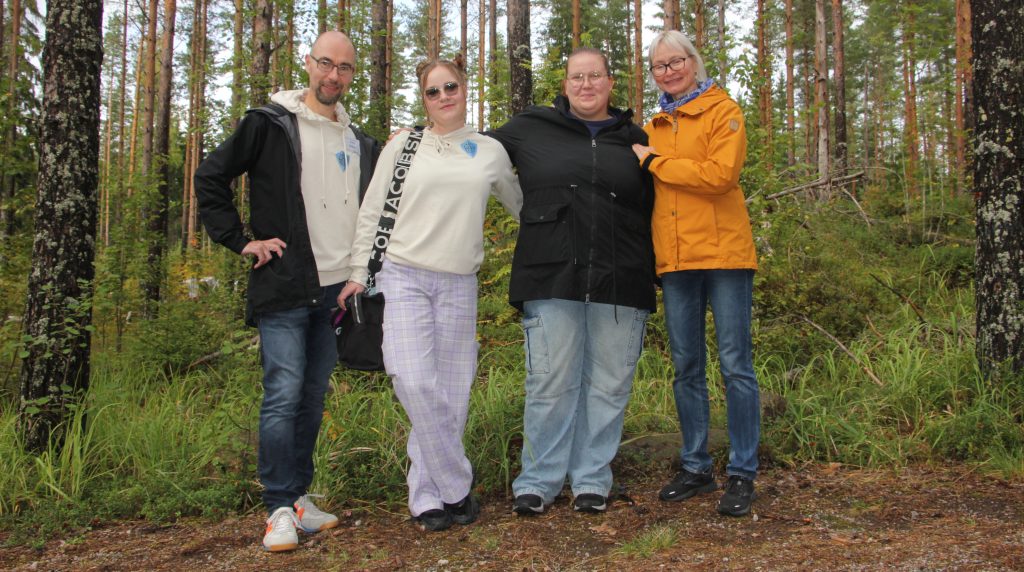
A group of general upper secondary school students and staff calling themselves Climate Warriors focus on engaging students as sustainability educators, establishing friendships, promoting a collaborative approach and using social media to resolve climate issues and increase climate awareness. Pictured, from left, teacher Jarmo Lehtinen, students Milla and Wilma, and teacher Merja Kuisma.

The forum organisers from the University of Helsinki are actively involved in climate education. From left, Specialist Topias Ikävalko, Online Moderator Juliana Friedrichsen, Doctoral Researcher Janina Taurinen and the forum’s deputy director, Senior University Lecturer Taina Ruuskanen. Missing from the photo is the forum’s director and founder, Professor Maija Aksela of the University of Helsinki, who is also Director of LUMA Centre Finland.

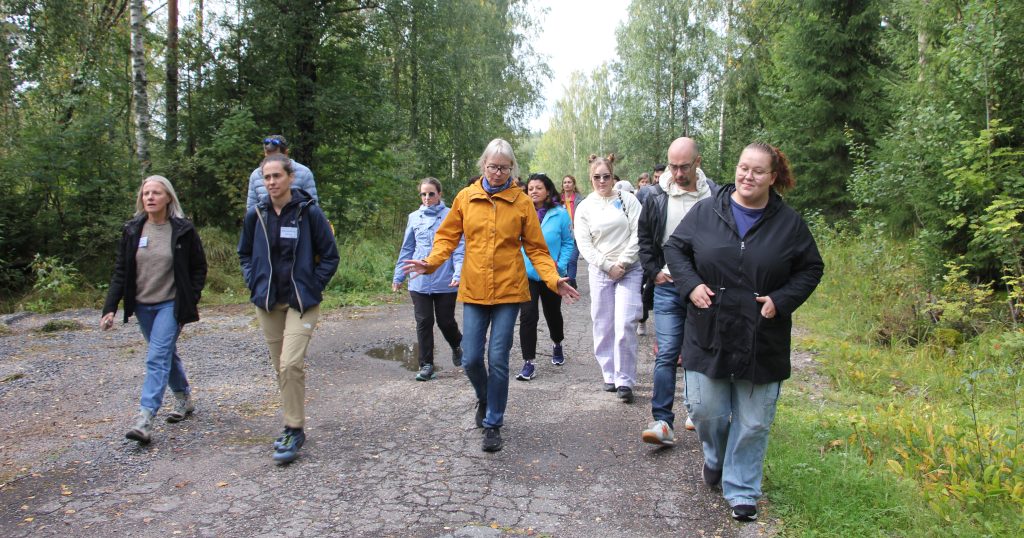
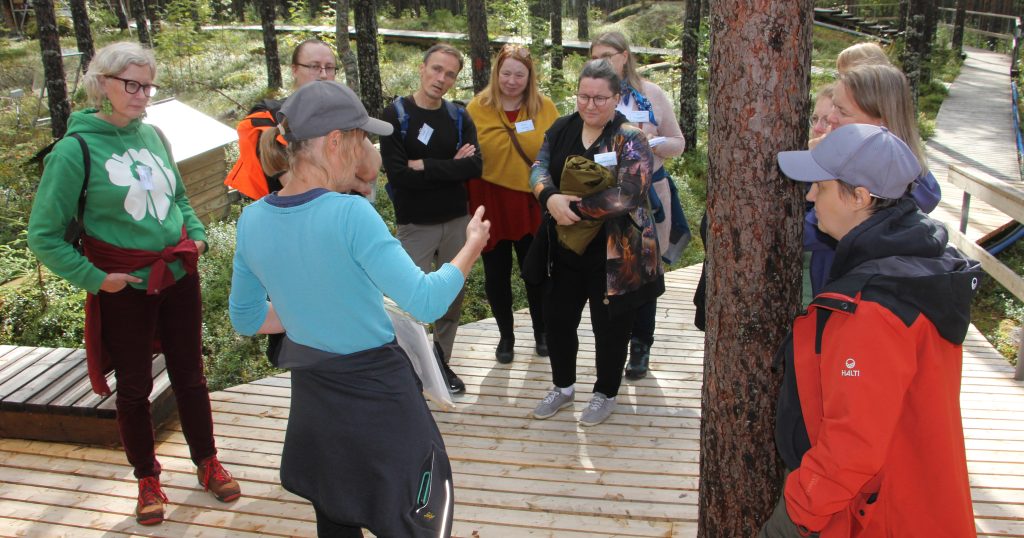
In Hyytiälä, the forum participants explored the wonders of the forest, forestry research and the effects of climate change.

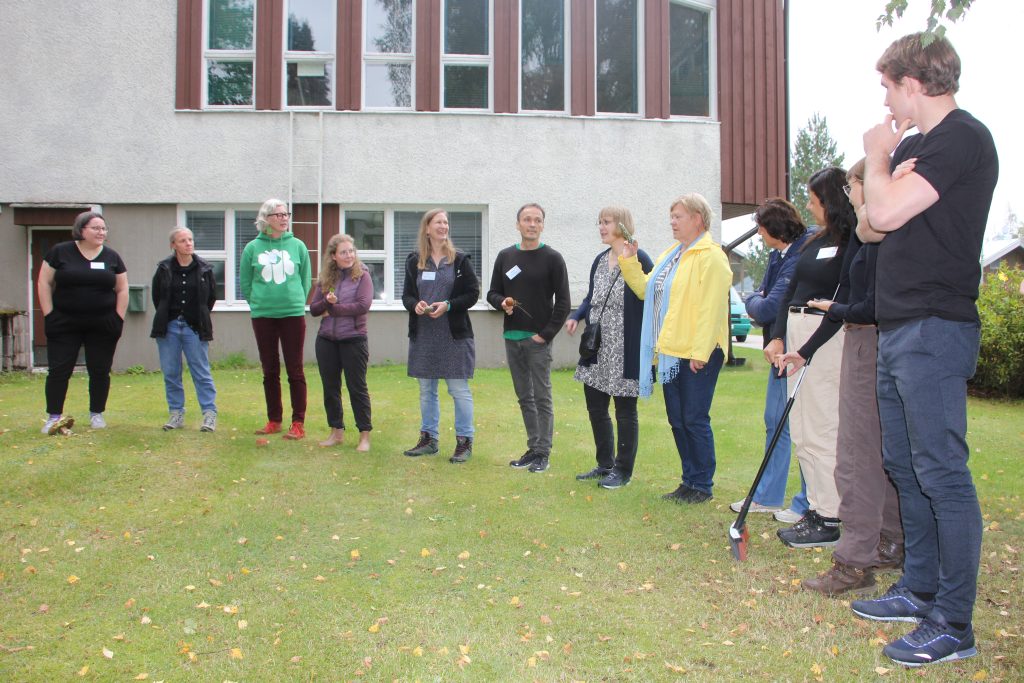
Both teachers and younger participants appreciated the sense of community and the chance to learn in nature and exchange ideas.

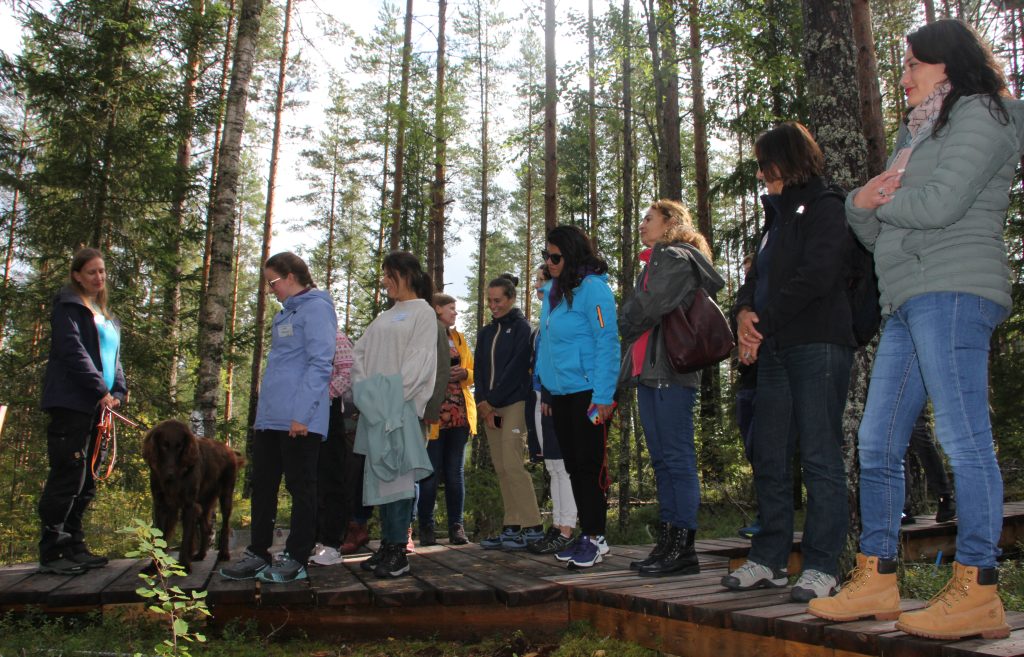
Teachers and researchers enjoyed a visit to the SMEAR II research station and came away with a wealth of knowledge about forests and climate change.

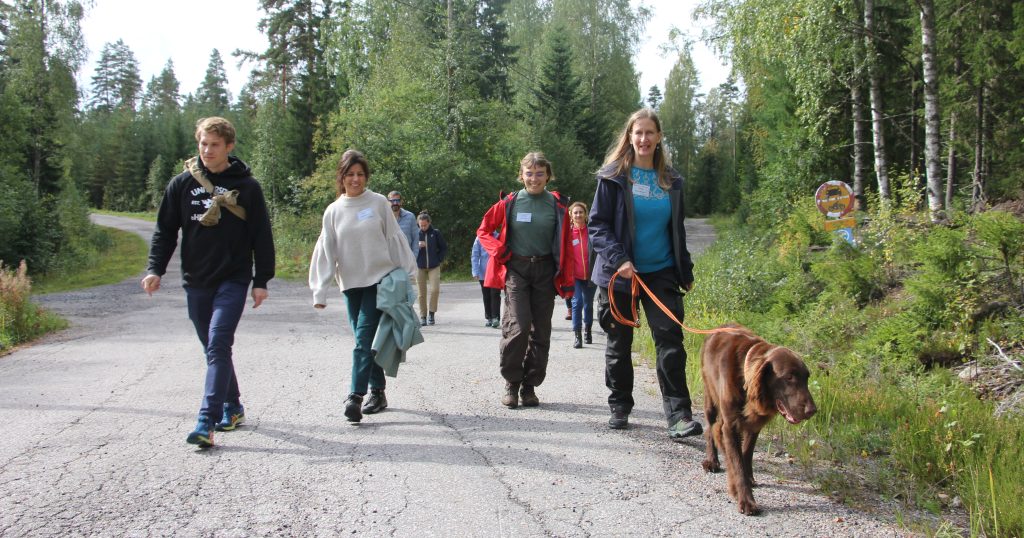
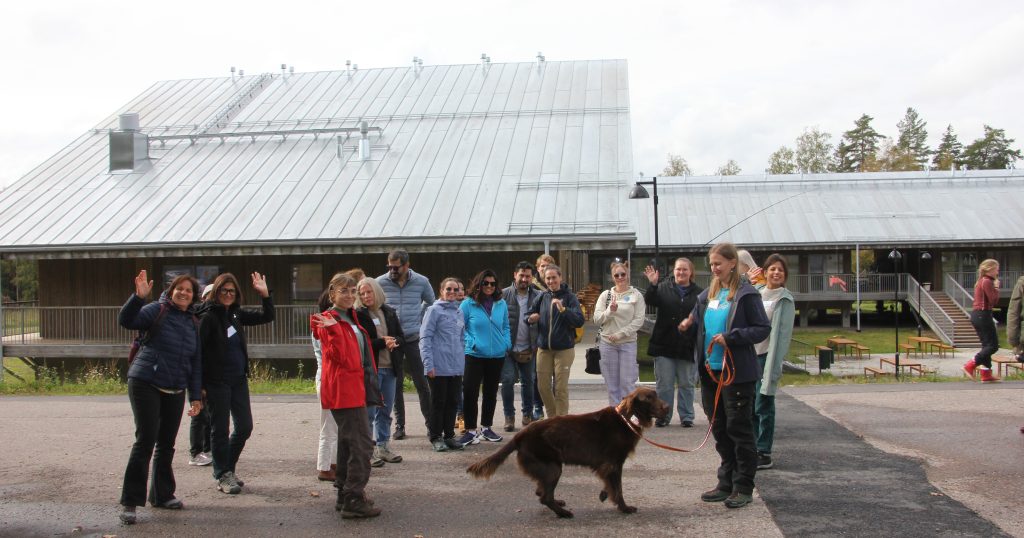
In the photo, participants are getting ready for a nature walk led by Senior University Lecturer Taina Ruuskanen. Hyytiälä Forestry Field Station operates under the auspices of the University of Helsinki’s Faculty of Agriculture and Forestry. The new international, multidisciplinary building visible in the photo was completed last year and nominated for the Finlandia Prize for Architecture 2024.

Workshops were held outside in a hybrid format, both on site and remotely. The programme in Hyytiälä included the creative generation of a vision for a sustainable future.

Event materials and lectures are available here. By creating a profile, you can easily log in and explore the latest climate education resources.

Subscribe to a newsletter in English.

Writer:

Jemima Unger, specialist in communication and community relations, LUMA Centre Finland (University of Helsinki)


International Teachers’ Climate Change Forum is held on 2.–3. September 2024 as a hybrid event

University of Helsinki Science Education, a part of LUMA Centre Finland, and the Institute for Atmospheric and Earth System Research (INAR) are again organizing the international Teachers’ Climate Change Forum 2024 (TCCF). The hybrid event is a chance for continuous professional development for teachers at all levels of education.

Teachers’ Climate Change Forum is about climate science, climate education, and the connection between these two domains. This year, the Teachers’ Climate Change Forum will be held on the 2nd and 3rd of September 2024 as a hybrid event.

Collaboration between scientists and teachers is important in climate change education. It has been our pleasure to organize this forum together with the INAR scientists since the year 2017. Together we are more! says the founder and director of the forum, Professor Maija Aksela from LUMA Centre Finland, University of Helsinki.

Morning sessions are on-site in Hyytiälä Forest Station, where there is hands-on work with teachers. Afternoon sessions are hybrid so that everyone can attend also online. There is a possibility to create hubs outside Finland where local teachers can attend the forum together, meet each other, and discuss afternoon workshop topics. You can also choose to attend only the virtual event in the mornings.

Registration for remote participation is now open. The registration fee is 24.80€. The program for remote participants is on Monday, September 2. from 14:30 to 16:30 and on Tuesday 3.9. from 12:00 to 16:00.

Read more about the program and register through this link.

Online program

Monday September 2nd at 14.00–16.30 

Keynote lectures and group discussions on-site and remotely

Chair, Professor Maija Aksela, online moderator Julia Friedrichsen, University of Helsinki

  • Co-designing for innovative climate change education, Professor Ying-Shao Hsu, National Taiwan Normal University (NTNU). Dr. Ying-Shao Hsu’s (M.S., Ph.D.) primary research interests include socio-scientific issues (SSI) learning, technology-infused science education, curriculum design, metacognition, and STEM education. She specializes in developing SSI-based curricula and investigating scaffolds that improve students’ decision-making and metacognition in SSI contexts.
  • Insights to Hyytiälä Living Lab research: Climate impacts of sustainable wood constructions, Professor Pasi Puttonen, University of Helsinki. Wooden buildings as a learning environment, Professor Tuula Jyske, University of Helsinki
  • Climate education networks, University Lecturer Laura Riuttanen, University of Helsinki
  • Climate mobilities education: The power of art-science-school collaboration in Finland and Greece, Postdoctoral Research Fellow Vilhemiina Vainikka, Tampere University

Tuesday September 3rd at 12.00–16.00

  • Visioning sustainable futures through creative methods, Hybrid workshop, Postdoctoral Researcher Anna Lehtonen, University of Jyväskylä
  • Oranssi Lumi – an exploratory journey through atmospheric events, Ana Álvarez Piedehierro, Finnish Meteorological Institute
  • Teaching and learning climate-related issues in discipline-based upper secondary school through project-based learning, Professor Jari Lavonen, University of Helsinki
  • Closing discussion, Professor Maija Aksela, University of Helsinki

Read about the whole program through this link.

New Memorandum of Understanding signed with Bhutan – Taking STEM-education a step ahead

LUMA Centre Finland and the Royal University of Bhutan signed a Memorandum of Understanding on August 13, 2023. Photograph: Dr Som Gurung (left), professor Maija Aksela (centre) and chair of the board of LUMA Centre Finland, professor Jan Lundell (right). 

Collaboration started when director, professor Maija Aksela, was invited to Bhutan in the year of 2023. 

Dr Som Gurung from the Royal University of Bhutan says that he is excited about the collaboration. During his visit to Finland he familiarized himself with the Kumpula Campus at the University of Helsinki, Aalto University and the STEM-activities at the University of Turku, according to his wishes. In addition, he participated in the 20th LUMA-days (STEM-days) and the international Science on Stage event in Turku. The event gathered participants from over 50 different countries

– The new agreement that we have signed between LUMA Centre Finland, and the Royal University of Bhutan, will give novel horizons of learning and teaching and taking STEM-education a step ahead, from the experience that Finland has shared with so many other countries. We are very proud that STEM and its benefits that people and countries around Europe have built, which I can see very much at the Science on Stage festival in Turku.

In Finland, Dr Gurung has learned about the extraordinary initiative from teachers to teachers. It is a remarkable effort for educating young children for the future. Soon, Dr Gurung is looking forward to the exchange of knowledge and strengthening communication, between Finland and Bhutan.

– In the near future, we would like to have a lot of exchange of knowledge between our people, our students and our faculty and we wish that we have several mobility programs between Bhutan and Finland, where our students and faculty can come and go to Finland and learn from Finland. And maybe some faculties, and students from Finland, and get immersed in our values and STEM-education as well as enjoy the beauty of the Himalayas.

Dr Gurung challenges teachers to continuously ask themselves to teach better and to have a heart for the student. To be constantly prepared for the pursuit of sharing knowledge and to be ready for tomorrows citizen.

– How can I prepare my students for tomorrows world? This is in the heart of the teacher. The student is the center point for the teacher.

Professor Maija Aksela from the University of Helsinki highlights the importance of collaboration and learning from each other.

– Together we are more! The teaching in Bhutan involves a lot of things that we can learn from. For example, spiritual happiness, valuing nature and traditions, Aksela mentions.

Teachers as keys to success

The teachers are the keys to success in bringing the STEM-education forward. Dr Gurung mentions the admirable efforts of Finnish teachers and the Science on Stage festival in Turku, Finland.

– Teachers in Finland think their students are a real achievement. But to let your students shine in the future you must have it in your heart.

– Teachers to teachers and the forum that LUMA has organized, what is happening in Europe and outside. It is a great idea. It is not just the students who are coming to learn. But it is the teachers who are creating the learning environment. The students don’t have the fear of going to school but have an excitement to go to school.

Another key thing that Dr. Gurung mentions is trust. Trust and collaboration go hand in hand. Growing in the STEM-field and strengthening cooperation and communication is also on the agenda.

– The most important part of collaboration in is trust. We need to trust each other. And when we have the trust in each party we are already there – counting on our success.

LUMA Centre Finland Brings International STEM Teachers’ Mega Event to Finland for the First Time

For the first time, Finland will host one of Europe’s largest teaching events, the Science on Stage festival, as part of the national LUMA Days for teachers. The event showcases the best practices in teaching mathematics and science worldwide. LUMA Days will be held on August 14-15 in Turku, gathering over 800 teachers from more than 50 countries. You can participate virtually too and join the opening ceremony on the 12th of August already.

Celebrating its 20th anniversary, the national LUMA Days will feature various activities, including international workshops and open house events. Participation is free, and the event offers programs in Finnish, Swedish, and English. Registration is still open; attendees can participate for one day or join a single workshop. Detailed information and registration can be found on the event website.

– Teachers play a crucial role as change agents for a sustainable future. They deserve all the appreciation, support, and opportunities to learn from and meet each other. Together we are more! says Maija Aksela, Director of the LUMA Centre Finland network.

Participate in the event – also online

The Science on Stage festival, a non-profit fair event, recognizes the essential role of teachers in building a sustainable future. In 2024, the festival will focus on sustainability and celebrate dedicated teachers and their excellent teaching ideas. Teachers from different countries will present their educational practices and methods in mathematics and science. Finland will showcase 28 projects, ranging from art gardens to AI tutor robots and marine physics studies. The event can also be followed online through the event website. The online program consists of the main stage program:

  • Opening Ceremony, Mon 12.8. at 17:00 Including a pre-recorded video greeting by Commissioner Ms Iliana Ivanova
  • Keynote sessions, Tue-Thu 13.-15.8. at 09:00
  • Award Ceremony, Thu 15.8. at 12:00

Partners for this major event include Science on Stage Finland and Science on Stage Europe, supported by the City of Turku, local universities, various organizations, and companies. The highlight, however, is on the teachers. From Taipalsaari’s Kirkonkylä School, preschool teachers Kirsi Rehunen and Sanna Kolhonen will participate with their project How Long is a Second and Other Time Studies. This project, which began with children’s questions, explores and develops time-related studies, encouraging children’s natural curiosity about the world around them.

Taipalsaari has a long tradition of research projects related to the preschool year. The best research stems from everyday wonder, from questions about everyday phenomena that preschoolers want to explore and investigate. It is an honor to be among Finnish teachers showcasing our expertise to international colleagues, say Rehunen and Kolhonen.

Every teaching project selected for the fair is summarized in a poster, available on the event website

In addition to the Wednesday fair, LUMA Days will offer numerous workshops on various topics. Thursday’s workshops will feature new approaches to teaching mathematics using virtual reality, artificial intelligence, and mathematical linguistics. Participants can also explore the science education efforts of the LUMA Centre of Southwestern Finland at the University of Turku and Åbo Akademi University’s Skolresurs.

Interested to learn more?

Subscribe to our newsletter here and read a book about the network here.

“The best day I’ve had in ages!” – Learning together in a science club 

This spring – children, future and current teachers, and even parents – studied the wonders of science in clubs organised at schools. As part of the international multiannual StarT programme coordinated by LUMA Centre Finland, a new type of science club has been trialled and developed. In it, learners are the stars – their questions, creativity and skills lie at the heart of the activities.

Science clubs are effective and meaningful learning environments that may be integrated into school curricula, teacher training or extracurricular science education for families. This spring, the StarT programme organised by the LUMA Centre Finland network, has been testing a new collaborative model of science club activities in Finland and three other countries: South Africa, Indonesia and Jordan. Besides a learner-centred emphasis, the key to the model is collaboration, which supports emotional skills and inclusivity. Project-based learning is the working style and and an important research topic in the programme. 

The multiannual StarT programme also includes an English-language online course. The course provides support for collaborative project-based learning as well as examples of studying in StarT science clubs. Collaborative learning is also supported by a webinar and the international StarT LUMA Science Camp event. 

Research and innovation

Through the programme’s research, the aim is to find new solutions for blended and integrative STEM education in schools and teacher training. New models and solutions can benefit both those studying to become teachers and teachers who wish to supplement their skills.

“This is fun! When will the science club continue?” said one participant at the last session, organised as a small-scale science fair where children presented projects completed in small groups in the club and introduced their parents to the joys of science through selected experimental efforts. 

Experimental project-based learning together. In the picture collaborative chemical experiments can be seen.

Over the course of the club, parents sent messages on the children’s enthusiasm via a WhatsApp channel for club communications, also describing how the children showed photos of sugar rainbows they had made at the club, when they arrived back home. “The best day I’ve had in ages,” another club participant mentioned to their parents.

In the spring, the science clubs convened once a week for six weeks. Future teachers design the content of the sessions as part of their teacher training, consulting school teachers and engaging in listening to participating children’s wishes and questions. Each session involves activities that engage the children. In the StarT science clubs, the participants are the stars.

Collaborative project-based learning as the starting point

The versatile science clubs rely on collaborative project-based learning. The clubs are organised as part of the teacher training at the University of Helsinki and science education organised by LUMA Centre Finland, in cooperation with the City of Helsinki. The science clubs of the schools that participate in the pilot include learners from a wide range of nationalities. The languages of the clubs are, as a rule, Finnish and when necessary English.

“Basing the activities on projects enables inspirational collaborative learning. When carrying out their projects, learners are broadly honing important future skills – creativity, problem-solving, critical thinking and collaboration. Science clubs establish an excellent learning environment for completing research-based projects with children and adolescents, while providing teacher students genuine experiences with them, listening to and discussing their questions,” says Postdoctoral Researcher Outi Haatainen, project manager for the StarT programme. Haatainen teaches a course at the University in which future teachers lead science club sessions in collaboration with schools. Haatainen also investigates collaborative project-based learning, particularly from the perspective of teacher training. 

Reija Pesonen and Aleksi Takala from the University of Helsinki also contributed to supervising future teachers at the science clubs. Pesonen is interested in teachers’ continuous STEM learning, while Takala’s interests lie in modern learning environments, such as the use of artificial intelligence in teaching.

Inspiration from doing things yourself

The fascinating practical projects designed by children were related to removing dirt from clothing with various chemical solutions, and to the phenomena of burning and extinguishing in a range of materials. 

In the final session, the participants presented their findings in person, with posters and videos as a support. According to one participant, the science club is the best thing ever. When feedback was requested from the learners at the end, everyone gave the club a full 10 with their hands – some of them even three times. Each club participant also received a StarT diploma and molecule-themed playing cards for collaborative learning at home after the club.

At the last session, parents have the chance to explore a lava lamp project and make bubbles with dry ice during the guidance of their children. These are the children’s favourite projects at the science club. The parents noticed that they learned a lot. 

The received feedback was encouraging – with expressed wishes for more family-oriented science education in the immediate future. According to the parents, the children were very enthusiastic and learned a great deal. It was considered important that the children had the opportunity to do things on their own and ask questions, with time reserved for it.

Novel teacher training

The goal of the international StarT programme is to support a new kind of inspiring blended teacher training as well as the continuous learning of future and current teachers, in a new way in non-formal learning environments.

The project for the development of novel science clubs aims to apply new research-based solutions both nationally and internationally. It is a new initiative and a continuation of the internationally acclaimed StarT programme. You can read more about the award-winning programme via this link.

Maija Aksela gives students their diploma's-

“The preliminary results of the first implementation round are interesting. Future and current teachers who participated in the science clubs consider them a very sensible way of learning together and experimenting with new things without urgency. The teachers said they would also put their learning from the clubs into practice in their lessons. The science clubs appear to function as a new form of continuing education. However, more research-based knowledge is needed. The science clubs offer the joy of insights and success in science for everyone,” says Professor Maija Aksela from the University of Helsinki, director of the StarT programme.

The first international and collaborative StarT programme was launched in 2017 under Aksela’s direction. The new international StarT initiative and research programme constitute the fourth edition of the programme.

Through STEM education, new pedagogical solutions for a good and sustainable future are developed and studied collaboratively.

In August 2024, you can explore the top teacher projects from different European countries in the Science on Stage section of the LUMA Days conference.

International cooperation strengthens – new Memorandum of Understanding signed

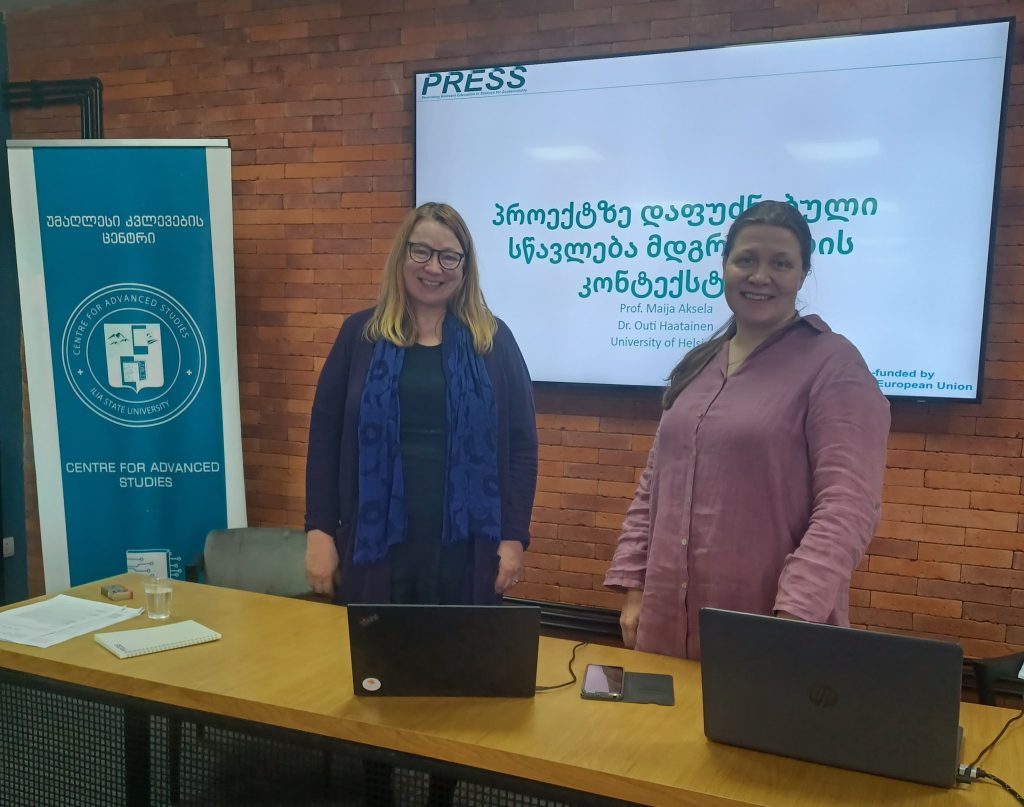
On Friday the 15th of February a Memorandum of Understanding was signed with Ilia State University in Tbilisi, Georgia. The cooperation concerns LUMA-activity (STEM-activity) in relation to the education of teachers and research. The agreement lasts over a five-year span.

”We learn from each other during international cooperation. The Memorandum of Understanding is an important opening to develop a science based new teacher education and teaching in schools. Together we are more!” says director, professor Maija Aksela, LUMA Centre Finland, University of Helsinki.

The Memorandum of Understanding was signed at the end of the PRESS-project, which is a part of the Erasmus+ programme.

Our international model can be found in our E-books: In Finnish and in English.

Maija Aksela an postodoctoral researcher Outi Haatainen.
Professor Dr. Maija Aksela and postdoctoral researcher Dr. Outi Haatainen train educators of teachers in sustainability matters. The training took place in Georgia.

Teachers nurturing sustainable development

The latest study published in the LUMAT journal demonstrates the key role of teachers in education related to sustainability and climate change. Teachers’ knowledge and skills related to the content and pedagogy of climate change are linked to their self-efficacy beliefs. The refereed scholarly article is part of the sustainability and climate change research programme of the LUMA Science Helsinki group. The programme collaborates closely with the LUMA Centre Finland network, which comprises 11 universities and 13 centres.

The study is a multimethod case study carried out at the Teachers’ Climate Change Forum continuing education event. A total of 22 teachers from different backgrounds responded to a survey, while 18 teachers from different countries took part in the continuing education session. Of the respondents, 19 participated in semi-structured interviews to supplement quantitative data. The results demonstrate that, on the basis of the interviews, the teachers are willing to engage in continuous learning and develop the teaching of sustainable development.

Sustainability and self-efficacy

Teachers have beliefs about not only sustainability education, but also themselves as sustainability educators. This should be considered in any future use of tools that measure teachers’ perceptions. However, the results of the survey demonstrated that teachers had the lowest self-efficacy beliefs in supporting students’ actions for sustainable development. The above should be taken into consideration in the development of new teaching methods and materials.

Watch a brief video introducing the study. In the video, Professor Maija Aksela, head of the LUMA Science Helsinki research group, introduces the study.

Written by:

Jemima Unger

Further information:

International Journal on Math, Science and Technology Education (helsinki.fi)
International Teachers’ Climate Change Education Forum 2024

If you wish to learn more about research in the field, you can find publications by Professor Maija Aksela and the above-mentioned publications in the field via the following links:

1)Towards Student-Centered Climate Change Education Through Co-design Approach in Science Teacher Education | SpringerLink
2) Teacher agency in using students’ questions in climate change education – Interdisciplinary Journal of Environmental and Science Education (ijese.com)

Evästeasetukset
LUMA-kukka ilman tekstiä

This website uses cookies so that we can provide you with the best user experience possible. Cookie information is stored in your browser and performs functions such as recognizing you when you return to our website and helping our team to understand which sections of the website you find most interesting and useful.

You can adjust all of your cookie settings in this view.

Strictly Necessary Cookies

Strictly Necessary Cookie should be enabled at all times so that we can save your preferences for cookie settings.

Analytics

This website uses Google Analytics to collect anonymous information such as the number of visitors to the site, and the most popular pages.

Keeping this cookie enabled helps us to improve our website.