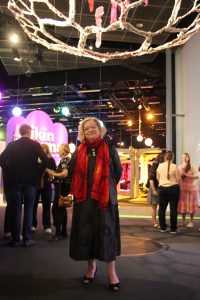
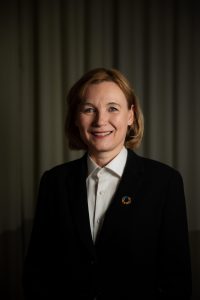
Maikki Roiha is writing a master’s thesis in chemistry in collaboration with Nokia

Chemistry student Maikki Roiha of the University of Helsinki is working on her master’s thesis in collaboration with Nokia Corporation. She is studying immersion, specifically the opportunities and challenges of using immersive 360-degree videos to teach chemistry on virtual school trips.

“I began to work on my thesis last June, first completing preliminary assignments and the training periods associated with the business collaboration.”

Roiha has been writing parts of her thesis almost from the start, typing up the literature review as soon as she had collected her data.

How to establish business collaboration

Roiha says that the key to business collaboration is networking. Connecting the academic and corporate worlds requires an active approach from the student.

“You have to network. Talk to your thesis supervisors about your interest in business collaboration, as they may know potential partners.”

If this does not work, students can contact companies of interest directly. Alternatively, they should keep track of their university’s job-seeking portal for thesis commissions.

Showing an interest can make the difference

Roiha is interested in exploring an educational technology initiative and using it in chemistry teaching. This type of basic research almost inevitably produces intriguing results.

“I particularly appreciated the chance to witness the development of this kind of technology from the corporate perspective.”

“I was able to participate in other areas of product development too, such as the research-based design of website texts and the compilation of marketing material. Collaboration with experts at Nokia was fascinating, as it gave me the chance to learn more about the culture in a big company and connect it to the academic world. It was a brilliant opportunity to be part of the Nokia work community and meet experts from a wide range of fields.”

Tips for thesis writers

Roiha advises students to choose a topic that interests them and not to be afraid even if they know nothing about it in advance. She also recommends that students create a schedule, take breaks and not aim too high.

“Make a clear schedule to write, for example, Monday through Wednesday from 9 in the morning to 3 in the afternoon. This gives you structure and helps you get started. Take breaks and recharge your brain by getting up and stretching. Fit hobbies into your calendar and respect it,” she says.

The text you write need not be perfect from the get-go. In fact, striving for perfection early on may prevent you from getting anything done.

“In the most difficult moments, it’s enough to open the document for just 10 minutes. This will help you overcome the biggest hurdle – getting started. If you can then keep up the momentum, great! If not, return to the text later.”

Free time and immersion

In her free time, Roiha enjoys physical activity and being outside in nature. Every now and then she plays the guitar.

“Concentrating on activities like these is a great way for me to relax my mind.”

When asked what immersion means, Roiha explains it is about being deeply involved in something, or giving the user a heightened sense of presence in the environment.

“In a virtual environment, you can enhance immersion, for example, with VR glasses or 3D audio. You can increase immersion further by adding interactive elements or visualising the user’s real-world hand movements in the virtual environment.”

Cornerstones of collaboration with Nokia

Roiha has enjoyed her collaboration with Nokia. She has developed new skills and received technical support, supplementing what she has learned at the University.  

“Nokia gave me free rein to test the company’s immersive technology solutions in the context of my choice. I learned to use them better and got help when I needed it. In turn, I’ve been able to offer Nokia my expertise in educational research and provided useful knowledge through my research.”

Skills learned at the University and elsewhere have equipped Roiha well for planning, coordinating and implementing a project with multiple partners.

“I’m grateful to everyone who has given their time to support my project. Big thanks to the HelsinkiALD team and Doctoral Researcher Alexander Weiß, Senior University Lecturer Sami Hietala and Senior Engineer Sami Heikkinen. Thanks also to ChemistryLab Gadolin, all research participants and the persons supervising my work at Nokia and the University.”

Roiha’s thesis supervisors are Professor Maija Aksela and Docent Johannes Pernaa of the University’s Chemistry Teacher Education Unit. The project is part of LUMA Centre Finland’s science education research on modern technologies.

The Finnish version of this article has been published on the LUMA Centre Finland website.
 

Celebrating the 20th anniversary of LUMA work in Finland – Joy of science!

LUMA Centre Finland is a science education network of 11 universities and 13 centres in Finland. The aim of our activity is to motivate and inspire children and youth into the STEM-fields, mathematics, science and technology. In this anniversary article Maija Aksela, the Director of the LUMA-network (LUMA meaning STEM in English) will share her views on the anniversary and the impact of LUMA.

– Science belongs to everyone! The best part of our operations during the past 20 years have been the joy of learning and success of the children and young people, the makers of the future! In addition, doing together and learning from each other about science. Together with teachers, the scientific community and other cooperative partners we have built new openings in a research-based way, new best approaches and materials for a sustainable future, also globally. Together we are more! says Director, Professor Maija Aksela, LUMA “mother”, LUMA Centre Finland (11 universities, 13 centres), from the University of Helsinki.

LUMA is an abbreviation of the Finnish words for natural sciences and mathematics. According to international PISA-results, Finnish youth achieve good results in the fields of natural sciences and mathematics.

National LUMA-strategy

The national LUMA-strategy involves ensuring that there is science and mathematics competence and understanding in society to promote wellbeing and growth that is socially, ecologically and economically sustainable.

LUMA Centre at the University of Helsinki started 20 years ago. LUMA Centre Finland (11 universities, 13 centres) started 10 years ago. On the other hand, ChemistryLab Gadolin, was founded 15 years ago.

Please view our LUMA book for more information here.

Anniversary celebration

LUMA Centre Finland celebrates its 20th anniversary with an anniversary seminar on Friday, 10th of November at 13.15 pm at the University of Helsinki. You have the possibility to participate on-site at Unioninkatu 33, in the banquet hall, or online. The event will begin with cake and coffee at 12.15, for those who are interested, and will end at 15.00.

The Minister of Science and Culture, Sari Multala, will be speaking at the event. In addition, Kai Nordlund, Vice rector of the University of Helsinki will be sharing his views in the event. Furthermore, Laura Taajamaa, Senior Ministerial Adviser, Ministry of Education & Culture, will be sharing the LUMA-strategy and its meaning. Awards will also be given to schools and teachers, as a recognition of their work. We would like to thank and encourage teachers in their important work. 

For more information about the programme, please view our anniversary schedule here – the seminar will be held in Finnish and partially in Swedish.

Furthermore, we receive congratulation responses at the address luma-keskus@helsinki.fi. Please feel free to contact us and cheer us on!

You have the possibility to donate and support our projects financially here.

Thank you all, who have supported us in previous years.

International StarT LUMA programme: A successful story from Jordania

Participating nations in the StarT programme met in Jordania in August. The director of the Ministry of Education awarded LUMA Centre Finland with a certification of collaboration with Jordania at the Jordan University. Since the year 2016 LUMA Centre Finland (11 universities and 13 centres) has organized the awarded international StarT LUMA programme. Over 70 countries have participated in it. More than 10 countries have been its official partners. A lot of joy for makers of the future!

Jordania has organized a successful StarT LUMA Jordania programme since the year 2018 – managed by the Innovation for Creativity Development Association (ICDA). This year they invited the director, professor Maija Aksela from the LUMA Centre Finland, to visit their award event at the University of Jordania, and their innovative camp for the best StarT LUMA participants in Jordania, at the German Jordan University. 

– The StarT LUMA model in Jordania is innovative and collaborative. Their talented students and teachers presented successful projects. Makers of the future in our hearts! We all are going to strengthen our collaboration in the near future. One dream is an international StarT LUMA science camp in Helsinki, next August before our LUMA days and Science on Stage event. Together we are more! says director and professor Maija Aksela from the University of Helsinki.

She is also grateful for a certification for LUMA Centre Finland regarding our collaboration that has lasted 5 years. 

The collaboration and partnership between the ICDA and LUMA Centre Finland, began after the association won the international grand prize for best educational practices in the LUMA StarT competition, for its project “Future Scientists National Program.”

Excellence in education

The recognition by LUMA Centre Finland served as an acknowledgment of this initiative and an incentive for the association to continue its efforts, adhering to global standards. This recognition extends to the association’s leadership, partners, students, schools, and teachers alike.

– What stands out in this collaboration is the unique formulation of excellent educational practices, built upon collaborative work, an integrated approach, and the STEAM approach, says Surayya Ayyad, chair for the ICDA.

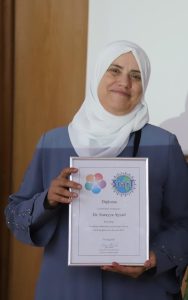
A first StarT Ambassador certification of great collaboration and success was given to chair Surayya Ayyad by director Maija Aksela.

Moreover, it encourages schools to delve into topics addressing global and national issues, fostering the creation of activities and projects involving students and teachers from various subjects, enhancing learning through projects and topics.

– This collaboration acted as a driving force for students and supervisors to explore global experiences and work according to international standards, cultivating a broad perspective to serve humanity, the country, and the world in these projects. Lastly, the focus is on 21st-century skills and sustainable development goals, explains Surayya Ayyad, chair for the ICDA.

Harnessing the creativity of young minds

The Future Scientists National Program competition was initially implemented at the Jordanian level, with aspirations to extend its reach to the Arab and international levels through collaboration with international partners.

– We firmly believe in collaborative work and the necessity of exposing our youth to global issues, working towards serving humanity and achieving a bright future by harnessing the potential, knowledge, and creativity of young minds, explains Surayya Ayyad.

The collaboration with LUMA Centre Finland provided a wonderful opportunity to work with a global professional initiative that operates with a high level of transparency, professionalism, and educational standards. This initiative is based on a robust educational system that has achieved outstanding global accomplishments. Operating according to these standards has bestowed us with significant experience in acquiring and sharing knowledge, contributing to the educational system and schools participating in the StarT competition. Specifically, our focus has been on integrating project-based teaching through the integrative approach.

Collaboration and solving global challenges together

A part of Surayya’s dreams of collaboration are that international cooperation would result in solving global challenges, through for example providing winning opportunities for collaborative projects between schools from Finland and Jordan.

–  These projects could address global issues such as sustainable development goals, climate change, renewable energy, and 21st-century skills.

StarT LUMA Programme

In the international StarT LUMA programme we aim to implement a new interdisciplinary and collaborative StarT way of working and thinking to schools. It is based on research and enforced by the newest core curriculum of Finland. StarT is operated by LUMA Centre Finland, which is a network of Finnish universities. We are working to ensure the high quality of science, technology, and mathematics teaching in Finland. Through StarT we also aim to encourage young people to take up an interest in science, technology, and mathematics and to strengthen their science skills.

The Innovation Development Association (ICDA) is a Jordanian voluntary cultural association founded in 2013, focusing on discovering, developing, and empowering the abilities of children and youth. Its motto is “Investing in Human”.                                                               

Read more about Surayya Ayyad and StarT in the World gifted newsletter.

Science on Stage Festivals 2024 in Turku – apply now with your project!

Lue lisää tapahtumasta suomeksi.
Läs mer om festivalen på svenska.

Teacher, early childhood educator, or teacher-student in the field of STEM education, do you have a teaching idea, material, or best practice that you would like to share with other teachers around Europe?

Science on Stage festivals is Europe’s largest educational event for STEM teachers. The international fair aims to share ideas, learn new things, and get to know international colleagues. In 2022, the festivals brought together 450 European teachers from more than 30 countries.

In 2024, the festivals will be held in Turku, Finland at the same time as the national LUMA days. Finnish teachers, among teachers from all Europan countries, will have an incredible opportunity to get to know the ideas of their European colleagues. The theme of the 2024 festival will be Sustainability in STEM education. We have compiled important information on this page for those interested in participating. You can read more about the event itself here.

How can I participate in the event?

There are three ways to participate in the Science on Stage festival:

  • By applying to present your idea at the event. The teacher presenting their idea or project has the opportunity to participate in all the programs throughout the event from 12 to 15 August 2024 for free. The presenters’ travel, accommodation, and meals are paid for during the event.
  • By applying to present your “Joint project”. Have you seen a project at the festival you especially like? Do you want to continue the exchange with an international colleague you met at the festival? School teachers from different countries who met each other at the European Science on Stage festival or at another conference/workshop (at least one of them must have attended the festival as a delegate) can apply for a travel scholarship to deepen the exchange or develop a new STEM project together. Read more here
  • As an event visitor, i.e. public, on the open day for free. We do not cover the public’s travel, accommodation, or dining expenses.

Apply now to join the Finnish delegation!

By filling out the application form within the application period, you are on your way to becoming a fair exhibitor. You can find more information about the search on this page. All teachers and teacher-students or other employees in the field of teaching and education who are over 18 years old and live and teach permanently in Finland can apply to be part of the Finnish delegation.

During the fall of 2023, 30 projects or practices will be selected from Finland, whose presenters will be able to participate in the festival for the entire four days. The project must be related to one of the guiding themes of the event, which are listed below. You can implement the project itself well before the application, for example in autumn 2022 or spring 2023. 

Guiding themes

All projects presented in the festival represent inquiry-based learning approaches.

  • STEM for the Youngest: Projects to promote STEM in elementary school for kids, 10 years or younger
  • STEM Education for Sustainable Development: Projects that contribute to the achievement of the 17 Sustainable Development Goals
  • Digital Technologies in STEM Education: Projects on programming, digital education, ICT, Big Data, artificial intelligence, virtual reality, etc.
  • Diversity in STEM Teaching: Projects that reflect the heterogeneity and diversity of our society, e.g. teaching methods that engage students with different learning levels or different cultural backgrounds.
  • STEAM in Education: Projects combining natural science with other disciplines, e.g. science, technology, engineering, or mathematics with arts, music, sports, history, etc.
  • Low-Cost Experiments in STEM Education: Projects that are low-cost to implement
  • Joint Projects: Projects developed collaboratively by teachers who have met at one of the past Science on Stage events (e.g., festival, webinar, professional development, network meeting, project)
  • STEM for Teachers in Training: Projects that have been developed during pre-service teacher training or teacher traineeship

The application period for the Finnish delegation was August 1–October 31, 2023. 

Project assessment criteria

The projects and practices presented at the Science on Stage festival must meet one or more of the following criteria:

  • is from teachers to teachers,
  • promotes research-based teaching of STEM subjects (natural sciences, mathematics, technology, and environmental studies),
  • integrates into learners’ everyday life or can easily be implemented as part of teaching,
  • is easy to implement with reasonable resources,
  • promotes sustainable development know-how.

In addition, we hope that selected teachers, supervisors, or students:

  • the ability to present a project or teaching practice in English,
  • a curious mind to get to know the teaching practices of other countries,
  • interest in European cooperation,
  • and an interest in sharing teaching practices within your own school, kindergarten, or learning community.


When and how are applications evaluated?

The applications are reviewed by a team of LUMA Center Finland educational experts. The team selects the 40 best applications from all the applications, after which the Science on Stage Finland steering group selects 30 projects or practices that will participate in the event. The remaining 10 applicants are on a waiting list if one of those selected cannot participate in the event.

We welcome applications from teachers, instructors, and teacher-students of all ages from all over Finland. In our selections, we try to take the following things into account:

  • different subjects and themes,
  • different levels of education and
  • the location of the school, kindergarten, or other learning community in Finland.

Selections will be made during November and applicants will be notified of the selections by email no later than 31 November 2023.

What happens when my project is selected for the Science on Stage festival?

First of all, we congratulate you! After that, we ask you to fill out the application with additional information, in English, during the winter:

  • A short summary of the project (max. 700 characters) in English.
  • An English-language poster about the project or practice, you will get more detailed instructions for this after the selection.

We will publish the name of the learning community, the name of the project or practice, and a description on the event’s website.

When the time for the event comes, we ask you to come to Turku on August 12-15, 2024. We pay for one project/practice presenter’s travel tickets/transportation, overnight stay during the event, and meals. We do not reimburse participants’ per diems or possible substitute expenses. The program of the event is free for participants.

Due to limited resources, we can only cover the travel costs of one presenter per project/practice. If you want to participate in the event with a colleague or friend, you can purchase another event ticket via the event registration form. The event ticket includes accommodation and meals during the event. The ticket office automatically calculates the ticket price and the ticket must be paid at the time of registration. Registration for the event and the ticket office will open in early 2024.

Do you have any questions?

Contact us by email at luma-keskus ((at)) helsinki.fi

We reserve the right to make changes to the information on the page.

International collaboration with Thailand: Equality, reciprocity and understanding

LUMA Centre Finland, the University of Helsinki and Nakhon Phanom University from Thailand have started an international collaboration in order to develop academic and educational co-operation.

The international guests from Thailand visited the department of Chemistry at the University of Helsinki on August 3rd, 2023.

The guests were thrilled to learn more about LUMA Centre Finland and equality, reciprocity and mutual understanding between the universities were promoted.

The importance of international collaboration

LUMA Centre Finland is a science education network of Finnish universities.

Professor Maija Aksela, director of the LUMA Centre Finland-network, highlights the importance of international collaboration.

“We all learn from each other and build a sustainable future together. Together we are more!”

Read more about LUMA Centre Finland and international cooperation in our new e-book.

A total of about one hundred people from the LUMA Center Finland network (11 Universities and 13 LUMA Centers) have participated in the design and creation of the book.

Publication on impact networks: Networks enhance innovative early STEM Education – suggests new learning paper by leading international STEM organizations

The six-member organizations of the International Dialogue on STEM Education (IDoS peers) release a learning paper: “How can networks help encourage the development and professionalization of innovative early STEM Education in a changing world?”, that highlights the impact of networks among diverse actors and initiatives engaged in early STEM Education. In a world marred by crises and growing complexities, the paper recommends network-building and collaboration to ensure children receive quality STEM Education.

The world is becoming more complex. In the face of the climate crisis, the Covid-19 pandemic, social inequality, and the changes brought by digitalization, children today need to acquire skills and competencies to cope with future challenges. Thus, extensive advocacy for quality early education in science, technology, engineering/ computer science, and mathematics (STEM) is needed, as it promotes critical thinking and problem-solving skills in children and benefits community members and societies around the globe. In their learning paper, the six IDoS peers “Haus der kleinen Forscher” Foundation, Siemens Stiftung, Smithsonian Science Education Center, LUMA Centre Finland, Fondation La main à la pâte, and the Office for Climate Education (OCE) demonstrate how impact networks (formed to address complex social or environmental issues) can enhance innovative early STEM Education. As experts in this field, the peers aim to support field-developing institutions to increase the impact of their work for a better and easily accessible education worldwide.

Paper lists criteria for successful networking in STEM Education

In the paper, the peers draw on scientific findings combined with their own experiences of impactful collaborations. The paper presents five types of networks (Resilience Networks, Scale Networks, Action Networks, Movement Networks, and Learning Networks) and identifies key factors that determine the success of a collaborative network. These include a good strategy and stewardship of the network, sufficient resources and funding, high motivation and commitment of network members, the application of effective practices of monitoring, evaluation, accountability, and learning (MEAL), as well as the network’s ability to adapt to the context and complexity they are faced with.

We can address the global challenges only by connecting people, communities, and societies. The IDoS network’s learning paper bears testimony to this: Joint exchanges help identify meaningful and pressing themes in the STEM field. By learning, exchanging, and experiencing together as sparring partners and in the process realising United Nation’s Sustainable Development Goal (SDG) number 17: ‘Revitalising the global partnership for sustainable development’. The 17 SDGs can only be met if the global community combines forces to work together. 

- Dr. Nina Smidt, Managing Director and Spokesperson of the Board at Siemens Stiftung
Our network partners in Germany enable us to scale up our continuing professional development programme for teachers and educators all over the country, thus ensuring that as many children as possible get a quality STEM Education. Similarly, other IDoS organisations cooperate with networks in their respective countries and even across borders. This paper demonstrates how a strategic interplay of actors from education, politics, business, science, and society gives the field of early STEM Education the attention and support it deserves.

- Michael Fritz, Executive Manager of “Haus der kleinen Forscher” Foundation

Combined expertise to drive change

IDoS defines itself as a learning network, formed to exchange and combine knowledge and best practices from organizations around the world to deal with the growing intricacy of STEM Education. Not only do STEM disciplines become more intertwined as sustainable development goals evolve, but the environments in which they are being taught are changing as well, as they come to include digital tools like Open Educational Resources (OER), blended- or hybrid learning, and online learning. Organizations that specialize in teachers’ training and in the provision of pedagogical resources need to be able to adapt to these new environments. IDoS peers pave the way for networks to become “education ecosystems”: supporting and implementing national education policies, increasing the capacity of teachers and educators, and improving access to STEM Education worldwide. IDoS peers share a common vision of educational innovation, whereby STEM Education concepts are developed, professionalized, and effectively implemented in networks of different countries in a way that is tailored to local needs on the ground.

Their learning paper is the second publication by members of IDoS. The first publication in 2019 argued for an integrated approach to STEM Education for Sustainable Development. In 2023, the peer dialogue will focus on the topic of “STEM Education in a digitalized world”.

Read the original story from Stiftung Kinder forschen | Little Scientists Foundation webpage.

For further information about the IDoS project: the blog post.

Mathematics, Arts and Architecture – a multidisciplinary student perspective

The multidisciplinary arts exhibition, Higher Powers – Kurotuksia, brought to light the cross-functional teamwork of Aalto University’s students and professors. The opening ceremony of the co-created exhibition was held on June 5th at Heureka.

Aalto University’s provost, Kristiina Mäkelä, officially opened the exhibition at Heureka, the Finnish science centre.

Multidisciplinary collaboration between science and art, technology, and business were at the heart of the opening ceremony.

“What you see here tonight is a wonderful example of that,” said provost Mäkelä.

“To our knowledge, combining science and arts in this way is novel, and we have not found anything similar anywhere in the world,” Mäkelä said.

Two of the students who contributed to the works presented at the Art exhibition shared their perspective.

“What interested me was multidisciplinarity working with people from different backgrounds and different programmes,” said design student Emma Prost (ARTS).

“So yes, learning new things and having this kind of group work was really interesting.”

Working together

Jonas Tjepkema (SCI) gave his own perspective.

“When I first saw arts and maths, I was always walking around on campus, and I saw the arts department. I was thinking that this would be a good way to get into that world. I thought it was a nice combination: maths and arts. So that was how I decided to get into this.”

Both students highlighted the multidisciplinary teamwork with students from different fields of study.

“All the courses were material that I had not seen before, so it was always entertaining and interesting as well. And then you got to also have that practical aspect of building huge sculptures,” mentioned Tjepkema.

Solving global challenges

Kirsi Peltonen wanted to break cliches and preconceptions about mathematics.

“What mathematics is all about, and the human element. To do things with your own style.”

Kirsi Peltonen with art work.
Kirsi Peltonen presenting some of the works in the exhibition.

Communication is a challenge when you leave your own bubble and go to work with people from different fields.

Peltonen, a senior university lecturer at Aalto University, found it inspiring that engineers were also excited about the project. Sustainability is also important to the exhibition.

“The students are aware of what materials are being used. We want to be sustainable. Recycling is also central.”

The exhibition is open until 31.8.2023 at Heureka and showcases student works from the interdisciplinary course Crystal Flowers in Halls of Mirrors: Mathematics Meets Art and Architecture, of Aalto University.

Millennium Youth Prize challenged youth to innovation – Biochar and bokashi winners

The final of the Millennium Youth Prize competition, culminated on Friday 12th of May in Think Corner, powered by the University of Helsinki. The winning work was chosen for its imagination, creativity, innovation, and practical implementation as well as research design and an extraordinary description.

Ella Kauppila and Wilma Nylander from Ylikiimingin koulu had prepared their winning work, Biochar and bokashi, toward self-sufficiency, in a collaborative way for several months. The collaboration was done with daycare, the same daycare where Kauppila and Nylander had been together as children, a school, and a university.

– We did the work, we came here, and we won – apparently! rejoice Kauppila and Nylander.

The winning work responds to the need for sustainable solutions for future generations. Biochar and bokashi, towards self-sufficiency, are based on natural character and purity – biochar is an organic and pure land healer. The winning work may change the circular economy and promote sustainable development in the future.

Young scientists

The participants in the competition are of a generation, which may win the Millennium Technology Prize in 30 years, states the event organizer. The jury also presented that conversations had been held about who would offer the best workplaces for future scientists. 

The Millennium Youth prize competition gathered the five best teams in Finland, from Otaniemen lukio, Helsinki School of Natural Sciences, Tampereen lyseo (two teams), and Ylikiimingin koulu. The projects were so even that it was a challenge for the judges to choose a winner.

In second place, Ida Aulaskoski, Elina Ruha, Laura Pihlaja, Beata Kaukolinna and Xie Li, from Otaniemen lukio, for the innovation of Scoby and its’ possibilities as a future biomaterial. The project was awarded for a great description of research design and results as well as extraordinary practicality. In third place, Joona Aalto, Rasmus Pouta and Anton Heimola, from the Helsinki School of Natural Sciences – Alternatives for lithium-ion batteries, with an excellent theme and comprehensive use of sources.

The winners encourage future participants:

– Have the courage to come! And believe in yourselves!

The event was organized by Technology Academy Finland (TAF), Aalto University, University of Helsinki, Tampere University, and LUMA Centre Finland. A warm thank you to all the participants and directors.

The three winning teams were awarded with 5 000, 3 000 and 2 000 euros respectively. The competition aims to inspire youth to the fields of technology and innovation. Youth are in a key position in creating a better future, because of a new way of thinking. There are many solutions to global challenges.

Mariya Gabriel and Mari Pantsar are the patrons of the European Science on Stage festival

LUMA Centre Finland will be the main event organizer for the 2024 Science on Stage festival in Turku, in cooperation with Science on Stage Europe. Mariya Gabriel and Mari Pantsar have agreed to become patrons of the festival. All the participating teachers will have a great opportunity to get to know European colleagues and their brilliant educational ideas and best practices. The theme of the 2024 festival is “Sustainability in STEM education”.

Mari Pantsar, one of the patrons of the Science on Stage 2024 festival.
Mari Pantsar, Founding Partner Kari & Pantsar Co.

The 13th European Science on Stage festival will take place August 12-15th 2024 in Turku, Finland. Here, the delegates are welcome to get to know the Finnish education system. Turku is the southwestern pearl of Finland – a city known for its beautiful archipelago and medieval history.

At the Science on Stage festival, 450 primary and secondary school teachers from all over Europe share their most creative STEM ideas at stands, in workshops, and in highlight sessions. Participants will be chosen through competitive national events in 35 countries.

The patrons are role models who have signed the objectives of the festival and work with tasks associated with the event themes. EU Commissioner Mariya Gabriel has agreed to become the international patron of the event. Since 2017, Mariya Gabriel is the European Commissioner in charge of innovation, research, culture and teaching as well as youth, in the European Union.

Mari Pantsar is the Finnish patron of the event. During her career, Mari Pantsar has significantly advanced a sustainable future and the circular economy. Currently, Mari Pantsar acts as a founding partner in her company Kari & Pantsar Co. The mission of the company is to stop biodiversity loss by helping companies and communities understand the diversity of nature and the fundamentals of circular economy, and by supporting companies in concrete actions.

“Sustainable development and especially solving ecological challenges requires new competencies and changes in our values. Teaching and education have a very central role in enabling a sustainable lifestyle and sustainable production.” – Mari Pantsar

More information about the event in English: https://www.sons2024.eu

Further information in Finnish: https://www.luma.fi/tapahtuma/science-on-stage-festivaali-2024/

Nokia Foundation grants Professor Maija Aksela a recognition award

The awardee, Maija Aksela, Professor of Science Education at the University of Helsinki is known for her distinguished, long-term efforts to develop teaching and learning in mathematics, the natural sciences and technology, from early childhood education to higher education throughout Finland.

Nokia Foundation has granted its 2022 recognition award to Maija Aksela, Professor of Science Education at the University of Helsinki. The Foundation recognizes Aksela’s distinguished and long-term efforts in developing teaching methodologies in mathematics, the natural sciences, environmental studies and technology, as well as in strengthening science education.

Expertise in science, technology, engineering and mathematics, also known as the STEM subjects, is central to the wellbeing of Finland and Finns. Science and mathematics form the foundation for technological development and the technological innovations of our future. STEM-teachers play a key role in inspiring and engaging children and young people in these fields and in ensuring their competencies.

Nokia Foundation granted Maija Aksela a recognition award in its annual award ceremony this evening. Nokia Foundation has granted over 1,900 grants during its 27-year existence. In 2022, the Foundation will grant scholarships and awards totaling around 400,000 euros.

“For Finland to stay a frontrunner in technological competence and innovations, we must invest in educating the top talents of our future. It is important that students, already from a young age, understand the importance of technology and that they are encouraged to pursue further studies in the field. With this award, we would like to show our appreciation for the distinguished, long-term work of Professor Maija Aksela in developing teacher training in this field and in stimulating students’ interest already at an early stage,” said Hannu Kauppinen, Chairman of the Board of Nokia Foundation.

Maija Aksela is Finland’s first professor of science education. She has more than 35 years of experience in developing both teaching and teacher training in STEM subjects, as well as creating new and inspiring teaching methods. She has published roughly 400 scholarly publications and supervised numerous doctoral and other theses. Her research focus areas include virtual methods of teaching and sustainability in teaching.

“Through my work, I would like to provide children and young people with new insights and spread the joy of learning, both in Finland and internationally. Futuremakers, that is, our children and youth, and their thinking and learning, have a special place in my heart. By working together with daycare centers, schools, families, businesses and the rest of society, it is possible for us to build a good and sustainable future. Anyone can be a science ambassador,” said Aksela.

Based on Aksela’s idea, the first LUMA Centre (the Finnish acronym LUMA is the equivalent of STEM in English) was established at the University of Helsinki roughly 20 years ago. Today, LUMA Centre Finland encompasses 11 Finnish universities and 13 regional LUMA Centres. The objective of the network is to promote collaboratively inspiring teaching and learning in mathematics, science and technology, from early childhood education to higher education. The network’s approach has attracted widespread international interest. Alongside her primary duties, Aksela serves as the director of the network. The network is particularly well known for its LUMA science and technology labs in various parts of Finland. Around 15 years ago, Aksela established the first LUMA lab at the University of Helsinki. ChemistryLab Gadolin is a learning environment that raises awareness about experimental chemistry.

The Nokia Foundation’s purpose is to support the scientific development of information and telecommunications technologies and to promote education in the sector in Finland. Nokia Foundation provides scholarships and awards for this mission. The Foundation was established on the initiative of Nokia Oyj in 1995; it is an independent, non-profit organization under Finnish foundation law.

Evästeasetukset
LUMA-kukka ilman tekstiä

This website uses cookies so that we can provide you with the best user experience possible. Cookie information is stored in your browser and performs functions such as recognizing you when you return to our website and helping our team to understand which sections of the website you find most interesting and useful.

You can adjust all of your cookie settings in this view.

Strictly Necessary Cookies

Strictly Necessary Cookie should be enabled at all times so that we can save your preferences for cookie settings.

Analytics

This website uses Google Analytics to collect anonymous information such as the number of visitors to the site, and the most popular pages.

Keeping this cookie enabled helps us to improve our website.