StarT – Inspiring Learning Together Worldwide

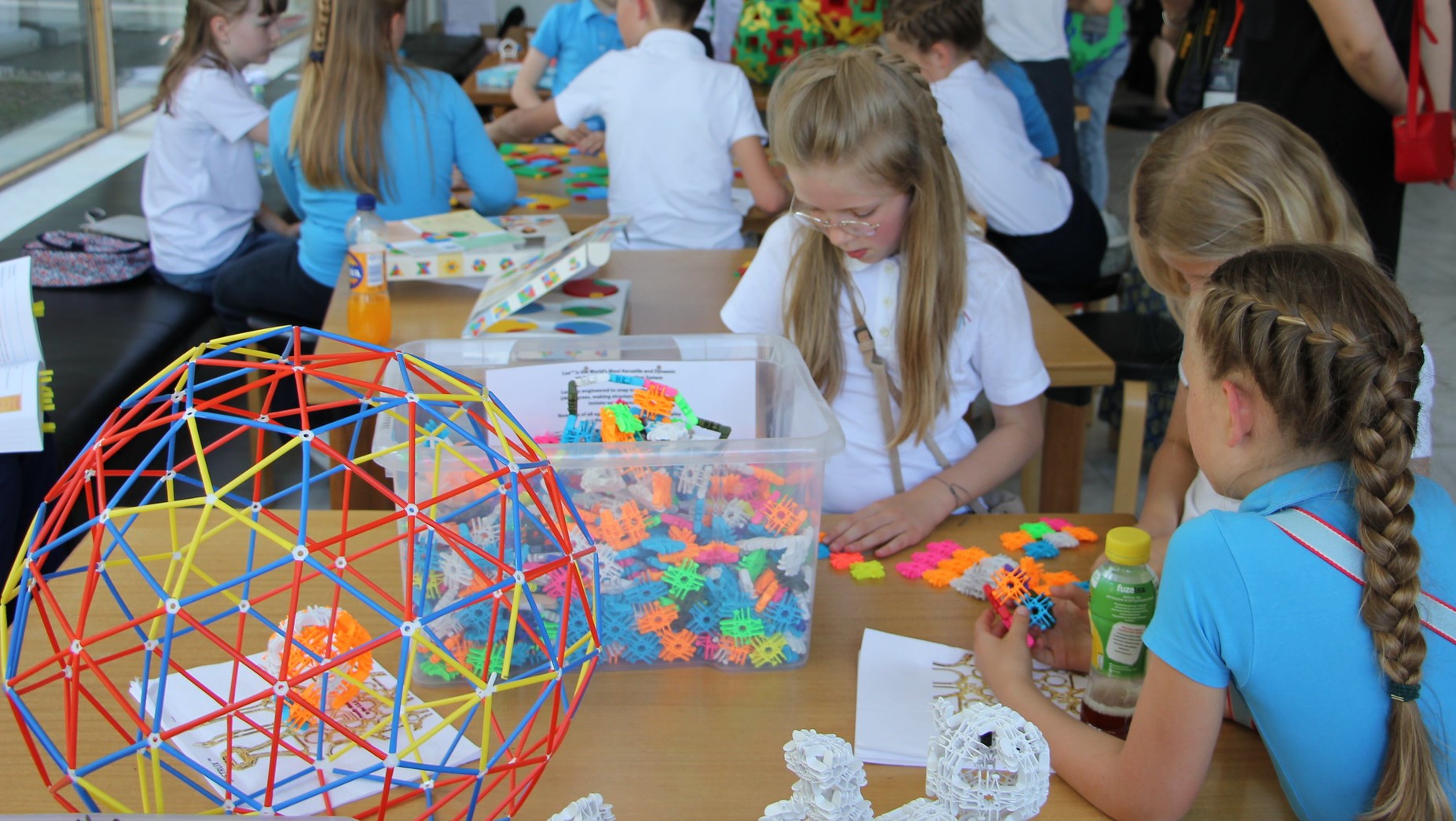
Lapset työskentelevät StarT-kerhossa. Kuva on vuodelta 2019.

Since 2016, StarT, created by LUMA Centre Finland, has grown into a global movement that transforms science, mathematics, technology, and sustainability education through creativity and collaboration. The name says it all: every child and young person can be a Star, and the T stands for teamwork. At its core, StarT is about learning together through projects and sharing ideas across borders to make education meaningful and exciting.

StarT ignites curiosity and creativity, empowering children, young people, and educators to imagine, design, and share projects that offer solutions to real-world challenges, guided by their own passions and questions. These projects often explore themes such as sustainability, climate solutions, and innovative technologies, encouraging learners to apply scientific thinking to issues that matter. Along the way, participants develop essential skills like problem-solving, communication, and collaboration.

From 2016 to 2022, the International StarT LUMA Competition brought together thousands of participants from more than 60 countries. Each year culminated in the International StarT Gala, a vibrant celebration of creativity and best practices, where young innovators and educators inspired one another. In addition, local LUMA Centres have organized regional StarT festivals with award ceremonies in Finland. Many of the projects and teaching practices are freely available in our open material bank.

Since 2023, StarT has expanded through the International StarT LUMA Science Clubs Programme, linking formal education with informal learning environments. These clubs, co-designed through research, offer children, teachers, and student teachers opportunities to engage in project-based STE(A)M learning beyond the classroom. StarT LUMA also inspires families: they are welcome to join the final club session and see their children’s projects. Read more from the LUMAT Journal.

An open online course on project-based learning supports teachers and educators with implementing clubs and projects that foster creativity, collaboration, and culturally sustainable practices. As highlighted in The Best Day I’ve Had in Ages – Learning Together in a Science Club, these experiences spark joy and curiosity, reminding us that science is a shared adventure.

Today, StarT is more than a programme; it is a community-driven platform for sustainable STE(A)M education, aligned with global goals and local needs. It invites everyone – students, teachers, and families – to become co-creators of knowledge and solutions. By fostering creativity and a sense of agency, StarT helps young people see themselves as active contributors to a better future.

StarT is a movement for learning together, shaping a world where science and collaboration lead the way towards sustainability. Whether through innovative school projects, inspiring teaching practices, or international networking, StarT continues to light the path for educators and learners worldwide.

Nowadays, the StarT LUMA Programme also serves as an international research and development initiative within the LUMAlab Gadolin. To date, several research papers have been published in this context, including:

    For more information:
    Director, Professor Maija Aksela, and Project Manager, Dr Outi Haatainen
    LUMAlab Gadolin Hub

    Science on Stage Festivals 2024 in Turku – apply now with your project!

    Lue lisää tapahtumasta suomeksi.
    Läs mer om festivalen på svenska.

    Teacher, early childhood educator, or teacher-student in the field of STEM education, do you have a teaching idea, material, or best practice that you would like to share with other teachers around Europe?

    Science on Stage festivals is Europe’s largest educational event for STEM teachers. The international fair aims to share ideas, learn new things, and get to know international colleagues. In 2022, the festivals brought together 450 European teachers from more than 30 countries.

    In 2024, the festivals will be held in Turku, Finland at the same time as the national LUMA days. Finnish teachers, among teachers from all Europan countries, will have an incredible opportunity to get to know the ideas of their European colleagues. The theme of the 2024 festival will be Sustainability in STEM education. We have compiled important information on this page for those interested in participating. You can read more about the event itself here.

    How can I participate in the event?

    There are three ways to participate in the Science on Stage festival:

    • By applying to present your idea at the event. The teacher presenting their idea or project has the opportunity to participate in all the programs throughout the event from 12 to 15 August 2024 for free. The presenters’ travel, accommodation, and meals are paid for during the event.
    • By applying to present your “Joint project”. Have you seen a project at the festival you especially like? Do you want to continue the exchange with an international colleague you met at the festival? School teachers from different countries who met each other at the European Science on Stage festival or at another conference/workshop (at least one of them must have attended the festival as a delegate) can apply for a travel scholarship to deepen the exchange or develop a new STEM project together. Read more here
    • As an event visitor, i.e. public, on the open day for free. We do not cover the public’s travel, accommodation, or dining expenses.

    Apply now to join the Finnish delegation!

    By filling out the application form within the application period, you are on your way to becoming a fair exhibitor. You can find more information about the search on this page. All teachers and teacher-students or other employees in the field of teaching and education who are over 18 years old and live and teach permanently in Finland can apply to be part of the Finnish delegation.

    During the fall of 2023, 30 projects or practices will be selected from Finland, whose presenters will be able to participate in the festival for the entire four days. The project must be related to one of the guiding themes of the event, which are listed below. You can implement the project itself well before the application, for example in autumn 2022 or spring 2023. 

    Guiding themes

    All projects presented in the festival represent inquiry-based learning approaches.

    • STEM for the Youngest: Projects to promote STEM in elementary school for kids, 10 years or younger
    • STEM Education for Sustainable Development: Projects that contribute to the achievement of the 17 Sustainable Development Goals
    • Digital Technologies in STEM Education: Projects on programming, digital education, ICT, Big Data, artificial intelligence, virtual reality, etc.
    • Diversity in STEM Teaching: Projects that reflect the heterogeneity and diversity of our society, e.g. teaching methods that engage students with different learning levels or different cultural backgrounds.
    • STEAM in Education: Projects combining natural science with other disciplines, e.g. science, technology, engineering, or mathematics with arts, music, sports, history, etc.
    • Low-Cost Experiments in STEM Education: Projects that are low-cost to implement
    • Joint Projects: Projects developed collaboratively by teachers who have met at one of the past Science on Stage events (e.g., festival, webinar, professional development, network meeting, project)
    • STEM for Teachers in Training: Projects that have been developed during pre-service teacher training or teacher traineeship

    The application period for the Finnish delegation was August 1–October 31, 2023. 

    Project assessment criteria

    The projects and practices presented at the Science on Stage festival must meet one or more of the following criteria:

    • is from teachers to teachers,
    • promotes research-based teaching of STEM subjects (natural sciences, mathematics, technology, and environmental studies),
    • integrates into learners’ everyday life or can easily be implemented as part of teaching,
    • is easy to implement with reasonable resources,
    • promotes sustainable development know-how.

    In addition, we hope that selected teachers, supervisors, or students:

    • the ability to present a project or teaching practice in English,
    • a curious mind to get to know the teaching practices of other countries,
    • interest in European cooperation,
    • and an interest in sharing teaching practices within your own school, kindergarten, or learning community.


    When and how are applications evaluated?

    The applications are reviewed by a team of LUMA Center Finland educational experts. The team selects the 40 best applications from all the applications, after which the Science on Stage Finland steering group selects 30 projects or practices that will participate in the event. The remaining 10 applicants are on a waiting list if one of those selected cannot participate in the event.

    We welcome applications from teachers, instructors, and teacher-students of all ages from all over Finland. In our selections, we try to take the following things into account:

    • different subjects and themes,
    • different levels of education and
    • the location of the school, kindergarten, or other learning community in Finland.

    Selections will be made during November and applicants will be notified of the selections by email no later than 31 November 2023.

    What happens when my project is selected for the Science on Stage festival?

    First of all, we congratulate you! After that, we ask you to fill out the application with additional information, in English, during the winter:

    • A short summary of the project (max. 700 characters) in English.
    • An English-language poster about the project or practice, you will get more detailed instructions for this after the selection.

    We will publish the name of the learning community, the name of the project or practice, and a description on the event’s website.

    When the time for the event comes, we ask you to come to Turku on August 12-15, 2024. We pay for one project/practice presenter’s travel tickets/transportation, overnight stay during the event, and meals. We do not reimburse participants’ per diems or possible substitute expenses. The program of the event is free for participants.

    Due to limited resources, we can only cover the travel costs of one presenter per project/practice. If you want to participate in the event with a colleague or friend, you can purchase another event ticket via the event registration form. The event ticket includes accommodation and meals during the event. The ticket office automatically calculates the ticket price and the ticket must be paid at the time of registration. Registration for the event and the ticket office will open in early 2024.

    Do you have any questions?

    Contact us by email at luma-keskus ((at)) helsinki.fi

    We reserve the right to make changes to the information on the page.

    Millennium Youth Prize challenged youth to innovation – Biochar and bokashi winners

    The final of the Millennium Youth Prize competition, culminated on Friday 12th of May in Think Corner, powered by the University of Helsinki. The winning work was chosen for its imagination, creativity, innovation, and practical implementation as well as research design and an extraordinary description.

    Ella Kauppila and Wilma Nylander from Ylikiimingin koulu had prepared their winning work, Biochar and bokashi, toward self-sufficiency, in a collaborative way for several months. The collaboration was done with daycare, the same daycare where Kauppila and Nylander had been together as children, a school, and a university.

    – We did the work, we came here, and we won – apparently! rejoice Kauppila and Nylander.

    The winning work responds to the need for sustainable solutions for future generations. Biochar and bokashi, towards self-sufficiency, are based on natural character and purity – biochar is an organic and pure land healer. The winning work may change the circular economy and promote sustainable development in the future.

    Young scientists

    The participants in the competition are of a generation, which may win the Millennium Technology Prize in 30 years, states the event organizer. The jury also presented that conversations had been held about who would offer the best workplaces for future scientists. 

    The Millennium Youth prize competition gathered the five best teams in Finland, from Otaniemen lukio, Helsinki School of Natural Sciences, Tampereen lyseo (two teams), and Ylikiimingin koulu. The projects were so even that it was a challenge for the judges to choose a winner.

    In second place, Ida Aulaskoski, Elina Ruha, Laura Pihlaja, Beata Kaukolinna and Xie Li, from Otaniemen lukio, for the innovation of Scoby and its’ possibilities as a future biomaterial. The project was awarded for a great description of research design and results as well as extraordinary practicality. In third place, Joona Aalto, Rasmus Pouta and Anton Heimola, from the Helsinki School of Natural Sciences – Alternatives for lithium-ion batteries, with an excellent theme and comprehensive use of sources.

    The winners encourage future participants:

    – Have the courage to come! And believe in yourselves!

    The event was organized by Technology Academy Finland (TAF), Aalto University, University of Helsinki, Tampere University, and LUMA Centre Finland. A warm thank you to all the participants and directors.

    The three winning teams were awarded with 5 000, 3 000 and 2 000 euros respectively. The competition aims to inspire youth to the fields of technology and innovation. Youth are in a key position in creating a better future, because of a new way of thinking. There are many solutions to global challenges.

    Integrated science education makes learning meaningful, but teaching methods are considered challenging in practice

    Outi Haatainen, MSc, defended her doctoral thesis on integrated and collaborative science education on 29 April at the University of Helsinki. Through integrative teaching, teachers strive to construct curriculum content into meaningful wholes for learners. In her doctoral thesis, Haatainen has particularly investigated teachers’ perceptions of integrative teaching and their related experiences.

    Integrative teaching has become part of the everyday life of all teachers through curricula both in Finland and elsewhere in the world. It has been brought to the fore in particular as a way of increasing the meaningfulness of science education.

    “At the turn of the millennium, several extensive research reports were published, highlighting the fact that pupils are uninterested in the science education taking place in schools and don’t consider it meaningful. At the same time, we need to educate more broad-based experts in the natural sciences. Integrative teaching emerged as one of the ways to make science education more meaningful,” Haatainen says.

    Haatainen has been interested in the topic for a long time.

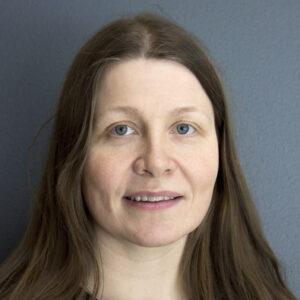
    “I wrote my master’s thesis on web-based materials for integrated education in 2014. Already then, I came across someProject manager Outi Haatainen. very negative notions about the method. As a result, I became interested in how teachers could be supported in adopting integrative teaching methods.”

    Teachers must rethink their role

    Teaching can be made integrative in many ways. For example, phenomenon-based teaching has long been a topic of discussion in Finland, with project-based learning added to the mix later on. Key to both are meaningful teaching practices and content, their linking with pupils’ everyday life, and the teaching of central concepts and skills associated with the school subject. In fact, a range of terms are used to refer to integrative teaching, which, according to Haatainen, affects teachers’ views.

    “It’s difficult to assess the success of integrative teaching without a shared understanding of the meaning of the concept.”

    Integrative learning methods also require a new kind of attitude and role from teachers: instead of traditional teaching, the teacher’s role is to support pupils in their learning. The current way of teaching provision, particularly in lower secondary school and upper secondary education, does not support integrative teaching or project-based learning.

    “In lower secondary and general upper secondary school, the natural sciences are taught as separate subjects or learning modules in different courses. This limits the opportunities to organise integrated education, which includes as an essential element cross-subject entities and collaboration. In many ways, integrated education is indeed easier to implement in primary school where subject boundaries are less strict and the same class teacher is primarily in charge of teaching in different school subjects,” Haatainen notes.

    Support needed for adopting new methods

    Teachers need support and training to be able to carry out integrative teaching successfully. Haatainen points out that support often also has a positive impact on teachers’ views on the practice.

    “When teachers are supported in adopting new teaching methods, they have the opportunity to avoid the most common challenges associated with integrative teaching. If teachers start to implement integrative teaching without a more precise understanding of the relevant factors, the assigned learning outcomes may not be achieved.”

    In addition to assuming a new role, teachers need support and training in, among other things, assessing integrative teaching, collaborating and supporting pupils. Besides these pedagogical skills, there is a demand for subject-specific training focused on including knowledge and skills central to specific subjects in integrated education.

    However, in many ways integrated education has consolidated its status in teaching since 2016, when the integrative approach was recorded in the principles of the curricula for basic education.

    “We collected the first dataset at the end of 2015, at which point there was still a lot of uncertainty: teachers were unclear about the meaning of integrated education. Since then, many teachers have formed at least some kind of notion of integrated education after getting the chance to put it into practice in the classroom.”

    Read more

    Text: Jasmin Kopra

    How to get started with integrated education?

    For teachers interested in integrative teaching methods, Haatainen offers a few tips:

    1.In the case of integrated education, you should start from small.

    Instead of trying to adopt a large whole, you should include a handful of elements in your teaching and test their suitability. This way, pupils will gradually become familiar with new ways of working.

    2.Familiarise yourself with currently available material.

    The internet is full of various materials and models that you can apply in your teaching. I recommend looking especially at the offerings of well-known and research-based operators. This way, you can trust that matters relevant to making teaching integrated have been taken into consideration. My doctoral thesis focuses on materials published by LUMA Centre Finland, which I can recommend precisely for their research-based nature.

    3.Open your mouth in the teachers’ room.

    Do not hesitate to ask whether a colleague would be interested in engaging in planning and implementation. It is easier to implement new teaching methods together.

    Evästeasetukset
    LUMA-kukka ilman tekstiä

    This website uses cookies so that we can provide you with the best user experience possible. Cookie information is stored in your browser and performs functions such as recognizing you when you return to our website and helping our team to understand which sections of the website you find most interesting and useful.

    You can adjust all of your cookie settings in this view.

    Strictly Necessary Cookies

    Strictly Necessary Cookie should be enabled at all times so that we can save your preferences for cookie settings.

    Analytics

    This website uses Google Analytics to collect anonymous information such as the number of visitors to the site, and the most popular pages.

    Keeping this cookie enabled helps us to improve our website.