The registration for the StarT competition has begun and will continue until 28th of February 2022. The theme of the competition is My LUMA which refers to natural sciences, mathematics and/or technology. The two series you can participate in are the StarT projects and good educational practices.
What is StarT
In the international StarT, learning communities get support, recognition and awards for carrying out interdisciplinary, collaborative project-based learning.StarT is an exciting and encouraging platform that supports carrying out projects related to science, technology and mathematics. The requirements for the projects allow the learning communities to take advantage of participating in the StarT process in such a way that supports their needs best. The StarT way of working and thinking is based on research and it empowers children and youngsters to use science, technology, mathematics and 21st century skills in order to solve real-life issues related to their own lives and future.
The competition 2022
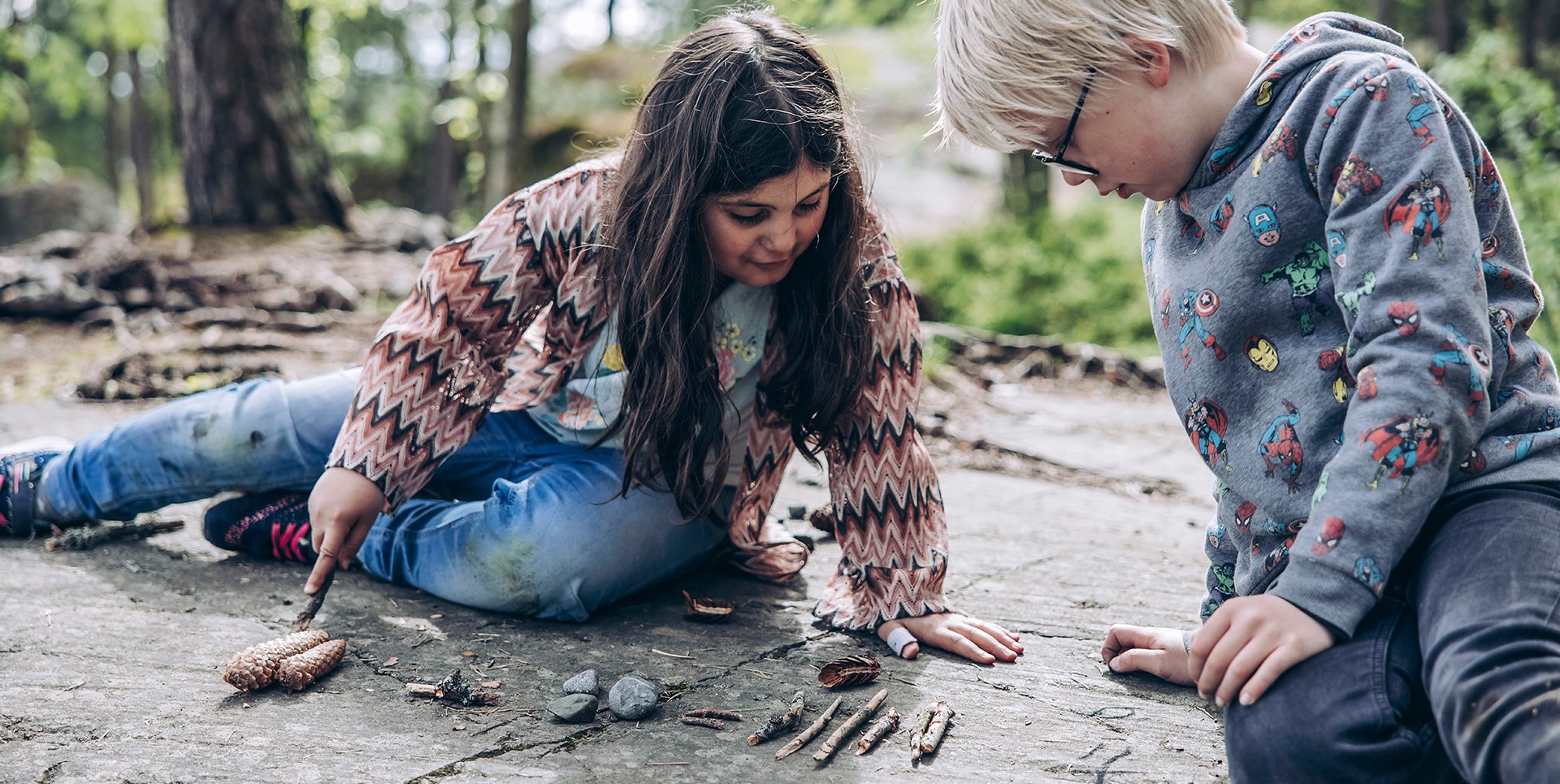
The theme for the 2022 competition is My LUMA, referring to natural sciences, mathematics and technology. The aim of is that all projects should be interdisciplinary and promote the ideas, interests and knowhow of children and youth. You may approach this theme through students’ own interests or phenomena related to everyday life: First, brainstorm a topic that inspires your team and then dive into the worlds of learning and discovery through your project. For inspiration, you can visit our material bank where we have collected some of the best projects and educational practices from earlier years.
Register for the competition by filling out this form. Tell us about your team of students and your project, or your good educational practice. The registration period for the competition will continues until the 28th of February 2022.
The students’ StarT projects
Teams of children and adolescents should carry out the StarT project. The project should be a product of the students’ work, supported by the teacher on a suitable level. The projects will assessed based on how creative and innovative they are. We also appreciate projects that are linked to the theme. The students’ active role in the project is important as well as collaboration and the visibility of their enthusiasm. The project can include cooperation within the teacher community and with other actors outside of the learning community, such as researchers and companies.
An example of a My LUMA themed project from 2021
Air in my town -project by
Best educational practices for project-based learning
A best practice is an educational practice or a model that the learning community has tried and found useful in interdisciplinary and phenomenon-based learning. The best practice should also have a link to science, technology and/or mathematics. In the assessment of best practices, we will look at how the best practice demonstrates links to curriculum and cooperation. We will also be looking for innovative approaches for carrying out inquiry-based and/or phenomenon-based learning.
An example of a best practice from 2021
Manufacturing of drawing charcoal by Forssan Kuvataidekoulu
With ZAU science clubs, we increased girls’ interest towards mathematics, natural sciences and technology. At the same time, science club instructors were able to try phenomenon-based and Inquiry-based teaching. For example, many primary school teachers were inspired to organize accessible science clubs for their pupils.
Learning experiences for both children and instructors
In 2019 –2021, a total of 55 clubs and 3 virtual clubs were organised, bringing together more than 1,000 children from all over Finland. At the same time, 91 club instructors gained valuable experience in phenomenon-based and inquiry-based teaching. Professor Maija Aksela, Director of the LUMA Centre Finland, is pleased with the results of the ZAU-project.
– With science club activities, we popularized science and technology for the children, young people and families involved. I am also pleased that the training of club instructors enabled us to support the continuous learning of teachers and teacher training. As a network, we gained a lot of valuable experience of science club activities and many good learning materials to share with everyone. Warm thanks to the Zonta International -organization for making this possible and all those who have organised science clubs.
Science was introduced through everyday phenomena
Primary school teacher Mari Huttunen from Kotka organized two ZAU science clubs at her school: the first one in autumn 2019 and again in autumn 2021. The theme of the clubs was selected based on its familiarity to be food and reactions, which was then expanded according to the pupils’ interests. In science clubs, pupils familiarised themselves with the reactions of everyday life, such as the reacting of baking powder and the foaming of egg protein. In addition, children made ice cream in a plastic bag, play dough and plastic from milk.
According to Huttunen, clubs were successful from the viewpoint of both participants and teachers.
– Both of our clubs were very popular: there were about 20 participants on both occasions and even more would have wanted to participate. The clubs were organised at the school premise after the school day, and they were free of charge to make them as accessible as possible. Children have been extremely motivated to experiment themselves, and their joy has also spread to us instructors. Instructing science clubs has not felt like work at all, she says.
Confidence in personal skills was increased
In particular, Huttunen praises the project for all the support which made it easy to organise clubs on her own. During the project, she was able to cooperate with a colleague as an equal team. Although the pupils had time to experiment with a variety of activities, several were still left for the prospective future clubs.
– Without the ZAU-project, I would never have organized a science club, because I would not have felt that I was competent enough to do so. However, during the clubs, those doubts were proven wrong. I wish the children who took part in my clubs would never have to doubt their own expertise, Huttunen sums up.
About the project
The aim of the ZAU-project was to inspire especially girls towards studying mathematics, natural sciences and technology and having these subjects as a hobby. To reach this goal, phenomenon-based and accessible science clubs were organized all over Finland. Club activities were specifically planned based on girls’ interests and emphasized the importance of hands-on activities. Those interested in instructing clubs were trained for their task in an online course. The project was carried out in cooperation with the Zonta International District 20 and the LUMA Centre Finland. To finance the project, Zonta International organised a fundraising with a total revenue of approximately EUR 150,000.
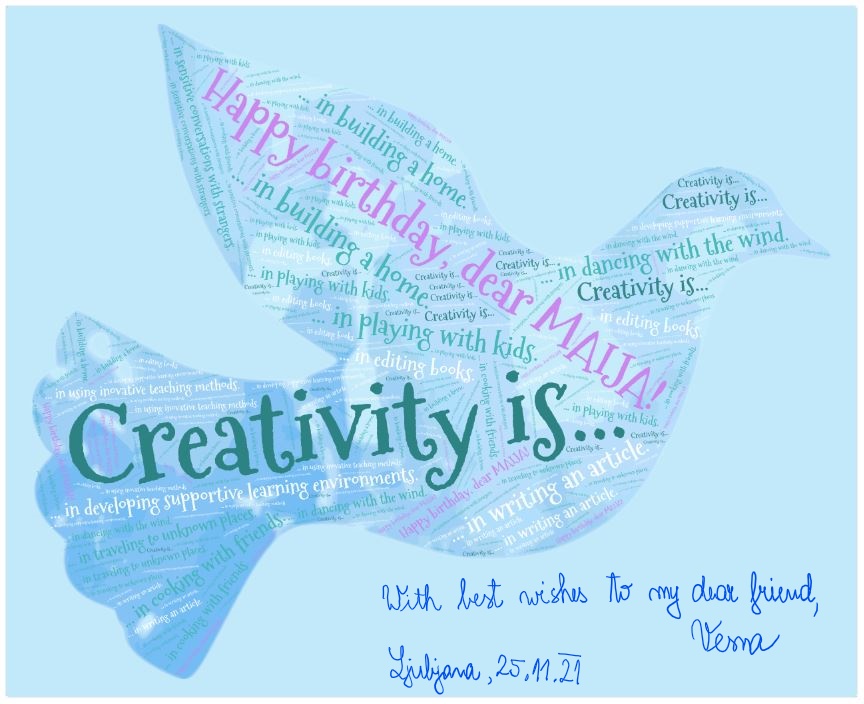
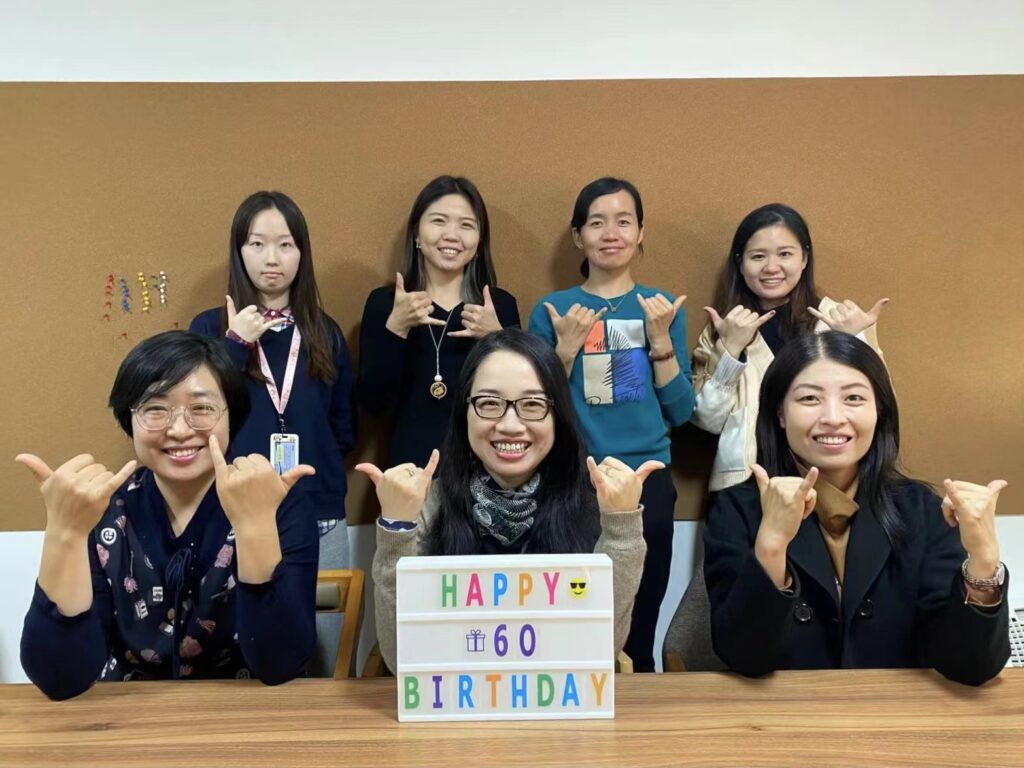
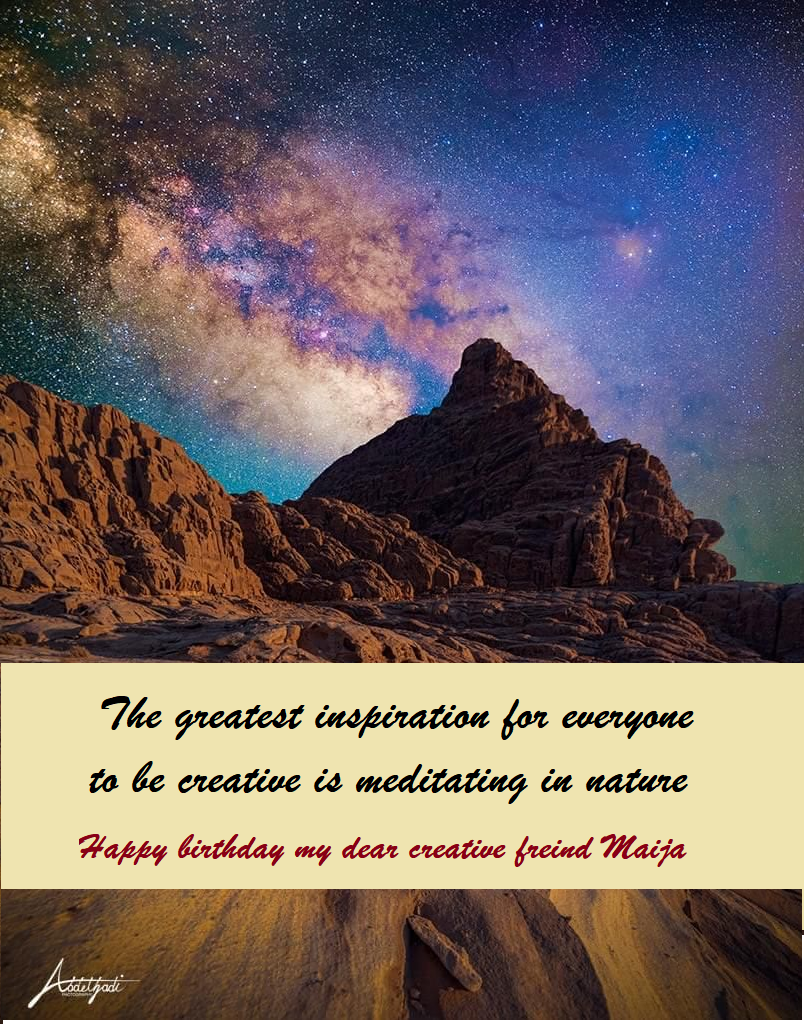
Director of LUMA Centre Finland, professor Maija Aksela is celebrating her 60th birthday on 25th of November, 2021 with the theme of creativity and an art exhibition. Some of her colleagues and friends have sent greetings around the world. On this page we have collected art greetings from colleagues and friends abroad and Finland in English and in Finnish and info about her birthday celebrations and about possibility to support national and international LUMA work for good and sustainable future. You can send your greetings to luma-keskus@helsinki.fi until 3rd of December.
Maija Aksela: Miksi teen taidetta? Why do i do art?
Maija Aksela is celebrating her birthday through her art exhibition:
Greetings in English
Professor Vesna Ferk Savec, Slovenia
Professor Russell Tytler, Australia
Associate Professor Erik Foolandi, Norway
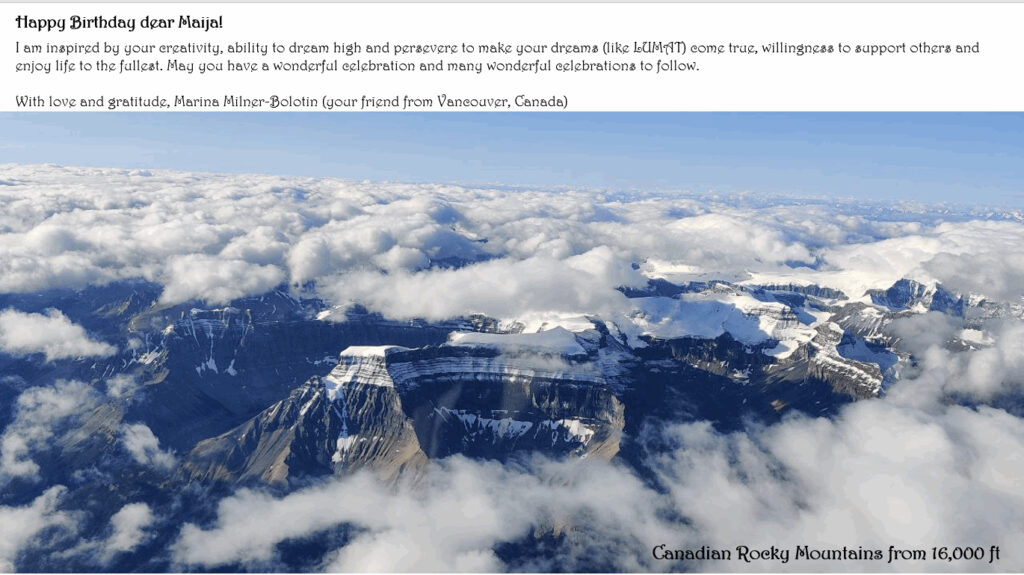
Professor Marina Milner-Bolotin, Canada
Professor Esa Räsänen, Finland
Professor Samuli Siltanen, Finland
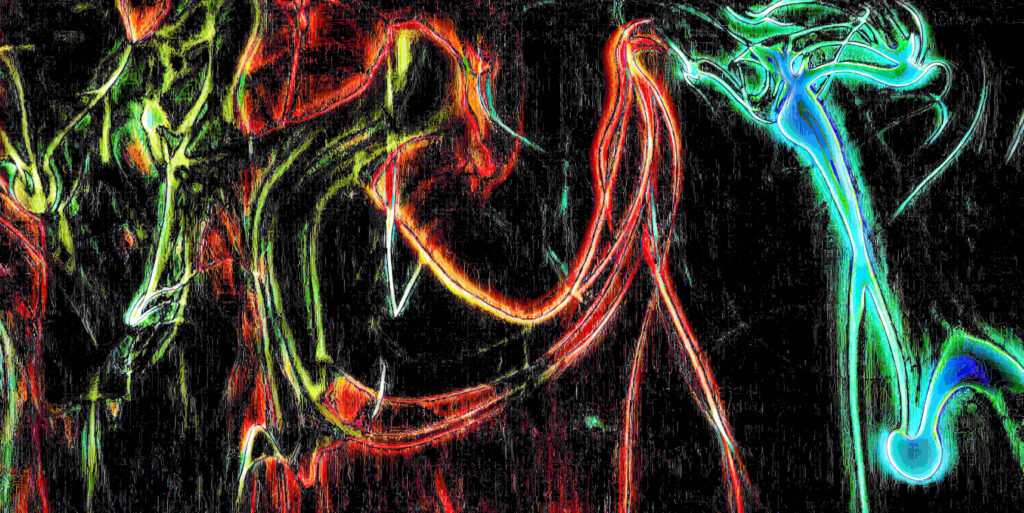
My art greeting is a photograph I took of a convection flow that has passed through a pseudo-differential operator.Here is the core message of your great science education work: Sciences together, seasoned with color!Congratulations!
Everyone is Creative
Adjunct Professor Terry Lyons, Australia
When I think of creativity I’m reminded of the unconventional students I taught in high school; those labelled as angry or badly behaved or rule breakers. They looked for the boundaries of behaviour and then tried to challenge these, sometimes destructively but also sometimes in creative, even funny, ways. This attitude could be irritating in many school subjects—mathematics, science and so on—which tend to be taught in highly structured, non-creative ways. Yet if these student discovered a topic or subject where they could explore boundaries, their propensity to challenge and question conventions became an asset. They were capable of such beautiful and original work precisely because they didn’t just copy whatever they were shown, they saw it as a personal challenge to break it, to reshape it, to take it further. These students taught me that sometimes creativity has the same spark as disobedience and mischief. It just needs the right opportunity to ignite.
Congratulations on your 60th birthday. The art exhibition is a great idea and an excellent way to celebrate this milestone and your dedication to creativity in all things.
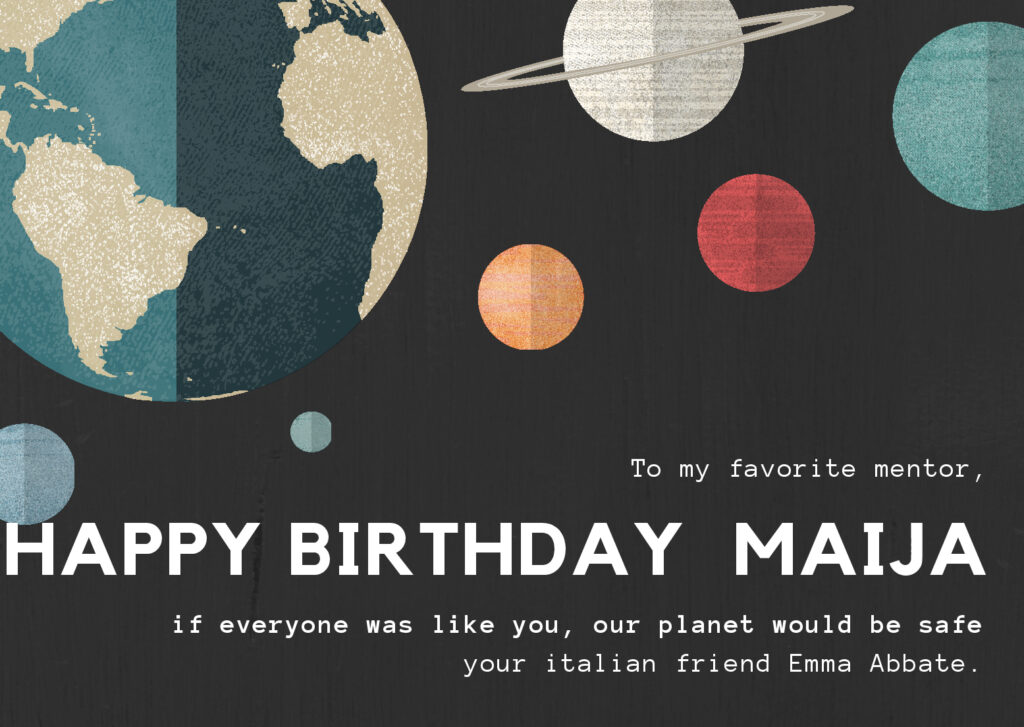
Emma Abbete, Italy An active participant of our international Teachers’ Climate Change Forum
Dr. Marianne Juntunen, Finland
Very warm congratulations from arctic Lapland for my dear great Professor Maija!
– Institute for Atmospheric and Earth System Research (INAR) collaborators, Finland
Professor Ying-Shao Hsu, Taiwan
Creativity is integrating things to serve a particular goal in innovative ways. Creativity is a way to improve the current status with different solutions so it is important for better life and innovation in industry. Creativity serves a role in learning science as a channel of learning problem solving in flexible and effective ways. I think creativity is different in science and in art because creativity in science is more like problem-solving innovatively but in art is like extending imagination for fun. It is possible to learn creativity by building an atmosphere for expression ideas and presenting a novice solution freely; also, providing possible resources and supports for trying out ideas and solutions.
Professor Jun Wang and her research team, BNU, China
Creativity means imagination, curiosity, fresh ideas, novel connections, turning ideas into reality, solving complex problems and make changes in our life. It is creativity makes our lives better and more colorful. Creativity is the vitality of science (and education). Creativity is the same, whether in science, art or life. In creativity, you concentrate, you try, and you find it in reality, in the way of painting, dancing, or experiments. Creativity is not a subject, all we learn is to open ourselves to the world, keep studying, accept new things and welcome people come and go, get close to the nature, collaborate with others, and done is better than perfect! You future makers are naturally creative. Let your ideas fly!Together we are more! All the best wishes.
Your creativity has been the seam that has created opportunities for youth, families, educators in Finland and throughout the world. Wishing you and the LUMA Centre continued success!
Professor Maija Aksela wishes all possible birthday gifts for the LUMA fund for promoting national and international research-based LUMA activities to support meaninful learning and teaching of future makers -kids and youth for good, sustainable future. LUMA means STEAM in Finnish with A being all subjects/disciplines. You can read about the earlier LUMA work on our recent e-book.
Professori Maija Aksela on valinnut syntymäpäivänsä teemaksi luovuuden ilon. Tiede ja taide tuovat toivoa tulevaisuuteen! Täällä on muutamia onnittelutervehdyksiä ja linkki sivulle. Voit lähettää onnittelutervehdyksen (joku kuva luovuuden ilosta ja tarina) osoitteeseen maija.aksela@helsinki.fi tai galleriasihteeri.soukantaideseura@gmail.com
Professori Maija Aksela toivoo pienemmät ja isommat muistamiset tulevaisuuden tekijöiden -lasten ja nuorten- opiskelun ja opetuksen edistämiseen hyvään, kestävään tulevaisuuteen. Sitä varten Helsingin yliopistolla on tulevaisuuden tekijöille LUMA-rahasto (LUMA LU luonnontieteet, M matematiikka A kaikki oppinaineet/tieteet: All subjects/sciences): Lue tarkemmat ohjeet lahjoittamiseen Helsingin yliopiston sivuilta.
Oivaltamisen ja onnistumisen iloa kaikille! Voit tutustua aiempaan LUMA-työhön e-kirjamme avulla.
Professori Maija Aksela viettää merkkipäiväänsä tieteen ja taiteen luovuuden ilon merkeissä taidenäyttelynsä parissa 25.11-3.12.21. Hänet tavoittaa aukioloaikoina tai voi sopia hänen kanssaan muusta ajasta. Katso tarkemmin taidenäyttelystä Soukan taideseuran sivuilta. Näyttelyssä on myös LUMA-toiminta esillä ja sen yhteydessä on mahdollisuus tutustua tieteen ja taiteen mahdollisuuksiin itse kokeilemalla.
Yhteydenotot: luma-keskus@helsinki.fi tai maija.aksela@helsinki.fi
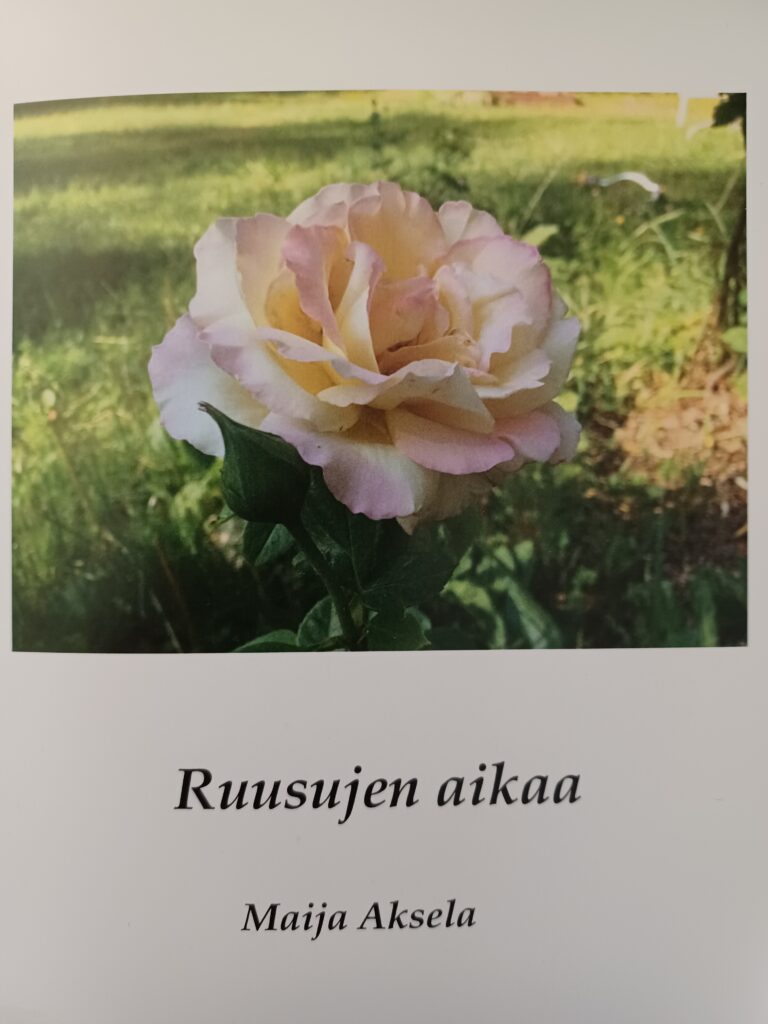
Maija Akselan kuvallinen miete/runokirjan “Ruusujen aikaa” saatavilla kirjoittajalta (mkaksela@gmail.com) suomeksi ja englanniksi. Sisältää Maija Akselan valokuvia ja mietteitä/runoja elämästä. 48 sivua. Kirjaa on saatavilla myös taidenäyttelyssä 25.11 – 3.12. Hinta 10 euroa (päälle mahd. postituskulut).
The Finnish Ministry of Education and Culture is organising the Nordic Nord Start Climate Change Competition in autumn 2021. The competition is part of the programme of Finland’s Presidency of the Nordic Council of Ministers in 2021. Organised in cooperation with the LUMA Centre Finland’s StarT programme, the competition aims to gather children, young people and adults, from early childhood education and care to higher education, to brainstorm concrete means for the fight against climate change.
The Nord StarT competition aims to showcase what kinds of visions Nordic children, young people and young adults have about climate change mitigation and to present examples of how to curb climate change. In recent years, there has been an increasing interest in and a growing concern about climate change. In addition, young people are more socially aware and active than they have been in over two decades, and they want concrete action and solution-oriented climate debate.
It is possible to enter the Nord StarT competition with projects or practices where different age groups and educational levels are working together. Schools, groups, clubs or any other set of children, young people or adults can enter the competition with a good learning practice or project where children and young people show how to fight the climate change. Teachers, instructors and educators play an important role in the creation of teaching practices. Nord StarT aims to strengthen cooperation and the sense of community among the Nordic countries, to develop sustainable development pedagogics and to promote curriculum-based activities. The competition is designed for all educational levels from early childhood education and care to higher education.
The competition is already underway, and it is possible to enter projects and practices for the competition until the end of November. The competition will culminate at the Nordic Conference, and the award ceremony will be held on 9 February 2022. Read more about Nord StarT and how to enter the competition on the competition website.
More information and materials
Ulla-Jill Karlsson, Ministerial Adviser, Ministry of Education and Culture, tel. +358 295 330 141
The 11th LUMAT Research symposium will be organized on 9-10.6.2021 by LUMAT Science Research Forum. Preceding that, we organize a Summer school on 8th of June. Both events will be organized online.
The theme of this year’s LUMAT Research Symposium is Engaging learners in math and science through modern technologies. How to get the students more involved and engaged in maths and science learning in the classrooms?
Welcome to discuss and listen to our keynote presenters as well as researchers in the oral sessions.
Professor Jari Lavonen will introduce us to the topic of engagement in Finnish science classrooms, and Dr. Angela James will give her presentation on the topic of modern technologies in South Africa.
Learn to conduct mixed methods research
This year’s summer school will provide the participants with the possibility to learn on mixed methods research, and on what to take into consideration when writing a scientific paper. We also encourage the participants to present their ongoing research and get feedback on it.
Prof. Dr. Silvija Markic will give us a keynote lecture on using mixed methods in science education research.
To address the challenges of the 21st century skills, there is a need to educate citizens capable of seeing and exploring the interconnections within STEM subjects and between STEM and other areas. It is also important to educate teachers who can support students in becoming STEAM-literate citizens. We need to educate students who understand basic science and mathematics, and in addition to that, who are curious and knowledgeable about how things work (engineering), and how modern technology is affecting our life. In addition, it will be required from tomorrow’s leaders to be able to make connections between fields, such as between STEM and arts (STEAM), STEM and social sciences, STEM and policies.
The STEAM-special issue includes an editorial and three articles that challenge us to rethink STEAM education, reveal the potential of STEAM, and offer ideas for future research.
Articles offer insights on the practical applications of STEAM education
The editorial (Jaana Herranen, Erik Cyrus Fooladi, and Marina Milner-Bolotin) introduces some key notions, discourses, and challenges of STEAM education, as a relatively novel concept and briefly discusses the history of STEAM and its evolution over the last decades. It also problematizes STEAM and its roots through asking a question: What is “A” in STEAM representing?
The second article “Promoting STEAM learning in the early years: ‘Pequeños Científicos’ Program” (Valeria Cabello, Maria Loreto Martinez, Solange Armijo Solis, and Lesly Maldonado) describes and examines a non-formal education program among 3–10-year old children. The article discusses the strengths, weaknesses, and opportunities of the program based on the perceptions of the students, teachers, and educators. A number of strengths of the program were identified: the students were engaged in learning processes; holistic perspectives and integration between STEM and ‘A’ were achieved and clear signs were found of increased motivation and interest among the participants. One of the major challenges identified in this program was the handling of young learners’ emotions, frustration and behavior by an all-scientists/artist staff with limited or no pedagogical background in handling such issues.
The third article “Promoting student interest in science: The impact of a science theatre project” (Lydia Schulze Heuling) reports on a science theatre project in a heterogeneous teaching context in a disadvantaged area, and its effects on students’ interest in STEM and their artistic expression. The quantitative analysis presented in the study indicated an increased student interest in the topic of galvanization, and physics and chemistry in general. In addition, the approach resulted in increased student appreciation of artistic practices and positive classroom spirit, knowledge of cultural practices, and student self-confidence.
International climate education event Towards Sustainable Future Together – Forum for Future Makers is organized by The Science Education Centre (a part of national LUMA Centre Finland) and Institute for Atmospheric and Earth System Research (INAR).
The online event combines two of our yearly events which will be held online due to the coronavirus situation: Teachers’ Climate Change Forum’s Summer Camp for teachers (on August 4.-5.) and the Global Challenges Course for students aged 15–19 (on August 3.-4.). On August 4, joint activities will be organized for both the youth and the teachers.
The course for the youth will discuss the role of science in helping to solve issues connected to climate change. In the course, the participants will make a small learning project in teams to develop a solution to a global challenge, with the support of the university’s young scientists and under the guidance of teacher students.
During their virtual conference, teachers will hear about the most recent research on climate change and science education carried out in the University of Helsinki. Based on these, the theme of climate change education will be discussed – How to address climate change and global warming from pedagogically meaningful and diverse perspectives, but also pay attention in different beliefs and attitudes.
The topics are discussed in communal manner and the goal of the events is that the multidisciplinary network built during the event will continue also afterwards to be a forum, where teachers can share their ideas, experiences and skills.
The event is free of charge and open for everyone interested.
How to inspire future factors to study mathematics, science and technology? How to support skilled teachers and prospective teachers in their important work? How to build a good and sustainable future in a community-based and research-based way?
Among other things, these questions will be answered in a new online book describing national and international LUMA science education activities. A total of about one hundred people from the LUMA Center Finland network (11 universities and 13 centers) have participated in the design and production of the book.
High-level expertise is key for a good future. Knowledge of mathematics, science and technology plays a significant role in this. Strengthening competence and encouraging the study these subjects is the goal of science education in the LUMA Center Finland network, and now we want to open it more by publishing a new online book. Science belongs to everyone!
Since 2003, LUMA’s central operations have been systematically developed at the university level in Finland. In 2013, a national LUMA central network was opened by 11 universities to promote an important goal. Network includes 13 active LUMA centers. The collaborative and research-based network has a national mission given by the Ministry of Education and Culture, to which all universities and centers are committed. Together for a good and sustainable future!
Our new book contains five chapters: the first chapter presents the experiences of participants and specialists, the second chapter describes the best solutions and approaches to support future makers for a good and sustainable future, the third chapter opens up international activities and learning community, and the fourth chapter introduces the LUMA network more thoroughly. The last chapter of the book culminates in research-based, collaborative development and research: How are these new solutions and approaches developed? What kind of topics are being researched and developed now and in the future? The network’s activities are based on research and strong interaction with the scientific community and external partners. The National LUMA Advisory Board has an important role to play.
Within the LUMA Network, we believe that the activities and innovations achieved during the past years deserve to be widely available to show the diversity how science education can be addressed in formal, non-formal and informal education to achieve “LUMA literacy” (science/STEM literacy) with joy and amazement.
LUMA Centre Finland (11 universities and 13 centers) implemented a national LUMA2020 program (2019-2020) which was funded by the Ministry of Education and Culture. The main objective of the national LUMA2020 program was to inspire and motivate children and young people to engage in mathematics, science and technology. To achieve that goal, the program produced new solutions and pedagogical models based on the latest research and co-design. The program also generated collaboration between schools, universities and industry. The concept of learning community was promoted, and program aimed to support implementation of the national core curriculum.
The national LUMA2020 program provided all teachers, from early childhood education to universities, continuous professional development. It offered an opportunity for cross-curricular collaboration and development of teaching methods. The main objectives were achieved well despite the program’s fast schedule and exceptional circumstances. The participating teachers were very satisfied with the program based on the evaluation. It has provided tools e.g. to support multidisciplinary project-based learning, and to support co-design and learning community approaches.
The program inspired teachers to try new methods and increased collaboration between teachers as well as between the students. The LUMA2020 also increased collaboration with the 13 LUMA centres. Teachers felt that the program developed the skills of learning and teaching, and increased the interest of both, teachers and students, in the thematic areas of the program. More than two-thirds of teachers responded that they would re-participate in similar programs in the future.
The learning communities worked in the program under four themes: Sustainable Development (e.g. climate change and circular economy), Mathematics around us (e.g. art, economics and statistics), Technology around us (e.g. mobile device, artificial intelligence, robotics) and My LUMA (optional theme related to STEAM subjects).
Working together, getting excited and learning. Our program created inspiring new openings and increased a collaborative culture. In particular, virtual materials and educational models developed with co-design, increased equal science education for all. A great tool for this was the design-based research, which has long been used in LUMA operations. The collaboration with the industry was fruitful and we created new materials and ways of working, says Professor Maija Aksela, Director of the LUMA2020 program and LUMA Centre Finland.
All materials produced in the program are shared on the program’s website with a charge. The materials also include three Massive Open Online Courses (MOOCs) for lifelong learning that are open throughout 2021. Courses are aimed for pre-service and in-service teachers from early childhood education to high school and vocational school education. LUMA2020 provided new, collaboration-based virtual education models, such as teacher workshops, several virtual science clubs and camps and Science in society -series that was created with the industry.
A total of 81 experts from 11 universities participated in the program. Experts supported approximately 450 in-service teachers in a total of 381 program-related events. There were 160 learning communities, including kindergartens, primary schools, high schools, vocational schools and hobby schools. The events included, for example, study visits to universities, schools and kindergartens, in-service training and meetings, and online meetings. In the spring, the program was made completely virtual due to the COVID-19 coronavirus pandemic.
The final report of the LUMA2020 program can be read here (in Finnish).
All the materials, MOOCs and more information here (in Finnish and in Swedish).
Contact information:
Professor Maija Aksela, LUMA Centre Finland, University of Helsinki, maija.aksela@helsinki.fi
Project Manager Oona Kiviluoto, LUMA Centre Finland, oona.kiviluoto@helsinki.fi
Counsellor of Education Paavo-Petri Ahonen, Ministry of Education and Culture, paavo-petri.ahonen@minedu.fi
Do you want to have a role in ensuring a good future for children and young people? Are you interested in developing and studying new initiatives in science education? Are you interested in national and international collaboration? Are you interested in promoting continuous learning? Are you interested in working in a communal team focused on a positive future?
The Science Education Centre of the University of Helsinki/LUMA Centre Finland invites applications for
four (4) DOCTORAL STUDENTS IN SCIENCE EDUCATION
for a fixed term appointment from 1 January 2021 to 31 December 2024.
The aim of the Science Education Centre of the University of Helsinki is to inspire and encourage children, young people and families to study various disciplines or learn about them as a hobby. Science education entails the promotion of mathematics and natural sciences skills and encouraging people to study them through formal, non-formal and informal science education.
Science education operations are one of the University of Helsinki’s strategic focus areas and part of the implementation plan of the Faculty of Science.
These operations allow the University of Helsinki to study and develop new pedagogical solutions. In addition to development and research, both future and current teachers are trained and supported in utilising them in teaching.
The operations include collaboration with Finnish and international parties. The Science Education Centre is also part of the LUMA Centre Finland network (https://www.luma.fi/en/) comprising 13 regional LUMA centres operating within Finnish university consortia. Further information on the operations is available in the book Collaborative Science Education at the University of Helsinki Since 2003: New Solutions and Pedagogical Innovations for Teaching from Early Childhood Education to Universities (https://www.helsinki.fi/sites/default/files/atoms/files/isbn-978-951-51-…).
About the position
The doctoral students’ duties include drawing up their doctoral thesis (50% of working hours) in the field of science education. In addition, the doctoral students will develop and implement science education in the Faculty of Science (50% of working hours). The position is closely related to science class activities. The aim is to link the duties as closely as possible to the research topic of the appointees. The appointees hired will make up a team and science education will also be implemented in cooperation with other faculties. The duties may also include administrative duties. There is a six-month trial period for the position. The research topics in science education of the appointees may be discipline-specific (e.g., mathematics, physics, chemistry, geography) or multidisciplinary, which promotes the strategic plan of the Faculty of Science (e.g., sustainable development, climate change, digitalisation).
The activities and research will be supported by the steering group of the LUMA Science Helsinki research team with representation from subject teacher education at the Faculty of Science, among others.
Selection criteria
The appointees must have a right to pursue doctoral studies at the University of Helsinki. If the doctoral student does not yet have a right to pursue doctoral studies at the University of Helsinki, the appointee to the position of a doctoral student must receive the said right within the six-month trial period. Further information on applying for doctoral education is available here: https://www.helsinki.fi/en/research/doctoral-education/the-application-p….
In addition, contractual employment of doctoral students requires the ability and motivation, as demonstrated in previous degree studies and otherwise, to complete a doctoral degree.
The position requires good interaction skills. Experience of teaching or other science education, knowledge of the Finnish education system, international work experience and a master’s degree in science will be considered an asset.
Salary
The salary for the present post will be based on levels 2 to 4 of the requirement level chart for teaching and research personnel in the salary system of Finnish universities. In addition, the appointee will be paid a salary component based on personal work performance. The salary range will be between €2,380 and €3,000 per month depending on the qualifications and previous experience of the appointee.
Application instructions
The application must be submitted through the University of Helsinki electronic recruitment system by clicking on the link “Apply for the position” below. Current employees of the University of Helsinki must submit their applications through the SAP HR portal (https://saphr.it.helsinki.fi/irj/portal).
Include in your application the following as PDF files: • CV containing a possible list of publications and contact information of two referees • Application letter where you describe your aptitude and motivation for the position (max. two pages) • Preliminary research plan topics and grounds for them (max. two pages) • Transcript of record of the studies completed for your master’s degree and any previously completed doctoral studies
The closing date for applications is 2 November 2020.
Additional information
Further information about the position can be obtained from: Professor Maija Aksela, science education, Faculty of Science, University of Helsinki, maija.aksela@helsinki.fi and Specialist Topias Ikävalko, Science Education Centre, University of Helsinki, topias.ikavalko@helsinki.fi, +358 50 311 4536


 according to the pupils’ interests. In science clubs, pupils familiarised themselves with the reactions of everyday life, such as the reacting of baking powder and the foaming of egg protein. In addition, children made ice cream in a plastic bag, play dough and plastic from milk.